
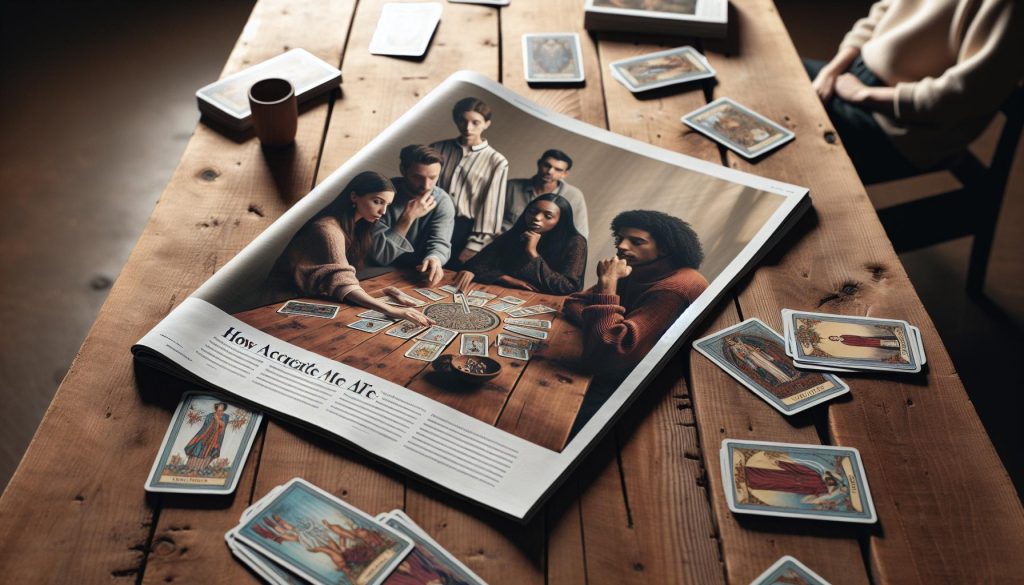
Have you ever wondered how accurate tarot card predictions really are? You’re not alone. Many people are drawn to tarot’s mystical allure, seeking guidance on life’s complex questions. Yet, there remains a lingering skepticism about its reliability. This article delves into the heart of tarot, exploring its potential for accuracy and how it can resonate with your intuition. Whether you’re a curious beginner or a seasoned reader, understanding the nuances of tarot can enhance your connection to this ancient practice. Join us as we uncover the truth about tarot predictions, bridging the gap between skepticism and belief, and empowering you to harness the insights of the cards in your own life.
Understanding the Basics of Tarot Card Readings
Tarot card readings combine intuition, symbolism, and personal reflection to provide insights into various aspects of life. At its core, tarot involves a deck of 78 cards, each rich with archetypal imagery and meaning. The deck is divided into two main parts: the Major Arcana, which encompasses significant life themes and spiritual lessons, and the Minor Arcana, which focuses on everyday events and challenges. Understanding these fundamentals is essential for anyone looking to explore tarot’s potential for offering guidance.
Every tarot reading begins with a question or intention. This forms the focal point that guides the interpretation of the cards drawn. For newcomers, it’s often helpful to start with simple spreads-like a three-card spread representing the past, present, and future. This approach allows for a clearer, more structured understanding of how the cards relate to one another and to the querent’s question.
The interpretation of tarot cards is not merely academic; it draws deeply on personal intuition. As you familiarize yourself with each card’s traditional meanings, it’s equally important to listen to your feelings about them in the context of the reading. For instance, drawing the Tower card might typically symbolize upheaval, yet in a reading about a job transition, it could reveal the liberation that comes from breaking free from an unfulfilling career. This balance of meaning and personal insight is crucial to harnessing the full power of tarot readings.
Engaging with tarot also requires an open mind, embracing both the mystical and the practical. While the prospect of predicting the future can be enticing, many practitioners view tarot as a mirror reflecting our inner thoughts and potential paths rather than a definitive forecast of what is to come. This perspective allows readers of all experiences, from skeptics to believers, to find value and comfort in their tarot journeys. Whether exploring complex spreads like the Celtic Cross or sticking to simpler layouts, the core of tarot remains the same: a bridge to deeper self-understanding and clarity.
The Science Behind Tarot: Psychology and Interpretation

Many individuals are curious about how tarot readings can yield insights that feel both personal and precise. This accuracy often stems from a unique blend of psychology and interpretation that allows a reader to connect deeply with the querent’s question. When a tarot reader lays down the cards, they aren’t merely conducting a ritual; they are engaging in a form of intuitive psychology. Each card represents archetypal themes, tapping into universal human experiences that resonate on a personal level.
One important aspect of tarot’s psychological power lies in its ability to reflect the querent’s subconscious thoughts and feelings. The imagery and symbolism of the cards serve as mirrors, prompting introspection and self-discovery. For instance, drawing the Empress may evoke feelings related to nurturing and abundance in one’s life context, while the Three of Swords might stir up memories of heartbreak or betrayal. By thoughtfully interpreting these symbols, readers create meaningful connections that illuminate the querent’s current emotional state.
As with any form of interpretation, the context in which the cards are read enhances their effectiveness. This is why it’s crucial for readers to remain aware of the querent’s question and their unique circumstances. A skilled reader listens intently, drawing from their knowledge and interpreting the symbols in a way that meets the querent’s needs. For beginners, focusing on simple spreads-such as a single card pull for daily guidance or a two-card spread to explore choices-can cultivate a deeper understanding of these dynamics. For instance, pulling the High Priestess in response to a question about inner wisdom encourages reflection on one’s intuition versus external advice.
Moreover, understanding the psychological underpinnings of tarot aids in demystifying the process. It invites skeptics to see tarot as a tool for personal insight rather than a supernatural prediction instrument. Embracing this duality of tarot as both mystical and psychological opens the door for everyone, regardless of their beliefs, to explore this rich domain of self-awareness and emotional growth. This balanced approach allows practitioners to foster a nurturing environment where questions arise without fear and insights emerge gently, guiding the querent toward empowered decision-making.
Common Myths About Tarot Predictions Debunked

Many people hold misconceptions about tarot predictions, believing they offer strict forecasts of the future or that they are solely mystical. However, it’s essential to unpack these myths to understand how tarot truly functions as a tool for insight and guidance.
One prevalent myth is that tarot cards predict the future with absolute certainty. While the imagery and symbolism of the cards can resonate deeply and highlight potential paths, they don’t dictate fixed outcomes. Tarot reflects possibilities based on current energies and situations, serving more as a guide for understanding options and exploring choices. A reading can reveal potential influences or obstacles, but ultimately, it empowers the querent to make decisions, free will remains paramount.
Another common misunderstanding is that only a gifted few can successfully interpret tarot. In reality, anyone can learn to read tarot with practice and patience. The cards are designed to engage intuition and personal insight, making them accessible to all. Beginners can start with simple spreads and gradually familiarize themselves with the meanings of the cards. Over time, each reader develops their unique style and connection to the cards, enhancing their readings. For instance, a novice might pull the Two of Cups and explore themes of partnership and balance in the context of their question, allowing for personal insights to emerge organically.
Additionally, skeptics often believe tarot is inherently linked to superstition or non-rationality. In contrast, many tarot practitioners approach their work as a blend of psychology and art. By tapping into archetypal symbols, tarot provides a platform for reflection and personal growth. It encourages querents to confront their emotions and explore deeper truths within themselves. This introspective nature elevates tarot from a mere guessing game to a valuable tool for enhancing emotional intelligence and self-awareness.
By recognizing these myths and embracing a more nuanced understanding, individuals can approach tarot with an open mind, ready to explore its rich terrain of insight and personal growth. Whether you’re a skeptic or a believer, tarot holds the potential to illuminate personal journeys and encourage mindful decision-making.
How to Prepare for a Tarot Reading Experience
Preparing for a tarot reading can significantly enhance your experience, making it not just insightful but also deeply personal. The key is to approach the reading with an open heart and mind, ready to engage with the insights that the cards can provide. Before diving into the reading, consider taking a few moments to reflect on your intentions and questions. What are the primary issues or areas of life where you’re seeking clarity? By framing your thoughts beforehand, you’ll find the reading more relevant and impactful.
Creating the Right Environment
The atmosphere around you can play a substantial role in how deeply you connect with the tarot. Choose a quiet space where you feel comfortable and can focus without distractions. You might want to light a candle or incense, which can help set the mood and enhance your intuition. Surrounding yourself with items that hold personal significance, such as crystals or mementos, can also ground you and facilitate a deeper connection to your inner self during the reading.
Choosing Your Deck
If you have multiple tarot decks, consider which one resonates best with your current energy or the questions at hand. Each deck carries a unique vibe and set of imagery that can influence your reading. For example, a traditional Rider-Waite deck might speak to someone exploring archetypal themes, while a more modern deck might appeal to someone seeking fresh perspectives. Trust your intuition in selecting a deck; often, the right one will simply feel ‘right’ in your hands.
Formulating Your Questions
The clarity of your questions can greatly impact the quality of the insights gained. Aim for open-ended questions that invite exploration rather than those that can be answered with a simple ‘yes’ or ‘no.’ For instance, instead of asking, “Will I get the job?” consider rephrasing it to, “What should I focus on to improve my chances of getting the job?” This allows the tarot to provide rich insights into your situation, revealing pathways and potential outcomes.
Setting Your Intentions
As you prepare, take a moment for a brief meditation or breathwork session to center yourself. Setting your intentions not only clarifies what you hope to gain but also aligns your energy with that of the tarot. You might say something like, “I seek guidance and clarity on my path,” which helps to focus your mind and heart on the purpose of the reading.
With these preparations in place, you’re creating a fertile ground for meaningful insights. Remember, the relationship between you and the cards is a collaborative journey, where your perceptions and the messages of the cards intertwine to illuminate your path. Embrace the experience, whether you’re a seasoned reader or a curious novice, and allow the tarot to guide you toward deeper understanding and personal growth.
The Role of Intuition in Tarot Predictions

Intuition is a powerful component of tarot card readings, acting as the bridge between the reader’s insight and the messages conveyed through the cards. When engaging with tarot, your intuitive abilities help decode the symbols and themes that emerge, transforming a mere card draw into a rich narrative. This connection allows for deeper interpretations that resonate with the unique circumstances and emotions of the person receiving the reading. In essence, intuition transforms the tarot from a set of images into a living dialogue, guiding you to insights that may not be immediately apparent.
One of the most effective ways to harness your intuition in tarot is through the practice of mindfulness. Before beginning a reading, take a moment to center yourself. Breathe deeply, and visualize a small, warm light in your heart expanding with each inhale. As you exhale, imagine this light radiating out into your surroundings, creating a space filled with calm and clarity. This ritual not only prepares your mind but also opens channels for intuitive messages to flow, making it easier to grasp the subtle cues offered by the cards.
When interpreting the cards, allow your instinctual responses to guide you. For instance, upon drawing the High Priestess, you might instinctively feel a sense of heightened intuition and inner wisdom surfacing within the seeker. Instead of adhering strictly to traditional meanings, pay attention to the feelings and images that arise in your mind. Are there personal experiences or stories that the card brings to light? Sharing such connections can significantly enrich the reading, making it more applicable and meaningful to the inquirer.
Finally, remember that developing your intuition is a continuous journey. Regular practice is key-whether by journaling insights after readings, reflecting on how certain cards resonate within your life experiences, or simply engaging in personal readings without external influences. The more you trust your inner voice, the more attuned you will become to the nuanced messages in the cards, allowing for transformative moments in your readings that go beyond the surface. Embrace this dance of intuition and tarot; together, they can uncover profound truths and guidance on your life’s path.
Can Tarot Cards Predict the Future? What the Experts Say
The allure of tarot cards often lies in their ability to stir the imagination, prompting one to ponder whether they can truly unveil glimpses into the future. While many enthusiasts swear by their efficacy in providing foresight, the relationship between tarot and future predictions is more nuanced than it might seem. Experts frequently articulate that tarot does not predict the future in a deterministic way but instead offers insights into potential outcomes based on present circumstances and emotional states.
At its core, tarot serves as a reflective tool, revealing probabilities rather than certainties. When you draw a card, such as the Tower, it might signal a significant upheaval ahead, yet it also invites interpretation about how current actions or mindsets could influence that potential disruption. Essentially, tarot encourages introspection; it prompts you to evaluate your life choices, helping you to set intentions that can steer your journey in desired directions. Through this lens, predictions are less about fixed outcomes and more about illuminating the paths available to you.
The power of tarot predictions also deeply intertwines with the reader’s intuition. Skilled readers interpret the cards while tapping into the emotional and energetic currents surrounding a situation. For example, if the Wheel of Fortune appears, a reader might highlight themes of change and cycles, planting the idea that the querent is at a transitional juncture. This attentiveness to the narrative woven by the cards enhances the reading’s value, directing the querent’s focus on how their current decisions might manifest in various future scenarios.
Additionally, real-life experiences often reinforce the credibility of tarot as a forecasting tool. Many individuals have recounted instances where tarot readings seemed eerily prescient, with events unfolding as the cards suggested. However, these anecdotes should not overshadow the fundamental belief that tarot serves as a guide rather than a strict predictor. The nuanced interplay of choice, intention, and situational awareness solidifies tarot’s role as a supportive companion on life’s journey, inviting users to approach the unknown with curiosity and empowerment.
Ultimately, whether you approach tarot with skepticism or belief, its true strength lies in its ability to foster self-awareness and encourage proactive living. By engaging with the cards thoughtfully, you position yourself not just as a passive observer of destiny, but as an active participant crafting your future.
Real-Life Examples: Successful Tarot Predictions
Navigating the world of tarot can feel mystical, yet many real-life stories validate its predictive aspect. Clients often share experiences where tarot readings provided striking guidance, confirming their intuition or predicting forthcoming events. One powerful example comes from a woman who, after a daunting reading, learned she would soon face an unexpected career change. Cards like the Eight of Cups depicted a journey away from something unfulfilling, while the Chariot suggested determination and control over future directions. Just months later, she transitioned to a new job that aligned more with her passions, celebrating the very change the cards foretold.
Another fascinating case involves a man who, during a reading focused on his love life, drew the Lovers card alongside the Two of Cups. These cards strongly suggested a potential partnership blooming. Initially skeptical, he didn’t take it too seriously until he met someone shortly after, mirroring the connection depicted in the spread. The synchronicity between tarot and his personal life illustrated how the cards can spotlight opportunities if one remains open to them.
Real-life successful tarot predictions highlight that the magic is not just in the cards but also in how they resonate with individual experiences. It’s common for querents to report noticing themes in their readings that align with their current life situations, leading to greater clarity about upcoming choices. For instance, many have experienced an immediate response to a reading’s call to action, often resulting in profound personal growth or new ventures.
Ultimately, these examples reinforce that tarot serves as a mirror reflecting possibilities and likely paths. It encourages participants to engage actively with their futures rather than passively awaiting outcomes. This intertwining of personal insight and tarot predictions fosters a heightened self-awareness, inviting individuals to embrace their roles as architects of their own destinies. With each reading, the stories of success illustrate the profound potential inherent in the tarot, blending intuition with imagery to illuminate the journey ahead.
How to Choose the Right Tarot Deck for You
Choosing the right tarot deck is not just about aesthetics; it’s a deeply personal journey that connects you to your intuition. With countless options available, selecting a deck that resonates with your unique energy can significantly enhance your tarot reading experience. Consider this: a deck that speaks to your soul will empower you to interpret the cards effectively and engage with their meanings on a profound level.
When beginning your search, focus on decks that draw you in visually and thematically. Here are some factors to consider:
- Art Style: Explore different artistic interpretations, from classic Rider-Waite imagery to modern abstract designs. Look for a style that feels inviting and relatable.
- Theme: Some decks are based on specific themes, such as mythology, nature, or a particular culture. Find one that aligns with your interests and beliefs.
- Deck Size: Comfort matters! A deck that fits well in your hands allows for easier shuffling and handling. Larger cards may offer stunning visuals, but smaller decks can be more practical.
- Guidebook Quality: A well-written guidebook can enhance your understanding of the cards and their meanings. Review the deck’s accompanying materials to ensure they provide clear insights and interpretations.
Once you’ve narrowed your choices, it’s time for a trial run. If possible, hold the decks in your hands or look for reviews and videos that showcase how the cards work in practice. Many readers find they can immediately sense which deck feels like a true fit during this exploration.
Remember, there’s no right or wrong deck to choose; it’s about what resonates with you personally. As an example, a beginner might gravitate towards the Rider-Waite deck due to its widespread use and simplicity in interpretations, while more experienced readers might enjoy exploring artistic decks such as the Wild Unknown or the Thoth Tarot for a fresh perspective. Whichever you choose, trust your intuition-it’s your most reliable guide in this magical journey.
Ultimately, selecting your tarot deck is an adventure filled with discovery and personal expression, setting the stage for deeper insights into your life and the mysteries that unfold within your readings. Embrace this process, and you’ll find that the right deck not only enhances your readings but also nurtures your intuitive growth.
Best Practices for Accurate Tarot Readings
To ensure your tarot readings are both accurate and meaningful, several best practices can guide you through the process. These techniques enhance clarity and foster a deeper connection with the cards and the insights they provide.
Begin by setting a clear intention before each reading. Take a moment to meditate on your question or the topic you wish to explore. A well-defined intention allows the cards to offer relevant insights. For example, instead of asking, “What will happen to me?”, reframe it to “What guidance do I need for my career at this moment?”. This specificity invites targeted messages from the tarot.
Next, create a conducive environment for your readings. Choose a quiet space free from distractions. Dim the lights, light a candle, or burn incense to signal the start of your intuitive practice. You may also want to lay out a cloth to dedicate your reading space. This ritualistic approach can enhance your focus and elevate the energy of the reading.
Once you’re ready to draw the cards, trust your instincts. Shuffle the deck while thinking of your question, and don’t hesitate to pause if a card catches your eye. This can be your intuition guiding you toward the message that resonates most with your situation. When interpreting the cards, consider both their upright and reversed meanings, as each side offers valuable insights into challenges and opportunities.
Lastly, reflect on your readings after the session. Journaling about your interpretations and the feelings evoked can deepen your understanding over time. For instance, if you draw the Fool card in a reading, take note of your feelings about new beginnings and risk-taking. Review past readings to see how they unfolded in your life; this will help you refine your approach and enhance your intuitive skills.
By practicing these techniques, you create a supportive framework for accurate and insightful tarot readings, empowering you to unlock the wisdom of the cards with confidence and openness.
Exploring Different Tarot Spreads and Their Purposes
Exploring various tarot spreads is essential for deepening your understanding of the cards and enhancing the accuracy of your readings. Each spread serves a unique purpose, helping to bring clarity to specific questions or situations. Whether you are a beginner or an experienced reader, knowing which spread to use can elevate your tarot practice significantly.
A fundamental spread to start with is the Single Card Spread. This simple yet powerful approach is perfect for daily guidance or quick insights. Just ask a question and draw one card; the card represents the essence of your concern or advice at that moment. For instance, if you pull the Star, it may suggest hope and inspiration, encouraging you to look for the silver lining in your situation.
As you advance, consider the Three-Card Spread, which can provide a more narrative view. Each position in this spread can represent the past, present, and future, allowing you to see how past events influence your current situation and what potential outcomes lie ahead. For example, drawing The Empress (past), The Tower (present), and The World (future) can indicate that nurturing energy from your past has led to a transformative crisis today, but ultimately you will reach a sense of completion and achievement.
For those seeking deeper analysis, the Celtic Cross Spread is a classic choice. It involves ten cards laid in a specific pattern that addresses various aspects of a situation, such as your current environment, challenges, and hopes. This intricate spread can help unravel complex emotional or situational threads. If you ask about a career change and discover the Eight of Pentacles in the advice position, it emphasizes dedication and skill development as key to your success.
Whether you’re navigating a life decision or seeking personal growth, selecting the right tarot spread helps channel your intentions and clarifies the messages from the cards. Remember to trust your intuition when interpreting the spread-you may find that certain cards resonate more strongly with your unique circumstances, guiding you to the truth you are seeking. Embrace this journey, as each spread you explore enhances your connection to the tarot and the insights it can offer.
A Beginner’s Guide: Making Sense of the Cards
Discovering the magic of tarot cards can be both exciting and daunting, especially for beginners. Each card tells a unique story, offering glimpses into our past, present, and future. However, the key to unlocking their wisdom lies in understanding their meanings and how they resonate with your own life experiences. By engaging with each card, you can create a personal connection that enhances your readings and reveals the insight you seek.
When beginning your journey with tarot, take some time to familiarize yourself with the structure of the deck. A standard tarot set consists of 78 cards, divided into two main sections: the Major Arcana and the Minor Arcana. The Major Arcana comprises 22 cards that represent significant life events and spiritual lessons, such as The Fool, The Empress, and The Tower. Each of these cards carries profound meanings that can influence the nuances of your readings.
The Minor Arcana is divided into four suits: Cups, Wands, Swords, and Pentacles. Each suit embodies different aspects of life:
- Cups: Emotions, relationships, and connections.
- Wands: Action, inspiration, and creativity.
- Swords: Intellect, conflict, and decision-making.
- Pentacles: Material aspects, work, and finances.
As you explore the cards, don’t be afraid to trust your instincts. While traditional interpretations provide a useful foundation, your unique experiences and feelings about each card may lead to deeper insights. For instance, pulling the Eight of Wands could signify swift movement or progress, while your personal association with the imagery might evoke a different sentiment entirely. Embrace this process of discovery as it will enhance your intuitive skills.
A practical tip for better understanding the cards is to keep a tarot journal. When you draw cards, write down your first impressions, how they relate to your question, and any feelings or thoughts that arise. Over time, this practice will help you recognize patterns and refine your interpretations, making your tarot readings more accurate and meaningful. Remember, tarot is not just about predicting the future; it’s a tool for self-reflection and personal growth, guiding you on your path.
Enhancing Your Intuition: Tips for Aspiring Readers
Unlocking your intuition can transform your tarot readings from simple card interpretations into profound insights that resonate deeply with your life experiences. To enhance your intuitive abilities, consider starting with the practice of mindfulness. Engaging in activities like meditation or deep breathing before a reading can clear your mind, allowing you to tap into your internal voice. This practice helps in recognizing the subtle messages your intuition sends, especially when you draw a card that feels particularly significant or unexpected.
Another effective approach is to develop a personal connection with each card. Spend time examining the imagery and symbolism within your tarot deck. As you familiarize yourself with the visuals, note any emotional responses or memories evoked by the cards. For instance, if you pull The Empress, reflect on what abundance means to you personally. This layering of personal meaning on top of the traditional interpretations can deepen your readings significantly.
Keeping a tarot journal can also serve as a vital tool for enhancing intuition. Document your card pulls, the questions you asked, and the feelings you experienced during readings. Over time, you will begin to notice patterns in your intuition and the cards, enabling you to recognize when certain cards appear that might signal specific themes or events in your life. This process of reflection will build confidence in your intuition, making it easier to trust your insights during future readings.
Finally, practice intuition exercises such as card association games with friends or solo practices. Select a card and try to articulate your immediate feelings and impressions without referring to the guidebook. Engaging in this kind of spontaneous interpretation fosters a trusting relationship with your intuitive self, reinforcing that the messages you receive are valid and worthwhile. Embrace the journey, and remember that every reading is a step toward a richer understanding of yourself and the world around you.
Frequently asked questions
Q: How can I improve the accuracy of my Tarot readings?
A: To enhance the accuracy of your Tarot readings, practice regularly and develop your intuition. Ensure you are in a calm and focused state before reading. Learn various spreads and their meanings thoroughly. Engaging with other Tarot practitioners can also enrich your understanding and perspective. Consider reviewing the section on Best Practices for Accurate Tarot Readings in our article.
Q: Why do some people doubt the accuracy of Tarot card predictions?
A: Doubts about Tarot accuracy often stem from misconceptions that it predicts the future with certainty. Many view it as mere entertainment rather than a tool for guidance. Understanding the psychological nature of Tarot, which reflects our subconscious, can help address these doubts. Explore Common Myths About Tarot Predictions Debunked for more insights.
Q: What factors influence the accuracy of a Tarot reading?
A: Several factors influence Tarot accuracy, including the reader’s experience, the question’s clarity, and the emotional state of both the reader and querent. The environment also matters; a calm space fosters clearer insights. For further tips, check How to Prepare for a Tarot Reading Experience.
Q: Can anyone learn to read Tarot cards accurately?
A: Yes, anyone can learn to read Tarot cards accurately with practice, patience, and study. Developing intuitive skills and understanding the card meanings are key. Beginners can start with straightforward spreads before progressing to more complex readings. Refer to the section on A Beginner’s Guide: Making Sense of the Cards for helpful tips.
Q: How do different Tarot decks affect readings?
A: Different Tarot decks can influence readings as each has unique imagery and symbolism. A deck that resonates with you will often enhance intuition and connection, leading to more meaningful insights. Experiment with various decks and reflect on how they align with your energy. Learn to choose the right deck in How to Choose the Right Tarot Deck for You.
Q: What is the role of intuition in Tarot predictions?
A: Intuition plays a crucial role in Tarot predictions; it guides the reader in interpreting card meanings and understanding the querent’s situation. Cultivating intuition through meditation and self-reflection can improve reading depth. Check out The Role of Intuition in Tarot Predictions for techniques to strengthen your intuition.
Q: Can Tarot readings provide solutions to specific problems?
A: Yes, Tarot readings can offer guidance and insights into specific issues. They help clarify choices and reveal underlying motivations, but it’s important to remember they serve as a tool for self-reflection rather than fixed answers. Delve into Real-Life Examples: Successful Tarot Predictions for how Tarot has helped others.
Q: How often should I have a Tarot reading for clear guidance?
A: The frequency of Tarot readings depends on personal preference and need. Generally, monthly readings provide a balance for reflection on ongoing issues while avoiding overwhelm. Regular readings are beneficial for tracking progress and changing circumstances. For more advice on reading frequency, refer to our main article content.
To Conclude
As we delve into the world of tarot, remember that the accuracy of tarot card predictions lies in your interpretation and intuition. You’ve learned that while tarot can offer profound insights, it’s essential to approach readings with an open mind and a sense of personal agency. If you’re eager to explore more, consider trying a 3-Card Tarot Career Reading for focused guidance on your professional path or check out our Daily Tarot Reading to gain fresh insights each day.
Don’t let your curiosity fade-discover how to deepen your practice and enhance your intuitive skills with our insightful resources. Join our community for exclusive content that will keep your spiritual journey vibrant and rewarding. If you still have questions, leave a comment below to share your thoughts, or explore further readings that resonate with your situation. Your tarot journey is just beginning, and we’re here to support you every step of the way!


