
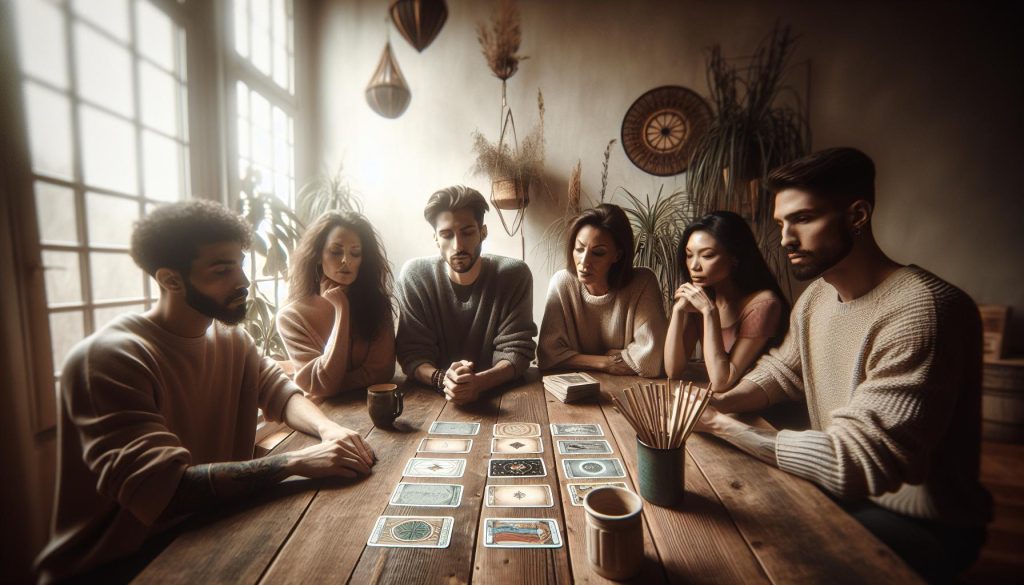
Have you ever wondered how tarot cards can seem to provide remarkably accurate insights into your life? Many seekers, skeptics, and enthusiasts are often left in awe of the profound clarity that can emerge from a simple card reading. Tarot’s power lies not just in the symbols and stories contained within the cards, but in the connection it fosters between the reader and the seeker. In this exploration, we’ll uncover the secrets behind tarot’s uncanny accuracy, revealing how intuition, personal context, and rich symbolism combine to offer guidance and understanding. Whether you’re curious about how it works or looking to enhance your reading skills, you’ll find valuable insights that resonate with your own experiences. Let’s embark on this journey together and demystify the magic of tarot.
How Tarot Cards Tap Into Intuition
Tarot cards possess an uncanny ability to resonate with our intuition, creating a bridge between the subconscious mind and the conscious world. This mystical art form taps into the emotions, thoughts, and energies that surround our lives, allowing us to uncover deeper layers of understanding. At its core, Tarot serves not just as a tool for divination but as a mirror reflecting our inner selves. When viewers approach the cards with an open heart and curious spirit, they often find clarity in confusion and answers to their most pressing questions.
One of the profound ways Tarot engages intuition is through imagery and symbolism. Each card holds metaphors that can resonate differently depending on the reader’s unique perspective and life experiences. For example, drawing the Two of Cups might speak to some about romantic connections, while for another, it could highlight the importance of friendship or partnership. This subjectivity allows both novice and seasoned readers to exercise their intuitive faculties, interpreting the messages that emerge during a reading.
Moreover, the process of shuffling and selecting cards can evoke a state of mindfulness, helping individuals tune into their feelings and thoughts. As the querent (the person asking the question) focuses on their inquiry, their emotional state can influence which cards are drawn, further aligning them with their deeper intuitions. This connection enhances the reading’s relevance, making it feel more accurate and personalized.
To harness the power of intuition in Tarot readings, set a clear intention before starting. Focus on what you wish to uncover, which can be as simple as seeking guidance on a specific relationship or exploring a career change. By anchoring your session in intent, the cards can guide you with greater precision. Trusting your instincts in interpreting the cards, whether you’re working solo or with a reader, leads to a more fulfilling experience.
In essence, Tarot is an invitation to engage with your inner wisdom. The magic lies not just in the cards themselves but in your ability to open up to what they reveal, transforming perceptions and better understanding personal journeys.
The Science Behind Tarot Accuracy

The accuracy of Tarot readings can often seem mysterious, yet it intertwines with psychology, intuition, and the unique energies of the querent (the person seeking guidance). At the heart of this phenomenon lies the concept of synchronicity-the meaningful coincidences that arise in our lives, which can manifest during a Tarot session. When you approach a reading with an open mind, you may find the cards drawn resonate deeply with your thoughts and feelings, revealing insights that align perfectly with your current life situation.
Research in psychology suggests that our brains are wired to seek patterns and meanings, which is a key component in how we interpret Tarot. The cards themselves-rich with symbols and narratives-act as prompts that can evoke personal memories and feelings. When you see a card like the Wheel of Fortune, it might remind you of a turning point in your life; thus, the card’s traditional association with change and cycles may resonate on a personal level. This subjective interpretation fuels the perception of accuracy, as it aligns the reading closely with the querent’s experiences and emotions.
Additionally, the state of mindfulness induced by the act of shuffling and focusing on the question at hand plays a crucial role. This mental clarity can enhance intuitive insights-allowing both the reader and the querent to tap into deeper levels of understanding. In practical terms, before a reading, take a moment to meditate on your question and visualize what you wish to gain from the session. This step not only sets a clear intention but also primes your mind to receive the insights the cards may offer.
Ultimately, the accuracy of Tarot readings stems from a blend of psychological dynamics, personal intuition, and the powerful symbolism inherent in the cards. By recognizing the interplay between your subconscious mind and the Tarot, you can not only enhance your reading experience but also cultivate a deeper connection with your own intuition, making the practice accessible and meaningful to anyone willing to explore it.
Understanding Tarot Card Meanings

To truly grasp the depth of Tarot, one must delve into the meanings behind the cards. Each card is a rich tapestry of symbols, archetypes, and narratives that can speak directly to your subconscious. For instance, drawing the Empress card may evoke themes of fertility, nurturing, and connection to nature, prompting reflections on your own life circumstances and relationships. These meanings are not just arbitrary; they stem from centuries of collective human experience and intuition that the cards encapsulate.
Exploring Card Meanings
involves approaching them as a conversation rather than a prescriptive set of guidelines. Here’s how you can engage with each card:
- Intuitive Reflection: Before consulting a guidebook, take a moment to look at the imagery on the card. Ask yourself what stands out to you. What feelings arise? This personal connection can often uncover deeper meanings.
- Symbolic Interpretation: Familiarize yourself with the traditional meanings of the cards, but see them as flexible. For example, the Tower is commonly associated with sudden change and upheaval, yet during a reading, it could symbolize a necessary clearing of the old to make way for the new.
- Context Matters: The position of a card in a spread significantly alters its interpretation. A card indicating challenge in one position may suggest opportunity in another, depending on the question posed.
By practicing these techniques, you cultivate a more holistic approach to readings. It helps not just to know each card but to feel them. You might find connections between different cards in your spread-like how the Lovers can highlight choices regarding relationships, which could relate back to insights gleaned from the Two of Swords, representing indecision.
Practical Application
To enhance your understanding, consider creating a personal Tarot journal. Record your insights about each card based on your readings. Over time, patterns will emerge, deepening your connection to the cards and expanding your intuitive abilities. For example, after a reading where the Sun card appears frequently, note how the themes of positivity and clarity play out in your life.
The world of Tarot is as vast as your imagination. Embrace the journey, remain open to possibilities, and trust that each card drawn is a narrative waiting to unfold-a unique lens through which you can view your experiences and aspirations.
Common Tarot Spreads and Their Purpose
Every Tarot reader, whether novice or experienced, benefits from using specific spreads in their readings. These layouts serve as frameworks to help organize your thoughts and insights, providing clarity on the questions that surface during a session. Different spreads are tailored for various inquiries, enabling you to delve deep into your concerns or explore broader themes. Here, we’ll explore some s, emphasizing how they can enhance the accuracy of your readings.
Three-Card Spread
The Three-Card Spread is one of the simplest yet most versatile layouts. Typically, it can represent the past, present, and future, allowing for a quick snapshot of a situation. Each card drawn in this spread offers insights into how past events have influenced the present moment and what potential outcomes may lie ahead.
For example, if you draw the Fool for the past, the Emperor for the present, and the Star for the future, it suggests a journey from new beginnings with a carefree spirit, moving into a time of stability and authority, ultimately leading to hope and inspiration.
Celtic Cross Spread
The Celtic Cross Spread is a classic and one of the most comprehensive layouts used in Tarot. It consists of ten cards, each positioned to reveal different aspects of the querent’s life and challenges. This spread provides a deep dive into complex issues, covering the forces at play, obstacles, and the eventual outcome.
For instance, if the center card (the present situation) is the Death card, it indicates transformation and change. The surrounding cards can provide context, illustrating what is being released and what new beginnings are emerging.
Relationship Spread
This spread is ideal for exploring interpersonal dynamics, whether they’re romantic, familial, or of friendship. It often includes cards that represent both parties, the relationship’s strengths, weaknesses, and future potential. By examining these elements, the reader can gain profound insights into how to enhance or navigate the relationship effectively.
Suppose you pull the Two of Cups to represent mutual respect and attraction between partners, paired with the Five of Wands indicating conflict. This combination may suggest that while there’s a strong foundation, unresolved tensions need to be addressed for the relationship to thrive.
One-Card Pull
For those seeking straightforward guidance or daily insights, a one-card pull is an excellent method. This approach reduces analysis paralysis and enables quick reflection on overarching themes for the day or clarity on a specific question.
When drawing a single card, note how it connects to your current emotional landscape. If you draw the High Priestess, it might encourage you to trust your intuition and inner wisdom for the day’s decisions.
Incorporating these spreads into your Tarot practice not only clarifies your focus but also enhances your confidence in interpreting card meanings. Each spread serves as a guide, illuminating different facets of your life or inquiries, leading to accurate and meaningful readings. As you grow more familiar with these layouts, you will likely notice how they complement your intuitive insights, leading to a more enriched Tarot experience.
Real-Life Examples of Accurate Readings
Real-life Tarot readings often astonish both the reader and the querent when they reveal insights that seem remarkably accurate or even eerily specific. These instances illustrate how Tarot can serve as a powerful tool for reflection and guidance. Through personal narratives, we can see how different spreads and cards provide profound clarity on life’s complexities.
One popular example comes from someone who sought a reading to navigate a turbulent career transition. During a three-card spread, the cards drawn were the Tower, the Eight of Cups, and the Three of Pentacles. The Tower indicated sudden change and upheaval, which resonated with the querent’s recent job loss. The Eight of Cups suggested the need to leave behind what no longer served them, guiding them toward a new path. Finally, the Three of Pentacles emphasized collaboration and building skills, affirming that seeking out a supportive team would lead to opportunities. Following this reading, they pursued further education and networked in their field, ultimately landing a role that felt more fulfilling.
Another poignant instance occurred during a relationship-focused reading, where the querent was feeling uncertain about their partnership. Utilizing a Relationship Spread, the cards drawn included the Two of Cups, the Five of Swords, and the Sun. The Two of Cups highlighted mutual attraction and connection, while the Five of Swords pointed to underlying conflicts and communication issues that needed to be addressed. The bright energy of the Sun spoke to the potential for joy and resolution. This reading helped the querent confront their partner about unresolved issues, resulting in a healthier dialogue and a deeper bond.
These examples are not mere coincidences; they underscore the magic of Tarot in connecting to one’s intuition and tapping into the collective unconscious. Each reading opens a dialogue between the cards and the querent’s personal experiences, making it an invaluable tool for self-discovery and planning for the future. Whether you’re a novice or seasoned reader, recognizing these moments of profound accuracy can greatly enhance your confidence in using Tarot as a guiding light.
Why Skeptics Are Often Surprised
Skeptics often find themselves astonished by the accuracy and insightfulness that Tarot readings can provide, particularly when they encounter a reading that resonates unexpectedly with their own life experiences. This surprise stems from a few key elements that make Tarot a powerful tool for reflection and guidance, even for those who approach it with doubt.
One significant factor is the intuitive aspect of Tarot. Each card embodies rich symbolism, and when combined in a spread, they create a narrative that is open to interpretation. Many skeptics report moments of profound clarity when a card seems to directly address a hidden aspect of their lives. For instance, someone might draw the Hermit, symbolizing introspection and solitude, which could spark a realization about their current need for self-reflection in a busy world. These moments can shift a skeptic’s perspective from dismissal to wonder, as the cards align with their personal truths in ways they hadn’t anticipated.
Additionally, Tarot readings often encourage self-exploration and highlight subconscious thoughts. When faced with their own questions or dilemmas, skeptics might be surprised to find the cards echoing their inner voices, leading to transformative insights. For example, a skeptic could be drawn to a spread that reveals patterns or themes in their relationships, such as repeated conflicts symbolized by the Five of Wands. This can prompt an examination of their behavior or beliefs, offering them a fresh lens through which to view their experiences, even if they initially approached the reading with skepticism.
The experience of the reading itself is another element that often catches skeptics off guard. The intimate and often revealing nature of discussions involving these cards can create a sense of connection that transcends disbelief. When a reader skillfully interprets a spread, articulating insights that resonate deeply, skeptics may find themselves considering the legitimacy of the insights rather than dismissing them outright.
Ultimately, these surprising moments reflect the deep-seated desire for understanding and clarity that we all share. Tarot can serve as a mirror to our subconscious, revealing truths we might not willingly confront. By blending intuition and symbolism, the cards create dialogues that can lead to meaningful revelations, making even the most doubtful individuals reconsider their stance on this ancient practice. Whether one heads into a reading curious, skeptical, or open-minded, the journey through the Tarot often uncovers layers of wisdom that encourage growth and self-awareness, demonstrating that magic can exist in the most unexpected places.
The Role of Intention in Tarot Readings
The power of intention is a fundamental aspect of Tarot readings that can significantly enhance accuracy and relevance. Intentions act as a guiding force, shaping not only the questions you ask but also the energy you bring into each session. When you approach a reading with a clear and focused intention, it creates a framework within which the cards can deliver powerful insights.
To harness this, begin by setting a specific intention before drawing any cards. Ask yourself what you truly seek to understand or uncover. This might be a question about a challenging relationship, career choices, or personal growth. For example, if you’re concerned about a decision at work, you might focus your intention on understanding the potential outcomes of that decision. This clarity will help the cards resonate more deeply with your circumstances.
Once you’ve established your intention, it’s essential to maintain an open mindset during the reading. This openness allows the intuition to flow freely, enabling meaningful connections between the intention and the interpretations of the cards. Consider the Two of Swords, which often symbolizes difficult choices. If your intention was to explore options, this card could reflect your internal conflict about the decision at hand. By recognizing how your intention influences the reading, you create a more engaging and relevant experience.
Another important tip is to remain aware of emotional states and distractions that could cloud your reading. Center yourself through breathing exercises or meditation before engaging with the cards. This practice solidifies your intention while clearing your mind of doubts and external noise, making room for intuition to shine. Remember, Tarot doesn’t just tell you what lies ahead; it opens a dialogue with your inner self. When guided by clear intentions, these insights become far more potent, enhancing your overall experience and understanding of the cards.
Enhancing Your Tarot Skills for Better Accuracy
To truly harness the power of Tarot and enhance your accuracy, it’s essential to practice foundational skills and develop a deeper intuitive connection with the cards. As you evolve in your Tarot journey, focus on creating a warm, inviting space for yourself, where curiosity can thrive. Begin each session by centering yourself. A simple breathing exercise can set the right tone; take deep breaths, visualizing your thoughts settling like leaves on a calm lake. This focus will clear mental clutter and help you approach your readings with openness.
Next, familiarize yourself with the meanings of the cards. Spend time with each one individually, not just reading the traditional interpretations but also journaling your personal impressions and feelings about the imagery. You might create a table like this to organize your insights:
| Card | Traditional Meaning | Personal Insights |
|---|---|---|
| The Fool | New beginnings, spontaneity | Represents my adventurous side, a push to take risks |
| The High Priestess | Intuition, unconscious knowledge | Symbolizes deep inner wisdom, guiding me toward hidden truths |
Understanding the cards on a personal level allows for a richer interpretation during readings. It’s also beneficial to practice different spreads, each designed to reveal various aspects of your life. For instance, a three-card spread can offer insights into the past, present, and future of a situation, helping you contextualize your readings more effectively.
Another powerful technique is to engage in regular readings-not only for yourself but also for friends or family. Sharing your interpretations can help solidify your understanding and build confidence. Discuss your readings openly, inviting feedback to refine your approach. The more you practice, the more intuitive your insights will become. Remember, the true accuracy of Tarot lies not only in the cards but in your connection to your intuition and the messages they convey. Allow these experiences to resonate within you, nurturing your skills and deepening your spiritual journey.
Tips for Trusting Your Intuitive Insights
You may underestimate the power of your gut feelings when reading Tarot, but these intuitive insights are often where the magic happens. Trusting your intuition can lead to more accurate readings, as it taps into your subconscious mind, which processes information differently than your logical thinking. To strengthen this connection, begin by creating a sacred space for your readings. This could be a quiet corner in your home or a cozy spot outdoors. The environment matters-make it tranquil and personal; such spaces can help you feel more in tune with your inner voice.
When you draw cards, take a moment to pause. Allow the images, colors, and symbols to wash over you without rushing to interpret their meanings. Observe your feelings and thoughts about each card, even those that seem irrelevant. Keep in mind that intuition often communicates through subtle nudges or sudden insights that can feel surprising or even uncomfortable. Consider journaling these impressions alongside your traditional card meanings. Over time, you’ll notice patterns in what resonates for you.
To build confidence in your intuitive abilities, incorporate regular practice into your routine. You might set aside time for a daily draw-one card to reflect on throughout the day. Notice how the card’s message plays out in your life. An example: if you pull the Ace of Cups, which signifies new emotional beginnings, pay attention to opportunities for connection or creative expression that arise. This practice not only reinforces your understanding of card meanings but also enhances your ability to recognize the nuances of your intuition as it relates to specific situations.
Lastly, remember to embrace uncertainty as part of the practice. Skepticism can creep in, especially when readings don’t align with our hopes or expectations. Allow yourself space to feel doubt without judgment. Engaging with fellow tarot enthusiasts can provide encouragement and different perspectives. Sharing experiences leads to valuable insights on trusting your intuition more fully. With each reading, strengthen your bond with your inner voice, welcoming both the clarity and the mystery that Tarot offers.
How to Interpret Card Combinations
Interpreting card combinations in Tarot can feel like piecing together a beautiful puzzle, where each card enriches the overall story presented by the reading. The interplay between individual card meanings can reveal deeper insights and enhance the accuracy of your readings. Learning to tune into these combinations involves practice and intuition, allowing you to weave narratives that resonate personally with you and your querent.
To begin, identify the primary theme of each card drawn. For instance, if you pull the Two of Cups alongside the Emperor, you may interpret this as a balance between emotional connections and structured authority in relationships. Here’s a brief process to guide you:
Steps to Interpret Card Combinations
- Begin with the Basics: Familiarize yourself with the meanings of each card. A well-worn Tarot guide or personal journal can be invaluable.
- Focus on Relationships: Consider how these cards interact. Are they supportive, contrasting, or enhancing each other’s messages? This relationship can guide your interpretation.
- Context Matters: Take note of the spread position. A card representing challenges in a future position might suggest upcoming obstacles, while one in the present position offers insight into current dynamics.
- Trust Your Intuition: Allow your gut feelings about the cards to guide you. If the imagery evokes a particular emotion or memory, lean into it. These insights are part of the intuition that makes Tarot reading so powerful.
Bringing these steps into real-life practice can enhance your understanding. Imagine drawing the Six of Pentacles along with the Knight of Cups. Here, you could interpret the Six of Pentacles as a symbol of generosity or balance in give-and-take relationships, while the Knight of Cups may represent a romantic or idealistic approach. Together, they might suggest a scenario where emotional generosity is rewarded or a call to embody kindness while pursuing romantic interests.
As you progress, pay attention to how combinations might bear different meanings based on varying contexts. For example, a combination that typically indicates conflict in a career reading might shift dramatically in a love reading. Make this exploration a fun and engaged part of your practice. By continuously experimenting with combinations and reflecting on their outcomes, your interpretative skills will deepen, revealing the extraordinary accuracy Tarot can offer when approached thoughtfully.
Cultural and Historical Influences on Tarot
The roots of Tarot run deep, intertwining with various cultural and historical threads that shape its practice today. Originating in the mid-15th century as playing cards in Europe, Tarot began its journey primarily within the context of entertainment and social gatherings. However, by the late 18th century, it evolved into a tool for divination and spiritual insight, influenced by mysticism, psychology, and a rich tapestry of symbolic interpretations. The transformation from mere cards to a profound spiritual resource reflects a collective quest for understanding the human experience.
Cultural influences significantly impacted the symbolism and themes present in Tarot decks. For instance, the incorporation of Egyptian, Kabbalistic, and alchemical symbols in certain decks illustrates how Tarot melded with the esoteric knowledge of these traditions. These integrations imbued the cards with layers of meaning, where each image captures the essence of broad archetypes spanning time and culture. The influence of the Renaissance, with its focus on humanism and individual exploration, also colored the imagery and interpretations of Tarot, inviting diverse personal insights and connections.
Different Tarot decks also reflect varying cultural beliefs and paradigms, showcasing a spectrum of interpretations. The vibrant colors and dynamic designs in contemporary decks attract a wide audience, including skeptics and seekers alike. These decks often aim to resonate with individuals’ present-day lives, suggesting that Tarot is not only a relic of the past but a living practice that adapts and evolves to meet the spiritual needs of its users. By embracing these historical and cultural influences, practitioners can enhance their readings, drawing on the wisdom of ages while expressing personal intuition.
As you engage with Tarot, consider how the historical context enriches your understanding of the cards. Each reading can become an exploration of not just the symbols before you but also the paths they have traveled through time. This connection can deepen your intuition and open new avenues for personal insights, allowing you to tap into the vast reservoir of collective human experience that Tarot encapsulates. Remember, regardless of your background or beliefs, the essence of Tarot lies in its ability to illuminate your journey with clarity and depth, affirming that these ancient cards are indeed relevant and accurate in today’s world.
The Future of Tarot: Trends and Innovations
The landscape of Tarot is evolving, reflecting broader trends in spirituality and personal development. As more individuals seek intuitive insights and self-discovery tools, Tarot has embraced innovations that cater to a diverse audience, from curious beginners to seasoned practitioners. One notable trend is the rise of digital platforms, where users can access virtual Tarot readings through apps and websites. This accessibility allows a wider audience to engage with Tarot, presenting an opportunity for new interpretations and uses of the cards.
Deck Diversity and Themes
Modern Tarot decks are increasingly reflecting our contemporary realities. Artists are breaking traditional molds, creating decks that resonate with various cultures, identities, and experiences. Whether it’s deck designs that incorporate diverse themes like feminism, astrology, or pop culture, there’s something for everyone. This inclusivity not only makes Tarot more relatable but also enriches the meanings behind the cards as each deck can bring new insights based on its cultural narrative.
- Diverse Artwork: Decks inspired by global art styles and cultural motifs.
- Thematic Decks: Decks centered around specific themes like mythology or nature, providing new dimensions for interpretation.
- Interactive Elements: Some decks include augmented reality features, enhancing the reading experience with digital content.
Community and Learning Resources
The rise of social media has also fostered vibrant communities dedicated to Tarot. These platforms allow enthusiasts to share readings, techniques, and tips, creating a collaborative learning environment. Online workshops and tutorials are helping to demystify Tarot for newcomers while providing advanced strategies for seasoned readers. Such communal learning encourages users to trust their intuition and develop personal interpretations of the cards, further enhancing the accuracy and relevance of their readings.
In this new era, Tarot’s adaptability ensures its continued relevance. By embracing technology, diversifying offerings, and promoting communal learning, the future of Tarot looks bright, inviting individuals from all walks of life to explore its depths. With this evolution, practitioners are empowered not only to interpret the cards more accurately but also to connect more deeply with their personal journey.
Frequently Asked Questions
Q: How do Tarot cards create personal connections during readings?
A: Tarot cards create personal connections through the reader’s intuition and the sitter’s energy. The imagery and symbols resonate with universal experiences, making each reading unique. Engaging with your card meanings on a personal level deepens this connection, enhancing the accuracy and relevance of the insights gained.
Q: Can anyone develop their Tarot reading skills?
A: Yes, anyone can develop their Tarot reading skills with practice and study. Start by familiarizing yourself with the card meanings, and work on your intuition through personal readings or journaling. Over time, consistency and reflection will improve your confidence and accuracy in readings.
Q: What techniques enhance the accuracy of Tarot readings?
A: Techniques that enhance accuracy include focused intention, meditation before readings, and using spreads that suit specific inquiries. Practicing mindfulness and staying open to intuitive insights during the reading can also significantly increase the relevance and clarity of the messages received.
Q: Why do some people claim Tarot readings are inaccurate?
A: Some claim Tarot readings are inaccurate due to skepticism regarding their spiritual aspects or the reader’s skill level. Additionally, unreliable interpretations or personal biases can affect the reading. A strong foundation in the Tarot’s symbolism and focused intuition helps mitigate these issues.
Q: How does the context of a question influence Tarot accuracy?
A: The context of a question greatly influences Tarot accuracy, as specific, clear inquiries lead to more insightful interpretations. When a question is framed with detail and intention, the cards drawn can provide relevant guidance, making the answers resonate deeply with the querent’s situation.
Q: What is the significance of intuition in Tarot accuracy?
A: Intuition plays a crucial role in Tarot accuracy, as it allows the reader to interpret card meanings beyond their standard definitions. Tapping into inner guidance fosters deeper connections with the cards and the querent, resulting in more precise insights and tailored advice for the situation at hand.
Q: How can journaling improve my Tarot reading practice?
A: Journaling can significantly improve your Tarot reading practice by recording insights, experiences, and evolving interpretations. Reflecting on past readings helps identify patterns and enhances your understanding of card meanings, ultimately boosting your confidence and accuracy in future sessions.
Q: What impact does the reader’s mindset have on Tarot readings?
A: The reader’s mindset greatly impacts Tarot readings. A clear, positive mindset fosters openness, allowing for intuitive insights to flow freely. Conversely, a cluttered or negative mindset can cloud interpretation, leading to less accurate readings. Regular grounding exercises can enhance clarity and focus during readings.
Future Outlook
As we uncover the mysteries behind the accuracy of tarot cards, remember that your intuition plays a crucial role in your readings. Whether you’re new to tarot or a seasoned reader, each spread offers unique insights tailored just for you. If you’re curious about diving deeper, explore our guide on how to perform a 3-card tarot career reading here, or check out our comprehensive tarot basics here.
Your journey into tarot doesn’t have to stop here. Share your thoughts in the comments, or sign up for our newsletter to stay updated on the latest insights and techniques to enhance your readings. Embrace the magic of tarot and unlock your intuitive potential today-after all, the secrets are just a card draw away!


