

Have you ever wondered where tarot cards originated? The journey of tarot cards is as fascinating as the insights they provide. Often seen as mystical tools for divination, their history is rich and layered, stretching back centuries. Understanding who invented tarot cards reveals not just the origins of a beloved spiritual practice but also connects us to the diverse tapestry of human experience and belief.
In this exploration, we’ll uncover the surprising historical roots of the tarot, revealing how they evolved from simple playing cards into powerful symbols of intuition and self-discovery. Whether you’re a seasoned reader or a curious newcomer, this journey into the past will deepen your appreciation of tarot’s significance in guiding our lives today. Join us as we delve into the intriguing origins of tarot cards, and perhaps reignite your own intuitive spark along the way.
Origins of Tarot Cards: A Historical Overview
The history of tarot cards is as rich and complex as the imagery within each card itself. Emerging in the 15th century, tarot cards were initially created not as tools for divination but as playing cards for a game known as tarocchi in Italy. These early decks featured elaborate illustrations and themes that reflected the society and culture of the time, showcasing art and craftsmanship. The cards gradually evolved, incorporating symbolic meanings that transitioned them from mere pastimes to spiritual guides.
As the cards spread across Europe, various versions developed, notably the Tarot de Marseille in France and the Visconti-Sforza deck, which is one of the oldest surviving examples. By the 18th century, scholars and mystics began to associate tarot with ancient knowledge and spirituality, laying the groundwork for its use in divination. This shift in perception marked a pivotal moment in tarot history, elevating it from a game to a tool for introspection and spiritual exploration.
The enigmatic nature of tarot is deeply linked to its roots in various cultural practices. The symbolism found in the cards often draws from diverse traditions, including astrology, Kabbalah, and alchemy. This blend of influences contributes to tarot’s distinctive character, making it a versatile instrument for personal insight. The practice evolved alongside the rise of occult movements in the late 19th and early 20th centuries, signaling a broader acceptance of tarot as a serious tool for divination and self-reflection.
Today, tarot is embraced by a wide range of people, from those merely seeking entertainment to spiritual seekers diving deep into its mystical applications. Whether you approach it with skepticism or belief, the origins of tarot cards offer a fascinating glimpse into how a simple deck of cards transformed into a global phenomenon, inviting anyone to explore its depths and wisdom.
The Evolution of Tarot Decks Through Time

The journey of tarot decks is a fascinating testament to the evolution of art, culture, and spirituality. Emerging in the 15th century, what began as ornately designed playing cards for games slowly morphed into the rich tapestry of divination tools we know today. Each era and region infused its unique aesthetic and symbolic depth into tarot, reflecting the ever-changing landscape of societal values and beliefs.
In the early days, decks like the Visconti-Sforza, created for the nobility, showcased lavish hand-painted designs, often steeped in allegorical and political themes. As tarot spread across Europe, particularly to France and Germany, the designs began to vary widely, leading to the emergence of the Tarot de Marseille, which became a cornerstone of tarot tradition with its straightforward yet striking imagery. These early decks served dual purposes: they were enjoyed as playing cards and, unbeknownst to their players, laid the groundwork for the spiritual practices that would later develop.
By the 18th century, scholars such as Antoine Court de Gébelin began framing tarot as a mystical tool imbued with ancient wisdom. This period marked a pivotal transition, where the cards were no longer just for entertainment but were embraced by esoteric traditions. The Rider-Waite-Smith deck, published in 1909, became a landmark in tarot history, introducing imagery that conveyed specific meanings within each card and significantly influencing modern tarot practices.
Today, tarot decks come in myriad forms, influenced by various cultures, art styles, and personal experiences. Whether it’s an oracle deck with whimsical illustrations or a more traditional tarot set, each offers unique insights and interpretations. As you explore choosing your first deck, consider what resonates with you personally. The imagery, themes, and artistic style should inspire you, as the goal is to create a meaningful connection with the cards.
Ultimately, the evolution of tarot decks invites everyone-whether a curious novice or a seasoned reader-to engage with this timeless practice. By understanding the historical context and the transformations the decks have undergone, you can appreciate the depth and richness that tarot has to offer in both divination and personal reflection.
Key Figures in the History of Tarot Card Creation
Throughout history, numerous individuals have significantly influenced the creation and evolution of tarot cards, shaping what began as simple playing cards into a deep and complex tool for divination and personal insight. Among these key figures is Antoine Court de Gébelin, an 18th-century scholar whose work propelled tarot into the realm of mysticism. He was one of the first to argue that tarot cards were derived from ancient Egyptian wisdom, suggesting they held profound esoteric secrets. This idea, although later discredited, sparked widespread interest and curiosity about tarot’s mystical associations and established a framework that many modern practitioners still reference.
Another pivotal figure is Oswald Wirth, a French occultist who, in the late 19th and early 20th centuries, created a new tarot deck infused with esoteric symbolism and meaning. Wirth’s designs emphasized the spiritual and transformative aspects of tarot, moving away from mere entertainment to a serious tool for self-exploration and divination. His work inspired countless other tarot decks, setting a precedent for the rich imagery and thematic depth that modern readers expect.
The contributions of Arthur Edward Waite cannot be overlooked. In collaboration with artist Pamela Colman Smith, he created the Rider-Waite-Smith deck, which debuted in 1909. This deck revolutionized tarot reading by introducing explicit symbolic imagery on every card, making it more accessible to both novice and experienced readers alike. The Rider-Waite-Smith deck provided a visual language that helped countless individuals interpret the cards’ meanings, promoting a deeper connection to the tarot practice. Waite’s focus on the psychological aspects of tarot also paved the way for therapy-based applications of the cards in modern practice.
Finally, Aleister Crowley, a controversial figure in the early 20th century occult movement, introduced his own deck, the Thoth Tarot. Crowley’s interpretations were heavily influenced by various esoteric and mystical traditions, incorporating intricate symbols and complex meanings. His work highlighted tarot’s adaptability as a mystical tool, capable of evolving with the times and incorporating various spiritual philosophies.
These figures are just a few among many who have contributed to the rich tapestry of tarot’s history. Each has added layers of meaning and interpretation, enabling tarot to flourish as a tool for reflection and insights. As you explore tarot, consider how these historical influences have shaped the cards you work with today, inviting you to connect with this ancient practice in a personal and meaningful way.
Early Tarot Games: From Playing Cards to Divination
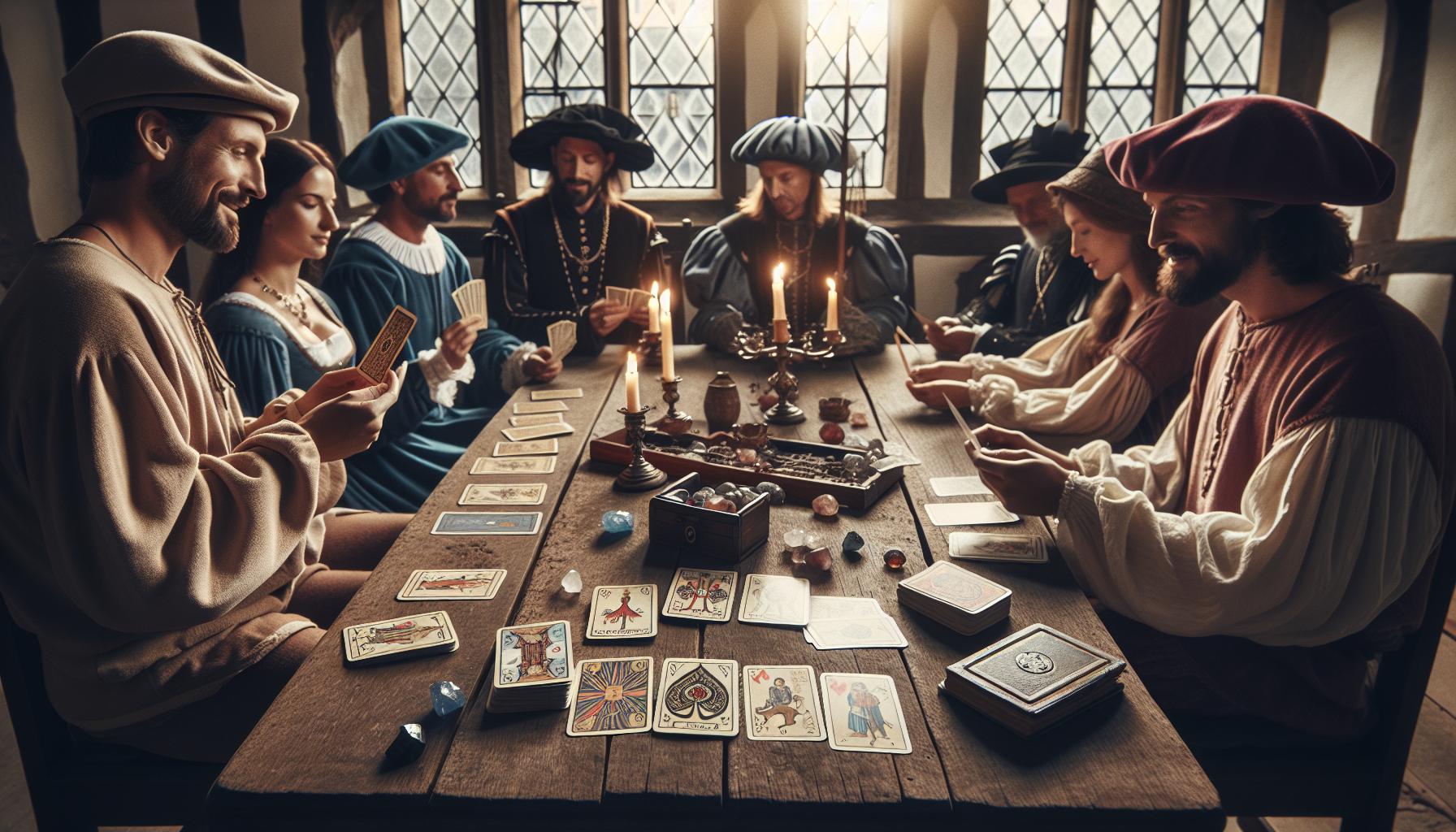
The journey of tarot cards from simple recreational tools to revered instruments of divination is a fascinating story that encapsulates centuries of cultural evolution. Initially, tarot cards emerged in the 15th century in Europe as elaborate playing cards designed for noble games. These early decks, known as “tarocchi,” were often luxurious, featuring beautiful artwork and intricate designs that reflected the artistic styles of the period. The gameplay centered around tricks and points, similar to modern card games, but they also incorporated a unique structure of trumps and suits, which set the stage for their eventual mystical transformation.
As the popularity of card games spread across Europe, so too did the tarot’s mystique. By the 16th century, tarot decks began to be associated with esoteric meanings, primarily due to the symbolic imagery used in the cards. Players sometimes infused their decisions during games with personal insight, leading to an early form of divination. This duality-of being both a recreational card set and a potential tool for reflection-crafted a paradigm where the cards were linked to both fortune and fun.
With time, the use of tarot for divination became more pronounced. In the 18th century, philosophers and mystics began to explore the tarot’s deeper meanings. Occult thinkers like Antoine Court de Gébelin argued that these cards held ancient wisdom and were steeped in rich, esoteric traditions. This marked a turning point where tarot moved beyond playful pastimes, entering a realm of spiritual exploration and psychological insight. People started to use tarot not just for games but as a means of gaining clarity in their lives. They began adopting techniques for interpreting cards in various spreads, viewing them as guides to understand personal circumstances and universal truths.
In this evolving tapestry, early tarot games were more than just entertainment. They fostered a culture where intuitive knowledge could flourish. As you engage with your tarot practice, remember that this rich history offers a foundation. Each card carries centuries of layered meanings, inviting you to explore your instinct and connect with the wisdom of those who played-and pondered-before you. Embrace the journey of discovery, whether you seek to play, predict, or simply to reflect. Tarot is a bridge between the mundane and the mystical, welcoming all who wish to cross it.
Cultural Influences on Tarot Card Development
The evolution of tarot cards has been deeply influenced by various cultural currents throughout history. Originating in 15th century Europe as a form of playing cards, tarot soon absorbed elements from diverse traditions, including mysticism, mythology, and the occult. The artistic expressions found in tarot decks have also mirrored shifts in cultural aesthetics, community beliefs, and historical events. This adaptability not only contributed to the cards’ enduring popularity but also enriched their symbolism, making each deck a canvas of historical narrative.
One of the most significant came from the Renaissance, a period rife with artistic and philosophical exploration. This era saw the fusion of ancient knowledge with contemporary thought, leading to the incorporation of hermeticism and cabbalistic teachings into tarot. Cards began to reflect not just gameplay but the esoteric wisdom of the time, effectively evolving into tools for divination and self-exploration. The imagery of the Major Arcana, for instance, encapsulates archetypes that resonate with alchemical symbolism and mythological figures, showcasing an exceptional blend of cultural heritage and intellectual pursuit.
Another crucial aspect of tarot’s cultural journey is the influence of various religious and mystical traditions. Early decks bore elements from Catholic iconography and medieval mysticism, which helped shape the psychological and spiritual interpretations of the cards. The integration of symbolism from Egyptian, Hindu, and even Native American traditions added layers of meaning, reflecting a universal quest for understanding and guidance. As tarot reading became more popular in the 18th century, the association with the occult further solidified, with figures like Eliphas Lévi positing that tarot served as a bridge between the seen and unseen worlds.
With the rise of modern spiritual movements in the 20th century, tarot embraced even more diverse influences, including psychology and new-age beliefs. This period fostered a democratization of tarot, inviting people from various backgrounds to explore their intuitive powers. Today, tarot decks often incorporate contemporary art styles and themes, catering to a global audience while maintaining the historical depth that makes them unique. Each new deck is a blend of influences, harmoniously connecting the past with the present while encouraging individuals to tap into their wisdom and intuition.
Incorporating these cultural reflections into your tarot practice can enhance your readings. Consider the origins and meanings of your favorite cards and how they resonate with modern themes in your life. Embracing the multifaceted nature of tarot empowers you not only to understand the cards but also to engage with them on a deeper, more personal level, bridging your experiences with the rich tapestry of history they represent.
The Mysticism Behind Tarot: Symbolism and Meanings
The rich tapestry of tarot transcends mere card games; it embodies a profound philosophical journey offering insights into the human experience. Each tarot card is imbued with layers of meaning and symbolism that resonate deeply within the collective psyche. To truly appreciate this intricate framework, it’s essential to understand that the mysticism behind tarot is not just about interpreting the cards but also about connecting with their deeper contents and the energies they represent.
At the heart of tarot’s mystique lies its symbology, where images and archetypes communicate narratives of life, transformation, and growth. The Major Arcana, for instance, consists of 22 cards that represent significant life lessons and spiritual growth. Cards like The Fool symbolize new beginnings and potential, while The Tower invites reflection on chaos and disruption, prompting necessary change. Here, understanding the symbolism extends beyond the immediate visuals; it involves conscious engagement with the feelings and thoughts each card evokes.
Exploring Symbolism in Tarot
The visual elements in tarot cards often draw from a diverse range of cultures, philosophies, and spiritual traditions. For example, the imagery may include elements from alchemy, numerology, or even astrological associations. This rich diversity creates a multidimensional lens through which to interpret the meanings hidden within the cards.
Consider the suit of Cups, typically associated with emotions and relationships. Each card in this suit captures different aspects of emotional experiences-love, heartbreak, joy, and sorrow-all presented through symbolic images such as chalices or flowing water. These symbols invite introspection and encourage readers to tap into their own emotional landscapes.
Unlocking the Magic of Interpretation
When reading tarot, balance your focus between personal intuition and the traditional meanings. Beginners may benefit from keeping a tarot journal to document their interpretations and feelings associated with each reading. This practice not only builds familiarity but also fosters a deeper connection to the symbolism.
For those ready to advance their interpretation skills, consider employing spreads that facilitate broader perspectives. A three-card spread, for example, may illuminate aspects of a situation-past, present, and future. As each card is placed, observe how their meanings interact and reveal a cohesive narrative, allowing you to weave together insights that may not be immediately visible when viewed in isolation.
Embracing the mysticism of tarot is ultimately about personal exploration and understanding. Whether you are a committed believer or a curious skeptic, the insights gained through tarot can serve as a powerful tool for self-discovery. Engaging with the symbolism invites you to become a co-creator in your journey, blending intuition with knowledge in a way that is uniquely yours. Let each reading unfold as an opportunity to connect, learn, and grow, transforming the mystical into the practical.
How Tarot Cards Became Tools for Fortune Telling
Tarot cards, originally crafted for playing games in the 15th century, gradually evolved into powerful tools of divination and self-reflection. This fascinating transformation occurred through a complex interplay of cultural shifts, spiritual interests, and the human desire to seek guidance about the future. Initially seen purely as entertainment, tarot began to gain a mystical reputation, drawing the attention of those seeking deeper insights into life’s mysteries.
The pivot from gaming to divination was significantly influenced by the Renaissance’s burgeoning interest in esoteric traditions. As scholars delved into ancient texts surrounding mysticism and spirituality, they began to interpret the imagery on tarot cards for fortune-telling. The cards became more than just symbols of earthly pleasures; they turned into pathways to understanding fate and personal destiny. This shift was epitomized by figures such as Antoine Court de Gébelin, who, in the 18th century, posited that tarot cards contained hidden wisdom from ancient Egypt. His views catalyzed the perception of tarot as a spiritual tool rather than just a deck of playing cards.
With this newfound recognition, the tarot evolved into a system of self-exploration. Readers started using the cards to explore questions about relationships, career, and personal challenges. The Major and Minor Arcana were seen as representing different aspects of life experiences. For instance, drawing The Lovers might suggest important decisions in relationships, while The Wheel of Fortune could indicate changes in one’s life cycle. This symbolic depth turned tarot readings into engaging, insightful experiences, allowing individuals to reflect on their circumstances and explore possible outcomes.
Today, tarot is embraced by both skeptics and believers for its versatility. Whether used for casual inquiries or profound life questions, the cards provide a canvas for reflection and intuition. As you engage with tarot, consider the context of your query and how the meanings of the cards may resonate with your personal journey. This spirit of inquiry not only demystifies the process but also empowers individuals to find clarity and direction through the rich tapestry of tarot.
The Connection Between Tarot and Astrology
The intricate relationship between tarot cards and astrology offers a fascinating lens through which to explore both disciplines. Both systems are rooted in ancient wisdom, providing seekers with insights into human experience and the mysteries of life. Astrology, with its celestial bodies and zodiac symbols, shares a profound connection with the imagery and archetypes found in tarot. For many, understanding this connection enhances their readings, creating a richer narrative intertwined with both the stars and the cards.
Each tarot card corresponds to astrological signs and planetary influences, deepening the meanings in a reading. For instance, The Fool, often associated with new beginnings, resonates with the energy of Uranus, representing change and unpredictability. Similarly, The Empress is linked to Venus, signifying love, beauty, and nurturing qualities. By identifying these connections, you can draw from both tarot and astrology to gain comprehensive insights into your questions and circumstances.
In a practical sense, consider incorporating astrological insights into your tarot practice. Start by identifying your zodiac sign and the corresponding cards. For example, if you’re a Gemini, you might resonate with The Lovers and The Magician. When reading for yourself or others, take note of these associations; it might illuminate aspects of personality or situations you hadn’t previously considered.
To further enhance your readings, explore the timing of your inquiries in relation to astrological events. Certain tarot cards may reveal more profound meanings during specific lunar phases or planetary transits. For example, a question about relationships during a Venus retrograde could yield insights about past connections or unresolved issues. By balancing tarot and astrology, you’re invited to journey through your experiences with greater depth and clarity.
Modern Tarot: Trends and New Interpretations
The world of tarot is once again experiencing a renaissance, captivating a new generation with its blend of ancient wisdom and contemporary relevance. Today, tarot goes beyond mere divination; it’s an artistic and therapeutic tool embraced by many for self-discovery and healing. Among the current trends, there’s a notable shift towards inclusivity and personalized interpretations, making tarot accessible to everyone, regardless of background or beliefs.
Modern tarot decks are now diverse and reflect a wide range of cultural and personal themes. Artists are creating decks that resonate with various identities, experiences, and spiritual perspectives, which encourages users to find personal meaning in the cards. For example, decks inspired by specific mythologies, social movements, or even popular media are emerging, allowing practitioners to connect on a deeper emotional level. This shift in design emphasizes that tarot is not a one-size-fits-all system but rather a flexible medium for introspection.
Another significant trend is the integration of tarot within wellness practices, such as mindfulness and coaching. Many are utilizing tarot not just for insight but as a complementary practice to traditional therapeutic methods. By incorporating card readings into self-care routines or counseling sessions, individuals can unlock deeper understanding and engage in more profound conversations about their life’s path. Techniques such as journaling about card insights or utilizing tarot spreads designed to address specific life questions or challenges have gained popularity, empowering users to actively participate in their healing journeys.
Moreover, technology is playing a transformative role in modern tarot practice. Mobile apps and online tarot communities foster connection and allow users to learn at their own pace. Digital readings, whether through video calls with a reader or automated apps, provide accessibility that earlier generations of tarot practitioners could only dream of. This tech-savvy approach encourages exploration and removes barriers to entry, inviting skeptics and enthusiasts alike to engage with tarot in innovative ways.
As tarot continues to evolve, it maintains a core principle: the cards are a mirror to our conscious and subconscious selves. By honoring this ancient relationship while embracing modern interpretations, tarot becomes a living, breathing tool for navigating our complex lives-rooted in history but consistently reinvented for today’s seekers.
How to Choose Your First Tarot Deck
Choosing the right tarot deck can feel like a mystical journey in itself, especially for beginners keen to connect with the essence of these ancient cards. With a vast array of decks inspired by different cultures, art styles, and spiritual philosophies, it can be overwhelming to select that first deck. One exciting aspect of tarot’s rich history is that it offers countless possibilities for personal expression and exploration.
Begin by considering the artwork and symbolism that resonates with you. Each tarot deck has its own unique style and theme, ranging from the classic Rider-Waite-Smith to modern interpretations featuring diverse imagery. As you explore options, look for decks that speak to your personal aesthetic and spiritual inclinations. Ask yourself:
- Do I prefer traditional imagery or contemporary designs?
- Am I drawn to a specific theme, like nature, mythology, or even pop culture?
- Does the size and card stock feel comfortable in my hands?
Next, it’s important to consider what you hope to achieve with your tarot practice. Are you seeking guidance for personal reflection, or are you interested in using tarot for reading others? Some decks are particularly friendly for beginners due to their clear imagery and straightforward symbolism, while others may require more in-depth knowledge to interpret. For example, the Radiant Rider-Waite deck is often favored by newcomers for its traditional representations and companion guidebooks that explain each card’s meaning.
Finally, don’t underestimate the power of intuition in your decision. When you hold a deck for the first time, allow yourself to tune into your initial reactions. Does the energy feel warm and inviting? This intuitive connection can often guide you toward the right choice. Remember, there is no “wrong” deck; the best one is the one that speaks to you and makes you feel excited to dive into your tarot journey. Embrace the wisdom that each deck can offer and trust your instincts to make a choice that feels right for you. With your deck in hand, you’re ready to embark on a transformative journey through the cards!
Beginner’s Guide to Reading Tarot Cards
Reading tarot cards is both an art and a science, deeply embedded in a rich history that intertwines culture, symbolism, and intuition. As you embark on this journey of exploration, it’s essential to remember that there are no strict rules; your unique connection with the cards is what truly matters. Here are some fundamental steps and insights to get you started confidently.
Begin by familiarizing yourself with the 78 cards in the typical tarot deck. The deck is divided into two main sections: the Major Arcana and the Minor Arcana. The Major Arcana consists of 22 cards, each representing significant life themes and spiritual lessons, while the Minor Arcana is composed of 56 cards divided into four suits, each reflecting day-to-day events and experiences. Understanding these distinctions will help you navigate the cards more effortlessly.
Learning Card Meanings
Start by learning the basic meanings of the cards. Here’s a simple approach to aid your memory:
- Major Arcana: Focus on the key themes, such as The Fool (new beginnings), The Empress (abundance), and The Tower (sudden change).
- Minor Arcana: Pay attention to the suits: Cups (emotions), Swords (thoughts and conflict), Wands (action and creativity), and Pentacles (material aspects). Each number (Ace to Ten) has its significance.
It’s helpful to create a small cheat sheet with key phrases or images that resonate with you personally.
Shuffling and Drawing the Cards
When you’re ready to read, take a moment to set your intention. You can ask a specific question or simply invite general guidance. Shuffle the deck while focusing on your intent, then draw the cards as you feel guided. Common drawing methods include:
- Single Card Pull: Great for daily insights or a quick perspective on a situation.
- Three-Card Spread: Typically represents the past, present, and future regarding your question.
- Celtic Cross: A more elaborate spread that provides a comprehensive view of the situation.
Feel the energy of each card as you place it down and take your time to interpret the connections between them.
Intuitive Interpretation
While it’s important to know the standard meanings, allow your intuition to guide your interpretations. Look for symbols, colors, and imagery that resonate with you. For example, if you draw the Two of Cups, you might immediately think about relationships, but also consider how it relates to your current life situation-perhaps it’s a reminder to foster a connection or to seek balance in friendships.
As you practice, journal your readings. Not only will this enhance your understanding over time, but it also allows you to reflect on how your interpretations evolve as your connection with the cards deepens.
Approach tarot with an open heart and mind. It’s a journey of self-discovery and empowerment, welcoming both believers and skeptics. Every reading is a step toward understanding not just the cards, but yourself as well. Trust that the insights you gain through reading will illuminate your path, and remember-there’s no right or wrong way to read tarot, just your way. Enjoy the magic that unfolds!
Advanced Tarot Techniques: Spreads and Interpretations
Delving into advanced tarot techniques can significantly enhance your readings, allowing for deeper insight and nuanced interpretations. Understanding various spreads-arrangements of cards that serve different purposes-empowers you to ask more complex questions and uncover layered meanings in a reading. From traditional spreads to innovative adaptations, knowing how to effectively utilize these layouts is key to evolving your tarot practice.
One of the most celebrated spreads is the Celtic Cross, consisting of ten positions that offer a comprehensive view of the querent’s life and concerns. The positions provide insights into the present situation, challenges, past influences, and future outcomes. To draw a meaningful reading from this spread, begin by laying the cards down in the correct order, and then interpret each card within its context. For instance, if the card representing future influences is The Sun, it might suggest upcoming positivity and clarity after a turbulent period.
Another insightful option is the Relationship Spread, consisting of cards that explore the dynamics between two individuals. Typically, you might draw one card to represent yourself, one for the other person, and a third for the relationship itself. This method reveals not only individual perspectives but also shared energies and potential challenges. A card like the Two of Cups in this position often indicates harmony and mutual respect, suggesting a flourishing partnership.
Don’t hesitate to create your own custom spreads tailored to specific queries or themes. Designing spreads can reflect your evolving understanding of tarot and deepen your intuitive connection. For example, if you’re exploring career changes, you might arrange cards focused on your current job, skills you possess, fears holding you back, and the opportunities ahead. This approach makes your readings more personal and directly relevant to your experiences.
Lastly, maintaining a journal of your spreads and interpretations can enrich your tarot practice. As you log the cards drawn in different readings, note any patterns or synchronicities that emerge over time. This practice not only reinforces your learning but also strengthens your intuitive abilities, allowing you to become more attuned to the insights hidden within the cards. Remember, the true magic of tarot lies not only in the cards themselves but in the dialogue you create with them through your interpretation and understanding.
Faq
Q: What are the earliest known tarot cards, and when were they created?
A: The earliest known tarot cards date back to the 15th century, specifically around the year 1440. These historical decks, known as the Visconti-Sforza tarot cards, were crafted for the nobility in Italy. To explore their intricate designs and cultural significance, check out the section on “Origins of Tarot Cards” in our article.
Q: How did tarot cards transition from games to divination tools?
A: Tarot cards transitioned from games to divination tools in the 18th century, largely due to the rise of mysticism and the occult. Initially used for playing card games, they began to be associated with fortune-telling and spiritual practices. For more details on this evolution, refer to our section on “How Tarot Cards Became Tools for Fortune Telling.”
Q: Who are some key figures in the history of tarot card development?
A: Key figures in tarot history include Antoine Court de Gébelin, who promoted their mystical significance in the late 1700s, and A.E. Waite, who created the influential Rider-Waite tarot deck in 1909. For a deeper dive into their contributions, see our section on “Key Figures in the History of Tarot Card Creation.”
Q: Why do tarot cards have different suits, and what do they represent?
A: Tarot cards traditionally feature four suits: Cups, Wands, Swords, and Pentacles. Each suit represents different aspects of human experience-emotions, actions, thoughts, and material matters respectively. For a comprehensive understanding of each suit, explore our guide on “A Guide to the 4 Tarot Suits.”
Q: What cultural influences shaped the designs of modern tarot cards?
A: Modern tarot cards are influenced by a variety of cultures, especially through the blend of Renaissance art, Kabbalistic mysticism, and European folkloric traditions. This melting pot of influences contributes to the diverse imagery seen in contemporary decks. Check out the “Cultural Influences on Tarot Card Development” section for more insights.
Q: How has the interpretation of tarot cards changed in recent years?
A: In recent years, interpretations of tarot cards have become more accessible and inclusive, focusing on personal empowerment and self-reflection rather than solely on fortune telling. This shift is reflective of broader societal changes towards spirituality and mental health. For trends on this evolution, see our section titled “Modern Tarot: Trends and New Interpretations.”
Q: What is the significance of Major versus Minor Arcana in tarot readings?
A: The Major Arcana cards signify major life events and spiritual lessons, while the Minor Arcana reflects everyday experiences and challenges. Together, they provide a comprehensive view of one’s life journey. To learn more about card meanings, refer to our section on “The Mysticism Behind Tarot: Symbolism and Meanings.”
Q: When and how did tarot cards gain popularity outside of Europe?
A: Tarot cards gained popularity outside of Europe in the late 20th century, particularly as interest in alternative spiritual practices surged in North America and beyond. Their use expanded into realms of meditation and personal growth, making them widely accessible. For a historical context, visit our article on “The Evolution of Tarot Decks Through Time.”
Concluding Remarks
As we unravel the fascinating history of tarot cards, remember that this rich tapestry of art and culture invites you to explore further. Discover how the symbolism and meanings of each card can illuminate your journey in life. If you’re eager to dive deeper into tarot practices, check out our guide on 3-Card Tarot Reading for insightful guidance on love and career decisions. Don’t forget to visit our section on Daily Horoscopes to align your personal reflections with astrological movements.
Now is the perfect time to harness the power of tarot in your life. Whether you’re a novice or seasoned reader, start experimenting with your own interpretations and spreads today. We’d love to hear your thoughts-share your insights in the comments below! For more enlightening content, consider signing up for our newsletter to stay connected with the mystical world of tarot. Explore, engage, and let the journey unfold!


