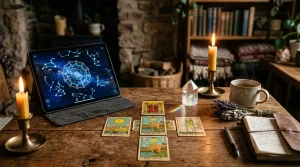
Have you ever wondered if Tarot can truly predict the future? Many people seek guidance from the cards, hoping to unveil hidden paths or foresee upcoming challenges. While some dismiss Tarot as mere superstition, others find profound clarity and insight through its ancient symbols. This exploration of Tarot’s ability to predict the future is not just for the curious; it addresses a universal human need-the desire to understand our journey and the choices before us. In this article, we’ll delve into the truths and myths surrounding Tarot readings, offering a balanced perspective that respects all beliefs. Whether you’re a skeptical newcomer or a seasoned reader, you’ll find valuable insights that could enhance your intuitive abilities and deepen your connection with this mystical tool. Let’s embark on this journey together and reveal what Tarot really has to offer!
Can Tarot Really Predict Your Future?
When we think about whether Tarot can truly predict our future, it’s important to recognize that the cards serve more as a guide than a crystal ball. Rather than providing definitive answers or unchangeable predictions, Tarot readings offer insights into potential outcomes based on current energies and decisions. The beauty of Tarot lies in its ability to provide context and illuminate paths before us, inviting us to reflect on our choices and the directions we might take.
In a Tarot reading, each card represents different aspects of our lives, ranging from interpersonal relationships to career decisions. For instance, drawing the Fool card might suggest a time of new beginnings, encouraging you to embrace spontaneity and trust the journey ahead. In contrast, the Tower could indicate sudden change or upheaval, prompting you to prepare for shifts in your current situation. Understanding these meanings can empower you to navigate your future with more awareness and intention.
When considering how to interpret the cards, it’s crucial to engage with your own intuition. The Tarot acts as a mirror, reflecting your inner thoughts and feelings. This aspect of the reading makes it less about predicting a fixed outcome and more about recognizing the shifts in your emotional and mental landscape. A skilled reader will encourage you to explore your feelings about each card drawn, integrating personal insights to craft a narrative that feels authentic.
While Tarot is undoubtedly a powerful tool for reflection, it’s essential to adjust your expectations. The cards provide guidance but do not dictate fate. Personal circumstances, free will, and the choices you make based on the insights gained from your reading will ultimately shape your future. Embracing this perspective allows you to approach your Tarot experience with openness, ready to harness the wisdom it offers to chart your own course forward.
Understanding Tarot: A Brief Overview

Understanding Tarot offers a gateway into a rich tapestry of symbols and archetypes that have captivated minds for centuries. At its core, Tarot is a tool for introspection and guidance, comprising a deck of 78 cards divided into two main parts: the Major Arcana and the Minor Arcana. The Major Arcana includes 22 cards that represent significant life experiences and spiritual lessons, such as The Fool, The Lovers, and The World. These cards often point to pivotal moments or profound transformations in one’s journey. Meanwhile, the Minor Arcana consists of 56 cards that reflect daily experiences and the ebb and flow of everyday life, categorized into four suits: Cups, Wands, Swords, and Pentacles. Each suit conveys different themes-emotions, actions, intellect, and material aspects, respectively.
It’s essential to recognize that Tarot is not about predicting an unchangeable future but rather illuminating possibilities and potential outcomes based on current circumstances. When you draw a card, you’re invited to explore its meaning in the context of your life. For instance, drawing the Two of Cups might suggest an opportunity for a meaningful relationship or partnership that could be on the horizon. In contrast, the Five of Swords could indicate conflict or tension that needs to be resolved. Thus, each card serves as a reflective mirror, tapping into your intuition and the energies surrounding you, rather than providing a fixed prophecy.
The Process of Reading Tarot
Engaging with Tarot typically involves a reading where the cards are laid out in specific patterns, known as spreads. Each position in a spread has its own significance, often relating to past influences, present circumstances, or future possibilities. Beginners might start with a simple three-card spread-one for the past, one for the present, and one for the future-while more advanced users might employ complex spreads to delve deeper into specific questions or situations.
The beauty of Tarot lies not only in its symbolism but also in its ability to connect you with your inner wisdom. As you interpret the cards, allow your feelings and thoughts to guide you. Personal connections with the card meanings are crucial-what resonates with you can reveal insights unique to your journey. Embrace the mystery and the personal nature of Tarot; each reading is a conversation between you and the universe, paving the way for deeper understanding and clarity in your life’s path.
Whether you approach Tarot with skepticism or belief, the key is to remain open and curious, ready to explore the myriad narratives each card unveils. Ultimately, it’s about harnessing these insights to empower your choices and enhance your life experience.
How Tarot Cards Work: The Mechanics of Divination
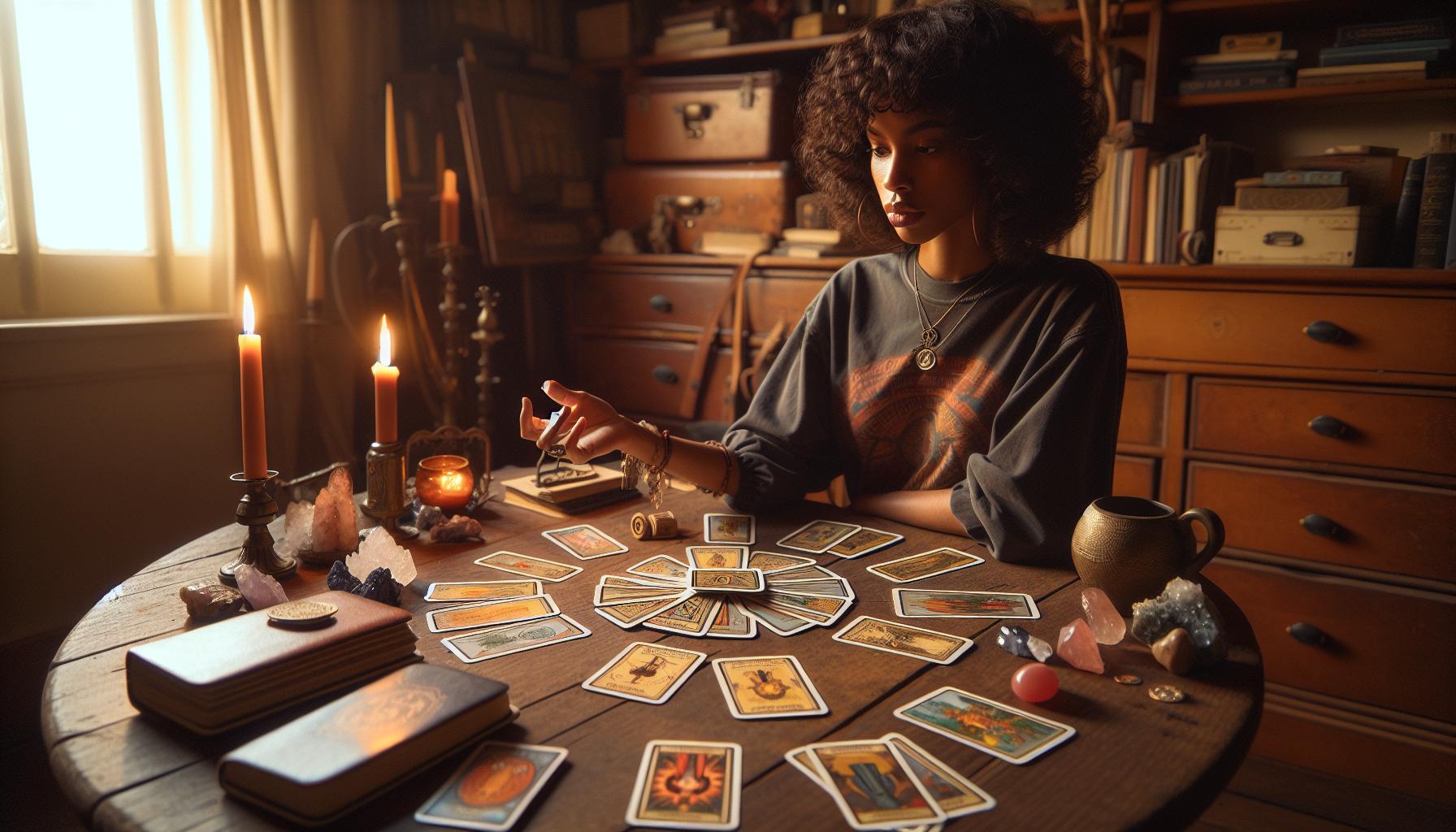
The art of Tarot reading is a fascinating blend of intuition, symbolism, and psychology, allowing practitioners to tap into deeper insights and potential pathways. At its core, Tarot operates through the principle of divination-drawing cards that serve as mirrors reflecting the querent’s internal landscape, experiences, and emotions. Each card, rich with imagery and archetypes, holds unique meanings shaped by its position in a spread and the context of the question posed.
When you shuffle and draw the cards, you’re engaging in a process that has both an element of randomness and intentionality. The random selection is thought to break the conscious mind’s hold, allowing your subconscious to bring forth the symbols and narratives that resonate with your current situation. For example, drawing the Chariot from the Major Arcana may symbolize overcoming obstacles and pushing forward with determination, while the Nine of Swords might reveal anxieties or fears needing attention.
Understanding Spreads
The layout of the cards is crucial. Tarot spreads can range from simple one-card draws to complex layouts with multiple cards, each representing different aspects of a situation. The most commonly used spread for exploring future possibilities is the three-card spread, which can represent the past, present, and future respectively. In this format:
- First Card: Represents past influences or events shaping the present.
- Second Card: Signifies the current situation, highlighting challenges or strengths.
- Third Card: Offers perspective on potential future outcomes based on the current trajectory.
Another common spread is the Celtic Cross, which provides a deeper analysis by exploring the querent’s challenges, goals, and the immediate future. Practitioners of all skill levels can adapt these spreads to suit their intuitive styles, making Tarot a personally tailored experience.
The Role of Intuition
As you delve into a reading, intuition becomes a guiding force in interpreting the cards. Beyond memorizing meanings, the true magic of Tarot lies in your ability to connect with the imagery and symbolism of each card. This interplay creates a dialogue between your inner self and the universe. For instance, if a reader pulls the Lovers card, it can symbolize relationship choices-yet depending on the surrounding cards, it may also point to significant decisions impacting personal values or life paths.
Ultimately, understanding how Tarot cards work involves exploring the messages that resonate most with you and reflecting on how they apply to your life. Tarot isn’t solely about forecasting an unchangeable future; it’s a rich, supportive tool that invites you to engage with your journey more consciously. This dynamic interaction can reveal insights, guide decisions, and serve as a catalyst for personal growth. Embrace this process, and you will find that Tarot can illuminate possibilities and empower your journey, regardless of whether you approach it with skepticism or curiosity.
The Role of Intuition in Tarot Readings
As you embark on a Tarot reading, your intuition serves as the essential compass guiding you through the mysteries of each card. Tarot isn’t merely about interpreting card meanings based on rigid definitions; it is a dynamic interplay between the images before you and the feelings they evoke within. Your intuitive insights can unlock deeper understandings that resonate more profoundly than standard interpretations, allowing for a more personalized reading experience.
Every card is a vessel of symbolic meaning, waiting for you to uncover its message. For example, when the Empress appears in a spread, it might typically represent nurturing, abundance, or fertility. However, your intuition might lead you to perceive it as an invitation to embrace creativity in an unexpected area of your life, perhaps revealing an entrepreneurial spark or a project that requires your care and attention. This interaction transforms the reading into a dialogue rather than a monologue, fostering a richer understanding of what the cards convey in relation to your life.
Nurturing Your Intuitive Skills
To cultivate your intuition, practice is key. Start with simple exercises, such as allowing yourself a moment of silence and reflection before gathering the cards. Pay attention to what thoughts or images come to mind and consider how they correlate with your question. Additionally, journaling your responses after a reading can highlight patterns and insights that enhance your future interpretations. Note how specific cards make you feel; this emotional connection can deepen your understanding of their meaning in different contexts.
Engaging with others can also amplify your intuitive abilities. Sharing readings with a friend or a community group provides fresh perspectives and feedback, fostering a collaborative environment where everyone can grow. Each reader brings their unique lens, reminding you that Tarot is a shared journey of discovery, where intuition plays a vital role for everyone involved.
Remember, trusting your intuition doesn’t mean disregarding the traditional meanings of the cards. Rather, it’s about weaving your intuitive insights with established interpretations. By respecting both, you create a well-rounded approach that embraces the mystical yet remains accessible. As you develop your intuitive connection with Tarot, you’ll find it becomes a powerful ally in empowering your journey and understanding the pathways that lie ahead.
Different Tarot Spreads for Future Insights
When it comes to seeking insights about the future, the way you lay out your Tarot cards can greatly influence the information and guidance you’ll receive. Different Tarot spreads serve various purposes, helping to illuminate specific aspects of your life, clarify a dilemma, or provide a broader overview of potential outcomes. Each spread offers its unique framework for interpretation, making the choice of layout an essential first step in your reading process.
A simple yet popular spread is the Three-Card Spread. This versatile layout allows you to explore various dimensions of a question, such as past influences, present circumstances, and future outcomes. When you draw three cards, each position can be designated to a specific timeframe or theme, providing a clear narrative flow. For example, the first card might represent lessons learned from previous experiences, the second card highlights current energies and challenges, while the third points toward possible future developments. This spread is ideal for both beginners and experienced readers, as it encourages intuitive interpretation while being straightforward to execute.
For those looking for a more comprehensive analysis, the Celtic Cross Spread stands out as an intricate layout. It consists of ten cards designed to provide a detailed overview of a situation and the various influences at play. This spread not only addresses the central question but also incorporates external factors, hopes and fears, and potential outcomes, creating a multi-layered understanding of the context. This is perfect for individuals who wish to delve deep into complex life questions or decisions, as it facilitates an exploration of both seen and unseen influences shaping their future.
In addition to these popular choices, there are specialized spreads tailored to specific areas, such as career, love, or spiritual development. For instance, a Career Tarot Spread might focus on aspects like your current job satisfaction, obstacles you face, and what future professional opportunities lie ahead. This targeted approach not only helps in clarifying uncertainties but also serves as a guiding beacon, encouraging proactive steps toward fulfilling aspirations.
Ultimately, the power of any Tarot spread lies in its ability to engage with your intuition and spark reflection. As you familiarize yourself with different layouts, consider keeping a journal of your readings to track your insights and how the cards resonate with your current life experiences. This practice not only enhances your understanding of individual card meanings but also helps you recognize patterns over time, deepening your connection with both the Tarot and your own instinctual guidance. Each spread is a conversation between you and the cards, inviting you to explore the rich tapestry of potential futures awaiting your discovery.
Adjusting Expectations: What Tarot Can and Can’t Predict
When engaging with Tarot, it’s important to understand its inherent qualities and limitations. Tarot is not a crystal ball that reveals undeniable truths about the future; rather, it serves as a reflective tool, shedding light on the energies and influences currently at play in your life. This distinction is vital for building realistic expectations around what Tarot can offer: insights, guidance, and clarity, rather than definitive predictions.
While Tarot can highlight potential paths and outcomes based on the present moment, it cannot foresee hard and fast events. Life is a tapestry woven from countless threads-your choices, the choices of others, cosmic influences, and random chance. Tarot readings can illuminate these connections, providing you with a clearer understanding of your circumstances and helping you recognize opportunities. However, the future is not set in stone. It’s fluid and can shift based on the decisions you make and the actions you take.
In shifting your expectations, consider this: Tarot is best viewed as a map rather than a destination. For example, if you pull the Wheel of Fortune in a reading regarding career changes, it might suggest that luck or new opportunities are on the horizon. This doesn’t guarantee that a job offer is waiting for you; instead, it indicates that positive choices and energies are available that could lead you to new paths. Depending on how you choose to navigate those influences, your career landscape may transform, revealing new possibilities that you can actively pursue.
This brings us to the role of your intuition and agency in Tarot readings. The cards provide a framework, but your interpretation, understanding of your own situation, and personal growth play crucial roles in shaping your reality. Embrace the collaborative nature of Tarot, where your decisions and the insights offered by the cards work in tandem to guide you toward creating your future. By adjusting your expectations to see Tarot as a supportive advisor rather than a definitive forecaster, you empower yourself to take charge of your life’s adventures, making informed choices rather than resigning to fate.
Interpreting Your Tarot Cards: Key Meanings
Interpreting Tarot cards involves more than just memorizing meanings; it’s about connecting with the cards and allowing intuition to guide your understanding. Each card in the Tarot deck carries a rich tapestry of symbolism and messages that can provide profound insights into various aspects of life. To effectively interpret your readings, consider both the traditional meanings of the cards and how they resonate with your current situation.
Key Card Meanings to Consider
Understanding the key meanings of the Tarot cards can help simplify your approach:
- The Fool: New beginnings, spontaneity, and adventure. This card encourages you to take the leap into the unknown.
- The Lovers: Choices, partnerships, and harmony. This often points to important decisions, especially in relationships.
- The Tower: Sudden upheaval or unexpected change. Although it can feel daunting, it often clears the way for new growth.
- The Star: Hope, inspiration, and serenity. A reminder that there is light after the dark moments.
- The Ten of Pentacles: Wealth, inheritance, and family. Signifies stability and prosperity in your physical and financial realms.
When you draw a card, think about the context of your question or situation. For instance, if you pull The Tower during a career reading, it might suggest that a significant change is imminent, which could be challenging but ultimately transformative. On the other hand, pulling The Star may indicate a time to embrace hope and trust the process, encouraging you to believe in positive outcomes.
Approaching Interpreting a Spread
Different spreads can offer varying perspectives on your question. For a simple three-card spread, you could structure it as past, present, and future. Here’s how to approach interpreting this spread:
- Past: Reflect on what has shaped your current situation. For example, if the past card is The Fool, consider how a spontaneous decision may have brought you to where you are today.
- Present: Look at your current challenges or opportunities. If you draw The Lovers, it may be time to evaluate choices you are facing in your personal or professional life.
- Future: This card hints at possible outcomes. A card like The Wheel of Fortune can suggest that cycles are changing, and new opportunities are on the horizon, dependent on your choices.
Example Integration
Imagine you have a question about a romantic relationship. You draw The Lovers (indicating choice and connection), The Tower (suggesting possible challenges or upheaval), and The Star (representing hope and healing). Your interpretation could unfold like this: while there may be a critical decision to make in the relationship that could challenge the current status quo (The Tower), there is also a strong potential for renewal and positivity if both parties are willing to work through it (The Star).
By embracing these elements-the meanings, the context of your question, and the energy of the spread-you can develop a deeper understanding of what the cards might be telling you. Remember, interpreting Tarot is an evolving skill that grows with practice and intuition. Each reading is an invitation to explore not only the cards but also your inner wisdom.
Common Misconceptions About Tarot Predictions
Many people believe that Tarot cards can predict the future with absolute certainty, creating a common misconception that they serve as a crystal ball. In reality, Tarot readings are more about guidance and reflection than definitive predictions. The cards unveil potential paths based on current circumstances, offering insights that encourage personal empowerment rather than foretelling an unchangeable fate.
It’s essential to understand that Tarot is not a tool for concrete future predictions. Instead, consider it as a roadmap; the cards highlight energies, themes, and choices present in your life. For instance, drawing The Lovers may suggest choices or partnerships that need to be evaluated, while The Tower could indicate an impending upheaval. These interpretations reveal possibilities and encourage you to make informed decisions about your path forward.
Another misconception is that Tarot readings should always provide clarity and straightforward answers. The cards can indeed be complex, reflecting the intricate nature of our lives. A reading depicting The Moon may indicate confusion or deception, signaling a need to navigate carefully through uncertainties. Rather than providing straightforward answers, such cards prompt deeper reflection and self-assessment.
Lastly, many people feel that only seasoned practitioners can read Tarot effectively. While experience can enhance interpretative skills, anyone can connect with the Tarot and use it as a tool for self-exploration. Begin with a simple three-card spread-one for past influences, one for the present, and one for future possibilities. This approach not only makes the practice approachable for beginners but also nurtures your intuition, allowing your personal insights to emerge as you work with the cards.
By shedding light on these misconceptions, we can see that Tarot offers a supportive framework for navigating life’s possibilities, rather than fixed destinies. It encourages us to engage actively with our choices, fostering a deeper understanding of ourselves and our journeys.
Real-Life Examples of Tarot Readings
In exploring the practical applications of Tarot, real-life examples illuminate how the cards can provide insight and guidance in the complexities of daily living. Consider the story of Sarah, a young professional facing a daunting career choice between two job offers. With one position promising stability and another offering an exciting but uncertain path, she turned to a Tarot reading for clarity. Drawing from a three-card spread, she revealed The Chariot for her past influences, The Two of Swords for her current situation, and The Fool for future possibilities. The reading encouraged her to embrace change and trust her intuition, ultimately leading her to choose the job that aligned more closely with her passion.
Another compelling example is that of Mark, who sought insights into his tumultuous relationship. A reading using the Celtic Cross spread highlighted The Tower in the position of “what is affecting you”. This card, often associated with upheaval and sudden change, prompted Mark to re-evaluate the dynamics at play in his partnership. The reading did not predict a fixed outcome but rather opened his eyes to the need for communication and honesty. By acknowledging underlying issues indicated by the Five of Cups in his present situation, he was able to take actionable steps towards healing and growth in the relationship.
These examples illustrate that Tarot readings can reveal potential paths rather than definitive outcomes. Rather than seeing Tarot as a means to predict the future, it’s more valuable as a reflective tool that prompts users to consider their options critically. Each card’s nuanced meaning-like The High Priestess, which symbolizes intuition and inner wisdom-invites readers to trust their own insights while navigating life’s decisions.
For those new to Tarot or even seasoned practitioners, integrating real-life experiences into the practice can enhance understanding and connection with the cards. Start with simple spreads and personal questions to cultivate a relationship with Tarot. Embrace the journey of self-discovery, and remember that each reading is an invitation to engage with life’s possibilities. Each card drawn is a mirror reflecting your current realities and offering clues to new paths of action and reflection.
Tips for Enhancing Your Tarot Skills
To truly unlock the potential of Tarot, it’s vital to nurture your skills continually. By deepening your understanding and practice, you can enhance your intuitive abilities and the quality of your readings. Start small by developing a consistent practice; even ten minutes a day with your cards can lead to profound insights. Lay out a single card each morning and reflect on its meaning throughout the day. This habit can help you become attuned to the cards and how they relate to your life.
Building Card Knowledge
Familiarize yourself with the meanings of each Tarot card. Rather than relying solely on predetermined interpretations, explore your personal feelings and associations with each card. Create flashcards with the card images on one side and your interpretations on the other. This interactive learning can solidify your memory and uncover new insights. You might also consider joining online forums or local groups to exchange interpretations and experiences, which can broaden your perspective.
Experiment with Spreads
As you grow more comfortable, try experimenting with different spreads beyond the common three-card spread. Each spread serves a unique purpose and can yield different layers of insight. For example, the Celtic Cross spread offers a comprehensive look at a specific question by examining various facets of your situation. Use spreads to tell a more complete story about the energies surrounding your life events. Document your findings after each reading to observe patterns and refine your intuition over time.
Practice Mindfulness and Intuition
Tarot is as much about intuition as it is about card meanings. Before each reading, take a moment to breathe deeply and clear your mind. Allow your intuition to guide you in interpreting the cards. When you’re about to draw, focus on your intention. Consider the question or situation you wish to address. This mindfulness will enhance your connection to the cards and improve the quality of your readings.
Lastly, remember that Tarot is a dynamic practice. Allow yourself the grace to grow and change alongside it, accepting that each reading is a step on your journey. Whether you’re a beginner or advancing in your skills, trust in your journey and embrace your intuitive insights. Tarot invites you to explore your potential and offers a supportive framework for personal growth and self-discovery.
How to Choose a Tarot Deck That Resonates With You
Choosing the right Tarot deck is a personal and transformative experience, akin to selecting a trusted companion on your spiritual journey. With countless options available-from traditional decks like the Rider-Waite-Smith to modern interpretations featuring vibrant art-finding a deck that resonates with you can enhance your intuitive readings significantly. The key is to explore what speaks to your heart and aligns with your intentions.
When selecting a Tarot deck, start by considering the artwork. Your connection to the imagery on the cards can deeply impact your comfort and intuition during readings. Take time to browse through different decks online or in bookstores, paying attention to how the artwork influences your emotions and thoughts. Do vibrant colors inspire you? Or do you prefer the subtlety of black and white illustrations? Let your feelings guide you; the deck that draws you in is often the best choice.
Next, reflect on the themes of the deck. Some decks embrace traditional symbolism, whereas others may incorporate aspects from various spiritual paths, cultures, or modern psychology. Choose a deck that resonates with your personal beliefs and interests. For example, if you have a connection to nature, you might gravitate towards a deck featuring botanical illustrations. Conversely, if you are drawn to the mystical, a deck with celestial themes may inspire you.
Practical Tips for Selection:
- Assess Personal Connection: Feel the deck resonate with your energy. Hold it in your hands and notice how you feel.
- Consider Size and Quality: Ensure the cards are a comfortable size for your hands. Look for quality cardstock that feels good to shuffle.
- Read Reviews: Seek insights from other users about how the deck performs in readings, especially those aligned with your skill level.
- Look for Guidebooks: Some decks come with comprehensive guidebooks that offer deeper insight into each card, which can be especially helpful for beginners.
As you narrow down your choices, you might want to try a few different decks before making your final selection. Many local shops or online markets offer samples, or you could attend a Tarot workshop where various decks are showcased. Ultimately, choosing a Tarot deck that resonates with you is about trust-trust in your instincts and the journey you’re embarking on as you explore the depths of Tarot and, consequently, of yourself.
Exploring Alternatives: Other Mystical Practices for Insight
Exploring the mystical realm extends beyond Tarot cards, offering a splendid array of practices that can enhance your intuitive journey. Each method presents unique ways to connect with your inner self and the universe, catering to various preferences and belief systems. Whether you’re a seasoned diviner or just starting your exploration of mystical insights, alternatives like astrology, pendulum work, or even rune casting can provide profound clarity and guidance.
Astrology: The Cosmic Blueprint
Astrology interprets the movements and positions of celestial bodies to glean insights into personality, behaviors, and potential future events. By understanding your astrological sign and the nuances of your natal chart, you can explore the personal influences at play in your life. Each planet and sign carries specific meanings that affect different aspects, providing a broader cosmic context for your questions. Using an astrology app or website, you can generate your birth chart, which will serve as a fundamental tool for deeper self-awareness and decision-making.
Pendulum Dowsing: The Art of Asking Questions
Pendulum dowsing combines focus and intuition. This practice involves asking yes or no questions while observing the direction the pendulum swings. For beginners, it’s essential to establish a clear connection and intention before starting. Many find that holding a pendulum-crafted from crystals or wood-while asking a question can offer quick, tangible insights. It’s an easy yet profound way to engage your intuition daily or when seeking guidance on specific situations.
Runes: Ancient Symbols of Insight
The use of runes-ancient symbols from the Nordic tradition-offers another layer of divinatory practice that many enjoy. Each rune has a unique meaning and can provide insights when drawn from a bag or cast. Beginning with a single rune reading can help you grasp each symbol’s interpretation before delving into more complex rune spreads. Runes also encourage a personal connection, allowing you to reflect on their meanings in your life.
Intuitive Journaling: Your Personal Reflection
Lastly, intuitive journaling allows for a deep personal exploration of thoughts, feelings, and divine guidance. This method encourages you to explore your questions on paper, fostering insights that may not surface in daily life. Setting aside a few minutes to write freely about your experiences or concerns can unveil patterns and themes, guiding you toward clarity. Pairing this practice with meditation can deepen your connection to your inner wisdom.
Exploring these alternatives not only enriches your understanding of the mystical but also empowers you to find a method that resonates most with your intuitive rhythms. Remember, the journey is yours, and each practice offers unique pathways to insight, fostering both understanding and personal growth in your spiritual journey.
Frequently Asked Questions
markdown
Q: How reliable is Tarot for predicting the future?
A: Tarot can provide insights and guidance, but its reliability varies. It reflects current energies and potential outcomes based on your decisions. For more details, consider exploring how Tarot works in understanding personal situations, as mentioned in the article.

Q: What should I expect from a Tarot reading?
A: During a Tarot reading, expect to receive clarity on your current situation and potential future paths. Each card offers guidance, not definitive answers. For tips on enhancing your reading experience, check out the section on tips for enhancing your Tarot skills.

Q: Can Tarot predict specific events?
A: Tarot is more about guiding your decisions than predicting specific events. It reveals possibilities based on your current path, rather than concrete future occurrences. This concept is explored in greater depth in the section about adjusting expectations.

Q: How do Tarot spreads affect predictions?
A: Different Tarot spreads, like the three-card or Celtic Cross, focus on various aspects of life, helping clarify potential outcomes. Each spread offers specific insights, making it essential to choose one that aligns with your questions. More on spreads can be found in the corresponding article section.

Q: Are there certain Tarot cards that indicate success or failure?
A: Yes, some cards do suggest themes of success or challenges. For example, the Sun often symbolizes positivity and achievement, while the Tower can signify upheaval. Understanding card meanings is crucial, as elaborated in the section on interpreting your Tarot cards.

Q: Can anyone learn to read Tarot cards effectively?
A: Absolutely! With practice and intuitive connection, anyone can learn to read Tarot. Start with simple spreads and gradually dive deeper into card meanings. Check out the tips for enhancing your Tarot skills for effective learning strategies.

Q: Why do some people think Tarot is just a superstition?
A: Many view Tarot as superstition due to misconceptions about its purpose and origins. It's a tool for self-reflection and guidance rather than fortune-telling. The article addresses common misconceptions, helping bridge the gap between skepticism and understanding.

Q: How often should I consult Tarot for guidance?
A: You can consult Tarot as often as you feel the need for clarity or insight. Regular consultations can lead to deeper understanding, but always approach readings with an open mind. Explore real-life examples in the article for practical insights on timing your readings.
To Conclude
As we unravel the mysteries of Tarot, it’s clear that while it may not predict the future with absolute certainty, it serves as a powerful guide to understanding your path. Embrace this unique tool to uncover insights and navigate your life’s challenges. If you’re curious about how to harness your own intuition through Tarot, explore our beginner’s guide to Tarot card meanings and deepen your practice with our advanced spreads to elevate your readings.
Don’t miss out on developing your connection with Tarot! Sign up for our newsletter to stay updated on tips, exclusive readings, and expert guidance. Have questions? Share your thoughts in the comments below-we’d love to hear your experiences with Tarot! The journey of self-discovery continues, so why not take the next step and explore our instant Yes or No Tarot reading for immediate insights? Remember, Tarot is a welcoming companion, ready to help you along your path to self-awareness and growth.
Get our latest guides, news, and insights highlighted in your Google Search & AI Overviews.