When it comes to tarot reading, understanding the difference between upright and reversed cards is crucial for unlocking the full potential of your interpretations. Each card carries distinct meanings that can shift dramatically depending on its orientation, adding a rich layer of nuance to your readings. This is not just about learning card definitions; it’s about deepening your intuition and enhancing your ability to provide insightful guidance to yourself and others.
Many enthusiasts, whether just starting or more experienced, often grapple with how reversals impact the messages of their readings. Perhaps you’ve wondered why some cards resonate differently when flipped. By exploring these contrasts, you’ll not only refine your understanding of tarot but also gain the confidence to interpret the energy and circumstances surrounding you or those you read for. Dive deeper into this fascinating aspect of tarot to enrich your practice and connect more profoundly with your cards.
Understanding Upright vs. Reversed Tarot Cards
Understanding the distinction between upright and reversed tarot cards is fundamental for anyone venturing into the world of tarot reading. Each position carries its own unique energy and insight, shaping the narrative of the cards in profound ways. When a card appears upright, it often symbolizes clarity, positivity, and a straightforward interpretation of its qualities. For instance, pulling the Sun card upright typically signifies joy, success, and vitality, reflecting a bright outlook in the querent’s current situation. Conversely, when a card is reversed, it signals a different tone-one that can indicate internal struggles, obstacles, or a need for reflection. The Tower reversed might suggest avoidance of change or denial of upheaval, highlighting areas where the querent may feel stuck.
Embracing both upright and reversed meanings requires an open mind and a willingness to explore the duality of each card. This exploration enriches the reading experience, allowing for a deeper understanding of the querent’s challenges and opportunities. In practice, start by familiarizing yourself with each card’s upright meaning, then move on to its reversed essence. A useful exercise is to create a journal entry for each card, detailing what you perceive to be its upright and reversed messages. This not only aids in memorization but also nurtures your intuition, making your readings more fluid and insightful.
As you develop your skills, remember that tarot is not merely about memorized definitions; it’s a dynamic conversation between the reader, the cards, and the energies at play. Enjoy the process of unveiling the layers of meaning that emerge from your readings, whether the cards are upright or reversed. By fostering an intuitive relationship with the cards, you empower yourself to navigate the intricate tapestry of life’s experiences with both confidence and sensitivity.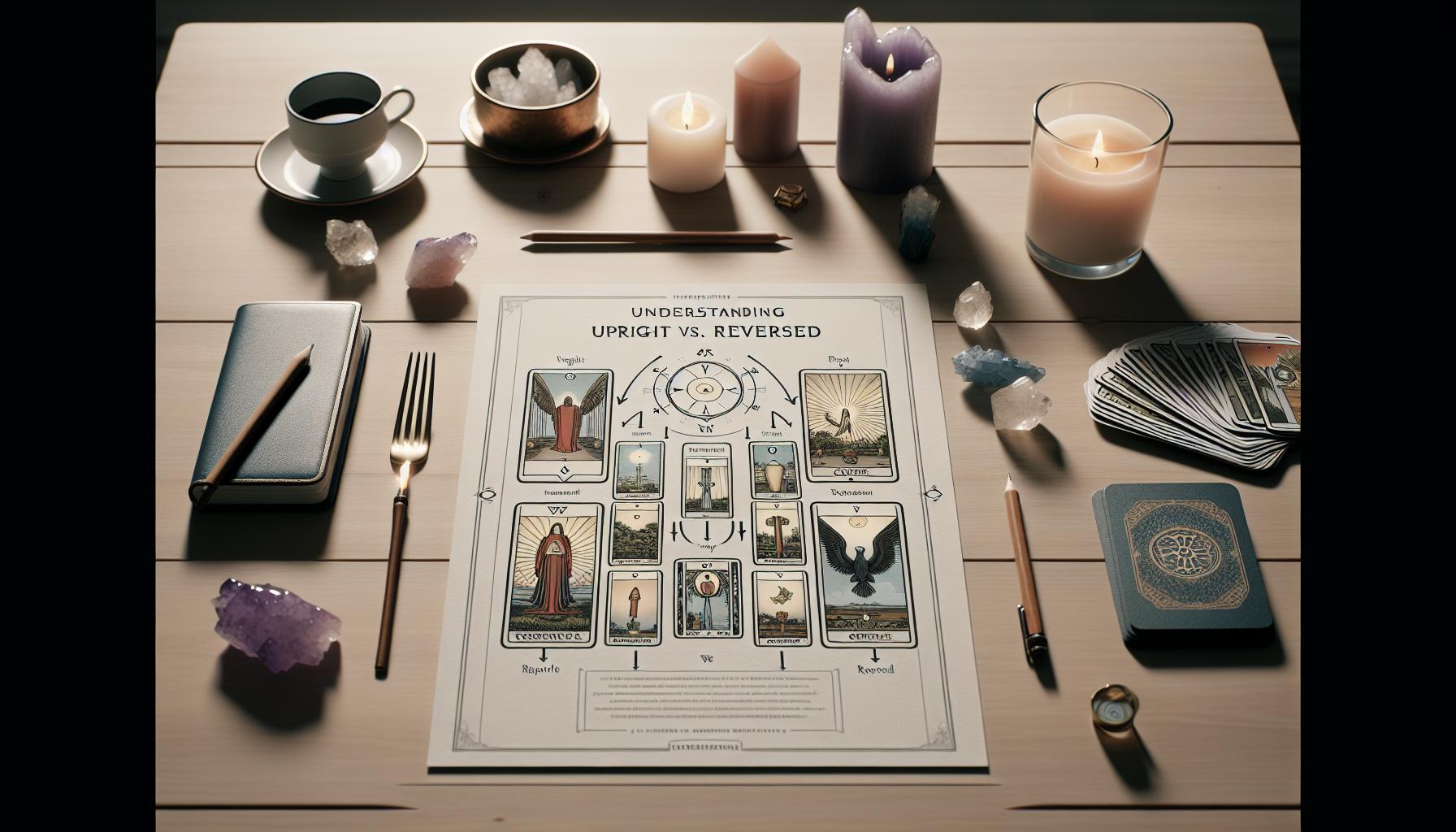
The Symbolic Meaning of Upright Tarot Cards
In the enchanted world of tarot, the upright position of a card serves as a beacon of clarity, illuminating its inherent qualities and messages for the reader. Each upright card vibrates with positivity and empowerment, offering profound insights into various aspects of life including love, career, and personal growth. For example, the Empress card, when drawn upright, evokes themes of nurturing, fertility, and abundance, suggesting a time of growth and creativity in the querent’s life. This clear, direct energy allows for an optimistic reading where the querent can confidently embrace the opportunities presented.
Upright cards convey straightforward interpretations, often reflecting a sense of spiritual alignment and clarity in the querent’s journey. Think of the Ace of Cups, which embodies new beginnings in emotional realms-be it love, joy, or creative expression. When you pull this card upright, it encourages the querent to open their heart to new experiences and connections, highlighting the power of emotional reception. These interpretations not only foster positivity but also empower the querent to take actionable steps toward their goals.
To effectively harness the energy of upright cards, it’s helpful to familiarize yourself with their meanings. Consider creating a visual reference card with keywords and themes associated with each card. This practice not only aids memorization but also strengthens your intuitive grasp of the cards’ messages. During readings, allow yourself to reflect on how the energies of the upright cards relate to the querent’s current situation, making the reading a co-creative experience that honors their unique path.
As you delve deeper into tarot, remember that the upright cards invite clarity and directness, setting a foundational understanding for your readings. They act as guiding lights, providing a stable framework upon which the more nuanced messages of reversed cards can later build, enriching the overall reading experience. By celebrating the symbolic meanings of upright cards, you cultivate a supportive space for exploring the complexity of your querent’s emotions, aspirations, and challenges.
Decoding the Significance of Reversed Cards
In the realm of tarot, reversed cards can feel mysterious and daunting, yet they hold a treasure trove of insights waiting to be uncovered. Unlike upright cards, which communicate clarity and positivity, reversed cards often invite a moment of contemplation. They can symbolize challenges, delays, inner turmoil, or a need for reflection. Understanding these significances empowers you to navigate both personal and professional landscapes more effectively.
When a card appears reversed, consider the energy it represents and what it reveals about the querent’s current circumstances. For instance, the reversed Lovers card might indicate disharmony or miscommunication in relationships, prompting an exploration of unexpressed feelings and unresolved issues. In contrast, the reversed Tower card can suggest a momentary disruption rather than a full-blown crisis, encouraging the querent to view the upheaval as an opportunity for growth. This shift in perspective is crucial; reversed cards often signal a need for introspection and can help identify obstacles that require attention.
To decode the significance of reversed cards, you might find it helpful to apply a few practical techniques. Start by focusing on the keywords associated with each card but flipped upside down. Create a personalized list of reversed meanings as a quick reference during readings. As you practice, allow yourself to contemplate how those interpretations relate to the querent’s situation. Engage in dialogue with them about their feelings regarding the challenges presented. This collaborative approach not only deepens your understanding but also empowers the querent, facilitating a shared journey through their unique experiences.
Remember that reversed cards are not inherently negative but rather present opportunities for growth and transformation. As you develop your intuition, embrace the idea that each reading, upright or reversed, is a chance for clarity, healing, and movement forward. The blending of upright and reversed energies enriches the narrative, offering a comprehensive view that can illuminate even the darkest paths. With practice, you will learn to appreciate the complexity and richness that reversed cards can bring to your tarot readings, making you a more insightful and confident reader.
How to Read Upright and Reversed Cards Together
To fully appreciate the insight derived from both upright and reversed tarot cards, it’s essential to recognize how they can complement each other in readings, weaving a richer narrative of experiences and emotions. Start by considering the distinct meanings these orientations present. Upright cards typically signal clarity, action, and affirmative outcomes, while reversed cards often invite us to delve deeper, encouraging reflection on challenges, hidden aspects, and inner conflicts.
When you read cards together, observe how their energies interact. For example, drawing the upright Chariot alongside the reversed Ten of Swords might suggest determination in overcoming a difficult time, yet also highlight the need to release past traumas fully. This dynamic can create a dialogue within the reading, showing the querent where they stand and the areas begging for attention. It can be helpful to take a moment after laying out the cards to meditate on their collective story. Ask questions like, “What do I see as a potential challenge here?” and “How can the upright energies support the reversed ones?”
To enhance your readings, consider creating a visual layout that emphasizes this interplay. A common method is the three-card spread, where the first card represents past influences, the second the present situation, and the third future possibilities. If one card is upright and the others are reversed, it can represent the support the querent has or the lessons learned from past obstacles. For instance, if the upright Empress appears in the position of the future, it may suggest abundant creativity and nurturing support, potentially guiding the querent through the challenges illustrated by reversed cards.
Above all, encourage open communication with the querent throughout your reading. Exploring interpretations together cultivates a collaborative atmosphere. Discuss how they relate personally to the energies represented-both the affirmative aspects of called-upon upright cards and the introspective invitations of reversed ones. This practice nurtures their intuitive abilities and provides a holistic framework for understanding their life situations, ultimately making for deeper and more empowering tarot readings.
Common Misconceptions About Reversed Cards
Many people encounter a range of misconceptions when learning about reversed tarot cards, often stemming from fear or misunderstanding of what these orientations represent. A primary myth is that reversed cards always indicate negative outcomes or bad news. In reality, reversed cards serve as valuable guides for self-reflection and can reveal hidden aspects of a situation. For instance, if you draw the reversed Devil card, instead of merely signaling fear or addiction, it can also suggest liberation from entrapments, indicating that it’s time to confront and release what no longer serves you.
Another common misconception is that reversed cards negate the meanings of their upright counterparts. This is far from the truth; rather than canceling each other out, upright and reversed cards can provide complementary insights. The Three of Cups upright represents celebration and community, while the reversed position might encourage exploration of any interpersonal conflicts that could be hindering joy. This duality enriches your reading, urging you to question and investigate the layers of your experiences.
Additionally, some readers struggle with the idea that they must memorize a completely different set of meanings for reversed cards. This can be daunting, but incorporating reversed cards into your readings can actually simplify the process. Instead of viewing reversals as standalone cards with distinct meanings, think of them as opportunities to delve deeper into the upright meaning. This allows for a more intuitive approach where you can focus on how the card’s orientation alters the narrative of your reading.
Finally, it’s essential to recognize that reversed cards can enhance your intuition. They often ask questions rather than provide direct answers, leading to deeper self-exploration and personal growth. By approaching reversed cards with an open mind, you cultivate a practice that embraces nuance and complexity, rewarding you with richer insights into your life and the paths that lie ahead. Trusting your instincts and interpreting these cards through personal experiences makes for a more engaging and meaningful tarot practice, bridging the gap between fear and understanding.
The Impact of Reversed Cards on Tarot Readings
The presence of reversed cards in tarot readings can significantly enrich your understanding of a situation. Rather than seeing these cards as purely negative or troublesome, consider them as opportunities for growth and deeper insight. Reversed cards invite you to explore complexities that may not be immediately apparent when interpreting upright cards alone.
When a card appears reversed, it often represents internal challenges or nuances. For example, drawing the Temperance card upright may suggest harmony and balance, while its reversed counterpart might indicate excess or lack of moderation, prompting you to examine areas of your life where you may be out of sync. This duality can reveal hidden factors influencing the situation, encouraging questions and introspection rather than straightforward answers.
In addition, reversed cards offer a way to engage with your intuition more fluidly. They challenge you to think critically about the meanings of the cards and how they relate to the question at hand. Incorporating reversed cards into your readings fosters a richer dialogue between the upright and reversed meanings, creating a layered narrative. For instance, the Six of Swords upright implies a journey towards healing, but when reversed, it could point to unresolved issues that prevent progress, urging you to reflect on what might be holding you back.
Finally, embracing reversed cards can enhance your tarot practice by fostering an open mindset. Instead of approaching them with apprehension, invite them into your readings with curiosity. This shift in perspective allows you to mine the depths of your intuition and reinforces the idea that each card-whether upright or reversed-has something valuable to teach us. As you become more comfortable with reversal meanings, you’ll likely find your readings become more insightful and your understanding of the tarot deepens.
Tips for Interpreting Reversed Tarot Cards
Exploring reversed tarot cards can feel daunting, but these cards often bring profound insights that can enhance your readings. Their meanings may not be as straightforward as their upright counterparts, but with practice, you can learn to interpret them effectively. One essential tip is to approach the reversal with curiosity rather than fear. Think of it as an invitation to delve deeper into the situation or the person’s psyche. Reversed cards often highlight internal struggles, delays, or the need for reflection, so ask yourself what deeper layers may be present.
To get started, consider journal prompts or reflection questions whenever you draw a reversed card. For instance, if the Two of Cups appears reversed, instead of simply labeling it as disharmony, ask yourself: “What unresolved issues are affecting my relationships?” or “Am I struggling to connect with my emotions or those of others?” This practice encourages a mindful examination of the challenges that might be influencing the situation and helps you uncover valuable insights.
Another effective strategy is to compare the upright and reversed meanings side by side. Keep a personal dictionary of cards where you note both interpretations for easy reference. Over time, this can help you notice patterns and develop your intuitive understanding of how reversals interact with upright cards in your spreads. For example, if you draw the Lovers card upright, it can signify connection and harmony, while the reversed meaning might suggest a need to address underlying conflicts or indecision in that area.
Practical Techniques for Reading Reversed Cards
- Set Intentions: Before starting a reading, clearly set your intentions regarding how you want to interpret reversed cards. This could include viewing them as opportunities for growth rather than solely negative warnings.
- Flexible Associations: Allow the meanings of reversed cards to be fluid. Different contexts or positions in the spread can affect their interpretations.
- Practice with a Variety of Scenarios: Use reversed cards in practice readings with various themes (love, career, personal growth). This exposure will strengthen your interpretive skills.
Embracing these approaches will not only enhance your ability to work with reversed cards but also foster a richer, more insightful practice overall. With patience and intention, you may find that reversed cards reveal profound insights that can empower your readings and your understanding of the tarot journey.
Challenges of Reading Reversed Cards
Reading reversed tarot cards can be a nuanced challenge. Unlike their upright counterparts, which typically align with clear, affirmative meanings, reversed cards often present a more complex tapestry of interpretations. Many readers find themselves grappling with feelings of uncertainty or confusion when faced with a reversal, leading to a hesitancy to embrace their full potential.
One significant hurdle is the tendency to view reversed cards solely through a lens of negativity. It’s easy to associate reversals with bad news or warnings. However, this perspective can limit the richness of interpretations these cards offer. For example, when drawing the Seven of Swords reversed, instead of fixating on themes of deception, consider the potential for healing or the need to come clean about a situation. Transforming this mindset around reversed cards is crucial for deeper insight.
Another challenge is the inconsistency in how reversals are interpreted across different tarot traditions and readers. While some may adhere to fixed rules regarding reversals, others might incorporate intuitive feelings or situational context into their readings. This variability can be overwhelming, especially for those new to tarot. To navigate this, consider developing a personal approach that resonates with your intuition; keeping a journal of your readings can help you track which interpretations feel right for you over time.
Lastly, determining the relationship between upright and reversed cards within a spread can create analytical pressure. It’s essential to remember that cards communicate with each other, and their positions can shift the overall narrative. When you draw both upright and reversed cards, examine how they interact-this dialogue can reveal important insights. For instance, if the Wheel of Fortune appears reversed alongside the Two of Cups upright, it might signify challenges in relationships stemming from external forces or fate, prompting introspection about control and acceptance in your connections.
Engaging with reversed cards invites deeper exploration and reflection. Embrace their complexity with curiosity rather than apprehension, and allow each reading to guide you toward greater understanding and growth.
Incorporating Reversed Cards in Spreads
Incorporating reversed Tarot cards into your spreads can significantly deepen the insight and nuance of your readings. A reversal is not just a “bad” version of an upright card; it brings its own set of meanings that can enhance the narrative of a spread. When you draw a reversed card, consider it as an invitation to explore different facets of the card’s symbolism. This exploration can provide clarity around inner conflicts, external challenges, and the nuances of situations that require more than a straightforward interpretation.
To effectively incorporate reversed cards, start by examining the context of your spread. Each position in a Tarot layout has a specific significance, and reversed cards can shift the interpretation dramatically. For instance, in a three-card spread representing past, present, and future, if the present card is the Five of Cups reversed, it might suggest a moving on or overcoming grief rather than dwelling in sadness. This aspect of recovery can be a powerful message in a reading.
Tips for Integration
- Know the Core Meaning: Understand the upright meanings of the cards you’re using. This foundational knowledge allows you to interpret the reversed position effectively, considering how it alters or amplifies the upright meaning.
- Visualize Relationships: When reversed cards appear alongside upright cards, look for connections. For example, if you draw the Lovers upright but the Tower reversed, the message could suggest navigating upheaval in romantic relationships, highlighting how disruptions are being dealt with rather than experienced passively.
- Reflect on Intuition: Trust your gut feelings when interpreting reversed cards. Sometimes, the illustrations or symbols may prompt insights that aren’t part of traditional meanings. Keep an open mind-your intuition can reveal layers of meaning that resonate more personally with the querent.
- Avoid Fixed Readings: Avoid rigid interpretations. Just because a card is reversed doesn’t mean it has to carry a negative implication. Consider the broader themes at play. A reversed Ace of Pentacles might suggest missed opportunities but can also indicate a need for reevaluation of goals rather than an outright failure.
Utilizing reversed cards is a practice in fluid interpretation. Embrace the ambiguity and richness they bring to your readings. As you grow more comfortable with reversals, your ability to deliver comprehensive readings will deepen, offering insights that may not be revealed through upright cards alone. Each reading invites you to explore the layered meanings inherent in your cards, enhancing your connection to intuition and the cosmic narrative they present.
Examples of Upright and Reversed Card Interpretations
Understanding the different interpretations of upright and reversed Tarot cards can significantly enhance your reading practice. Each version of a card reveals distinct energies, insights, and themes that can shed light on a querent’s situation, providing a rich tapestry of meaning to draw from.
For instance, consider the Two of Cups in an upright position. This card often signifies harmony in relationships, mutual respect, and a strong bond between partners. When it appears reversed, however, it might suggest disharmony, imbalance, or a need for boundaries within a relationship. In a reading, if the querent is grappling with relationship issues, the reversed Two of Cups invites a deeper exploration of what might be causing unrest and how to restore balance.
Next, let’s take a look at the Death card, which can invoke fear or confusion among many. Upright, this card symbolizes transformation and new beginnings, suggesting the end of one chapter and the start of another. In contrast, a reversed Death card may indicate a resistance to change or fear of the unknown, holding onto the past instead of embracing the inevitable transitions in life. This interpretation can highlight a querent’s struggle with letting go, encouraging them to address their fears and consider how transformation can lead to positive growth.
Combining upright and reversed interpretations can deepen the reading’s narrative. For example, if the Sun card appears upright in conjunction with the Moon card reversed, this might indicate a situation where clarity and positivity (represented by the Sun) combat confusion or fear (the Moon reversed). The querent could be reminded to trust their instincts while also embracing the joy and positivity that life offers, illustrating how light and shadow work together in their journey.
Incorporating these nuanced interpretations into your readings not only enhances accuracy but also empowers querents by illuminating paths that may have seemed blocked or unclear. Remember, each card draws on the intuitive energy of the moment, and combining upright and reversed meanings can lead to profound insights and revelations. Embrace the journey of discovery with each card, allowing its message to unfold uniquely for every reading.
Advanced Techniques for Reversed Card Analysis
Exploring the depths of reversed tarot cards can truly elevate your reading practice, turning seemingly negative interpretations into transformative insights. Each reversed card offers a unique perspective, acting as a mirror that reflects back not just what is wrong, but also what needs attention or understanding. This nuanced approach allows readers to uncover layers of meaning that can often be overlooked.
To effectively analyze reversed cards, consider employing the technique of contextual interpretation. Begin by examining the surrounding cards and the overall question at hand. Is the reversed card amplifying a theme revealed by neighboring cards? For example, if the Five of Cups appears reversed next to the Ten of Pentacles, it could suggest a shift from regret to appreciating inherited wealth and family support. Recognizing how the reversed card interacts with others can unveil deeper relational dynamics and insights applicable to the querent’s situation.
Another powerful method is to engage in active dialogue with the card. Instead of just interpreting its meaning, ask yourself questions like: “What is this card trying to teach me?” or “What unresolved issues does this reversed position highlight?” Write down your intuitive responses and reflections. For instance, a reversed Tower may signal fear of change, but it could also encourage you to explore what breakthroughs can come through embracing disruption rather than resisting it. This internal dialogue sharpens your intuitive skills and can lead to groundbreaking interpretations specific to each reading.
Lastly, cultivating a strong personal narrative for each card can significantly enhance your reversed card analysis. Create a personal dossier for each tarot card, detailing how you have experienced its energy in real life. This not only helps in memorizing card meanings but also in recognizing patterns and themes that resonate personally. When reading a reversed Emperor, reflect on times you’ve struggled with authority or control and how that understanding reshapes the card’s message for your querent. Your unique experiences empower your readings, making them richer and more relatable.
Harnessing these advanced techniques can make reading reversed tarot cards both enlightening and empowering. As you practice, remember that each card, whether upright or reversed, shares its wisdom and invites you to delve into the intricacies of your intuition. Embrace these challenges with an open heart, and let each reading guide you-and your querents-toward deeper self-awareness and growth.
Developing Your Intuition with Reversed Cards
Cultivating intuition in tarot reading, especially with reversed cards, opens a door to profound insights. Unlike their upright counterparts, reversed cards can feel daunting, suggesting challenges or blockages. However, by embracing their complexity, you can transform how you interpret and connect with them. This journey involves listening to your inner voice and allowing your intuition to guide you through the nuances of each reversed situation.
One effective way to sharpen your intuition is through interactive observation. When a card appears reversed, take a moment to reflect on what feelings or thoughts arise within you. Ask guiding questions such as: “What hidden aspects does this card reveal?” or “What challenges in my life do I intuitively identify with this card?” Consider writing down your impressions in a tarot journal. This practice not only documents your growth but also helps you recognize patterns over time, enriching your understanding of the cards’ energies.
Active Engagement with Reversed Cards
Engage actively with reversed cards by creating scenarios in your mind where these cards play a role. For instance, visualize the Two of Swords reversed, which often signifies indecision or conflict. Think about how this energy manifests in real life-perhaps it reflects a relationship where choices feel paralyzing. Writing a mini-story about how this card interacts with others in a spread can enhance your understanding and empower your readings.
Intuition-Driven Interpretation
Lastly, practice intuitive interpretation by focusing on the symbolism found in reversed cards. Consider a reversed Justice card; instead of viewing it solely as unfairness, think of what it teaches about balance and self-reflection. This card encourages you to explore personal biases that may skew your judgment. Allowing these deeper meanings to surface will foster a deeper connection with your cards and enhance your reading experience.
By developing your intuition through these methods, you transform the perceived negatives of reversed cards into opportunities for growth. Embrace the mysterious nature of your tarot practice, welcoming both skeptics and believers. Trust that your unique insights, shaped by experience and intuition, will guide not only you but also those you read for toward clarity and self-discovery.
Faq
Q: What does it mean if a tarot card is reversed?
A: A reversed tarot card generally indicates a shift in meaning from its upright position. This can symbolize blockages, delays, or a more self-reflective approach. For example, the reversed Fool may suggest recklessness or a fear of new beginnings. Understanding reversals enhances your tarot interpretations.
Q: How do I decide whether to read cards upright or reversed?
A: Deciding to read cards upright or reversed depends on your personal tarot practice. Consider your intuitive style; some readers feel a connection to reversals while others prefer only upright readings. Experiment with both methods to find what resonates best with your reading clarity.
Q: Can reversed cards provide positive insights?
A: Yes, reversed cards can offer positive insights. They often highlight areas for improvement or growth. For instance, a reversed Strength card may suggest finding inner courage or learning moderation, emphasizing that challenges can lead to empowerment and healing.
Q: How can I interpret a reversed card in a spread?
A: To interpret a reversed card in a spread, first identify its upright meaning, then consider how that meaning might apply to your current situation. Context is key; the surrounding cards can modify interpretation. For detailed guidance, see the “Incorporating Reversed Cards in Spreads” section of the main article.
Q: What are common misconceptions about reversed tarot cards?
A: A common misconception is that reversed cards always signify negative outcomes. In reality, they can also reflect hidden strengths or lessons. Reversed cards often indicate the need for self-examination rather than doom and gloom. Understanding nuances can enhance your readings.
Q: Are all tarot decks read the same way regarding reversals?
A: While the fundamental meanings of tarot cards remain consistent, interpretations of reversals may vary between decks. Each designer may infuse unique symbolism. It’s essential to familiarize yourself with your deck’s specific guidelines and themes for accurate interpretations.
Q: Why do some readers avoid reversed cards altogether?
A: Some readers avoid reversed cards due to a preference for simplicity or to focus on clear, direct meanings. They may feel that the upright interpretations already encompass the complexities of situations. If you’re considering this approach, explore the “Tips for Interpreting Reversed Tarot Cards” in the main article.
Q: How can I develop my intuition for reading reversed cards?
A: To develop your intuition for reading reversed cards, practice regularly with different decks, and keep a journal. Note how reversals resonate in specific contexts or spreads. Over time, this practice will sharpen your intuitive skills and understanding of the nuances involved.
Concluding Remarks
Understanding the difference between upright and reversed Tarot cards is key to unlocking deeper insights into your readings. Remember, reversed cards can reveal hidden challenges, necessary changes, or spiritual lessons, adding rich layers to your interpretations. Ready to enhance your Tarot practice even further? Explore our guide on the four Tarot suits to enhance your understanding of card meanings, and don’t miss out on our daily Tarot reading for fresh guidance each day.
If you’re still feeling unsure or have questions about specific cards, consider a personalized Tarot consultation for tailored insights. Join our community by signing up for our newsletter and stay updated on all things Tarot-you’ll gain tips and tricks to elevate your readings, whether you’re a beginner or seasoned reader. Dive deeper into the mystique of Tarot and let it empower your journey!