The Hierophant is a powerful card in tarot, symbolizing traditional authority, spiritual wisdom, and established social structures. It represents the frameworks that offer guidance and meaning, such as religious beliefs, educational systems, and cultural traditions. In a world where we often seek clarity and direction, the Hierophant invites you to explore how established teachings can illuminate your path.
Whether you’re navigating personal beliefs, seeking spiritual insights, or looking for answers within societal constructs, the Hierophant offers valuable lessons. Its presence encourages you to embrace structure while remaining open to the wisdom derived from age-old teachings. Understanding this card can enhance your tarot reading practice, allowing you to connect deeply with both traditional knowledge and your intuitive self. Join us as we delve into the significance of the Hierophant, exploring its meanings and applications in your spiritual journey.
What Does the Hierophant Tarot Card Represent?

The Hierophant Tarot card is a profound symbol of tradition and spiritual authority, reminiscent of the religious leaders who guide their communities. Representing the fifth card in the Major Arcana, this card embodies values such as conformity, spiritual wisdom, and the systems that uphold societal beliefs. When you encounter the Hierophant in a reading, it often calls to mind the importance of adhering to established customs and seeking guidance from traditional authorities, whether in a personal or communal context.
In practical terms, the Hierophant is often interpreted as a signal to consider the structures in your life that provide support and stability. This may manifest as a mentor, a spiritual leader, or even institutions like churches, schools, or organizations that play a significant role in shaping your beliefs and values. If you find yourself drawn to this card, it encourages you to reflect on how these influences shape your understanding of the world. You might ask yourself questions like, “What traditions resonate with me?” or “How do the teachings of others guide my decisions?”
The card also invites a dialogue about spiritual exploration. It suggests that there can be deep wisdom in learning from others, especially those who have walked the path before you. Exploring teachings passed down through generations can enhance your personal journey and reveal insights that may have been overlooked. For example, someone seeking clarity on their spiritual path might be encouraged by this card to engage with a spiritual community or study ancient texts that align with their quest for understanding.
Moreover, the Hierophant can encourage you to examine how you express your own beliefs, inviting you to be a teacher or guide for others. Just as the Hierophant embodies the idea of sharing knowledge, you might feel prompted to share your own experiences and insights, contributing to the ongoing cycle of learning and growth in your community. By embracing the wisdom of tradition while remaining open to personal interpretation, you empower yourself on your spiritual journey.
The Symbolism Behind the Hierophant

The Hierophant Tarot card is rich with symbolism, representing the power of tradition, structure, and spiritual guidance. At its essence, the card embodies the role of a teacher or spiritual authority figure, conveying the importance of established norms and values that guide our lives. Often depicted as a figure of authority seated on a throne between two pillars, the Hierophant connects the human experience with the divine through the transmission of sacred knowledge.
One of the most striking aspects of the Hierophant is the dual nature of its teachings. On one hand, it encourages conformity to societal structures, reminding us of the wisdom found in communal practices and established rituals. This can manifest as a call to participate in cultural traditions, religious ceremonies, or educational pursuits that provide a framework for understanding our place in the world. For those in search of direction, the Hierophant suggests turning to mentors or leaders who can offer guidance steeped in historical wisdom.
On the other hand, the Hierophant also invites a deeper examination of these traditions. It challenges you to consider which teachings resonate with your personal beliefs and values. Perhaps you find comfort in certain religious practices, or maybe you’ve adopted principles from multiple belief systems. This card urges you to explore the intersection of conventional wisdom and personal intuition, allowing for an authentic expression of self within the bounds of established norms.
In practical terms, when this card appears in a reading, it may signify a moment for reflection on your own beliefs. Ask yourself: What traditions inform my decisions? How can I honor these legacies while also keeping my authenticity intact? The Hierophant not only serves as a reminder of the importance of tradition but also encourages you to engage actively with it, shaping your path through both inherited wisdom and personal insight. By embracing this duality, you can foster growth and transformation in your spiritual journey.
Understanding Traditional Authority in Tarot

The Hierophant card in tarot is a profound representation of traditional authority, often acting as a bridge between the sacred and the secular. This card encapsulates the essence of established norms and collective wisdom handed down through generations. When you draw the Hierophant, it invites you to consider the role of tradition in your life, prompting essential questions about the structures that define your experiences and beliefs.
At its core, the Hierophant signifies the importance of learning from established systems, be it through religion, education, or cultural practices. It encourages you to seek guidance from leaders or mentors who embody these traditions and can provide you with valuable insights. This can manifest in various forms, such as attending spiritual services, joining community groups, or engaging in academic pursuits. The card urges you to recognize that wisdom can be found in the rituals and teachings of the past.
However, embracing traditional authority does not mean blindly following every directive. The Hierophant also challenges you to differentiate between what aligns with your values and what doesn’t. This duality is crucial; while traditions can offer a supportive framework, your personal journey requires you to adapt and personalize these teachings. Reflect on your experiences: which traditions resonate with you? This introspective approach can lead to a deeper understanding of how you can honor the past while carving a unique path forward.
As you navigate your readings, pay attention to how the Hierophant appears in context. For instance, if it emerges in a spread concerning personal growth, it may highlight the need to connect with a mentor who embodies the qualities you aspire to cultivate. Alternatively, if it shows up in a situation related to conflict, consider whether societal expectations are influencing your decisions. By engaging with the Hierophant’s energy thoughtfully, you can foster a balanced relationship with traditional authority that supports both your spiritual and personal development.
How the Hierophant Connects to Spiritual Guidance
The Hierophant serves as a vital conduit for spiritual guidance, emphasizing the value of established teachings and collective wisdom. This card often embodies the role of a mentor or guide, suggesting that divine insight is often found within the framework of tradition. When you draw the Hierophant, it encourages you to seek not only your own inner voice but also the teachings handed down through generations. By engaging with spiritual communities, attending classes, or participating in rituals, you open pathways to knowledge that enrich your spiritual journey.
The connection to spiritual guidance through the Hierophant also involves questioning and introspection. While it encourages you to lean on tradition and the insights of learned individuals, it invites you to balance this with your personal experiences and beliefs. You might find guidance in sermons, texts, or the wisdom of elders, but it’s essential to intersect these influences with your unique interpretation. This can manifest in practical ways, such as applying lessons learned from ritualistic practices to everyday choices, fostering a strong link between the sacred and the mundane.
In practice, consider the Hierophant’s appearance in your readings as a prompt for action. If the card emerges when you face uncertainty, it may suggest consulting a trusted mentor or engaging with a spiritual community for guidance. It’s not merely about following a prescribed path but rather embracing the support systems around you that resonate with your soul’s quest. Reflect on the teachings you encounter and ask yourself how they can mold your personal narrative, leading to deeper connections to both the past and your evolving spiritual identity.
In summary, the Hierophant’s connection to spiritual guidance highlights the importance of respecting traditions while nurturing your own insights. By harmonizing these elements, you embark on a journey that honors both your roots and your aspirations, creating a balanced and fulfilling spiritual life.
The Hierophant in Various Tarot Spreads
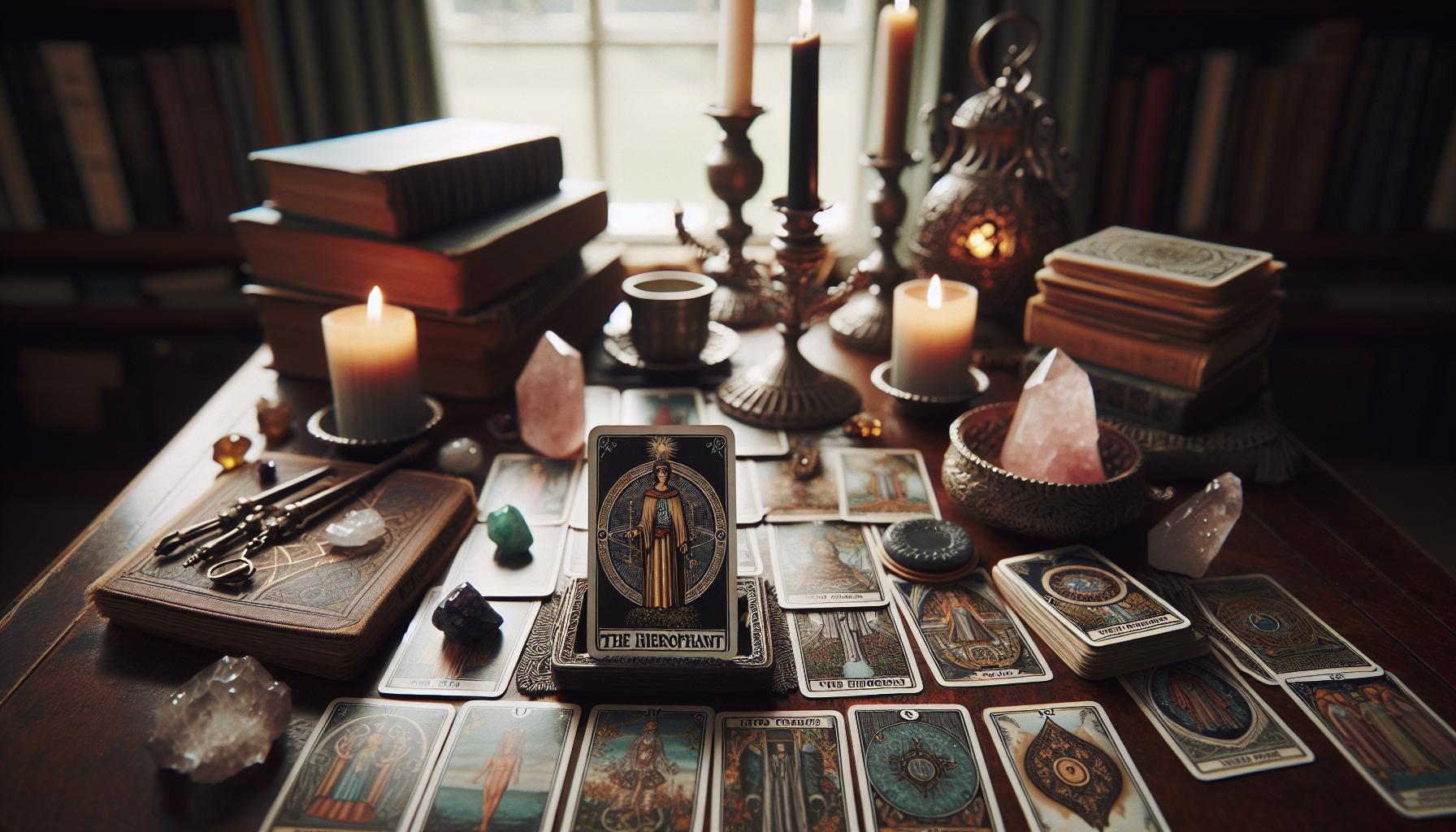
When conducting tarot readings, the placement of cards within various spreads can dramatically influence their interpretation. The Hierophant, representing traditional authority, spiritual guidance, and institutional wisdom, takes on unique roles depending on where it appears in a spread. Whether in love readings, career-focused layouts, or personal growth spreads, understanding the context of the Hierophant’s position can enrich your interpretation.
In a three-card spread, for example, if you draw the Hierophant in the “past” position, it may signify how upbringing, educational influences, or traditional beliefs have shaped your current situation. This context invites reflection on how these factors affect your decisions today. If placed in the “present” slot, the Hierophant suggests that it’s a pivotal time for seeking guidance or aligning yourself with established practices-perhaps joining a community or adhering to a set of values that resonate with you. Lastly, in the “future” position, it indicates that your path forward may involve embracing traditional teachings or entering a phase of deep commitment, possibly in relationships or career pursuits.
When working with larger spreads such as the Celtic Cross, the Hierophant might surface as a powerful card representing both your internal beliefs and the external influences of society. It urges you to examine how collective ideologies or spiritual institutions impact your journey. Here, you might consider the implications of conformity versus individuality, questioning where you feel comfortable or constrained by societal norms.
For beginners, incorporating the Hierophant into daily card draws can be enlightening. When it appears, take a moment to reflect on your current life situation. Are you feeling guided by traditional values or perhaps seeking mentorship? Journaling about these insights can deepen your understanding of how the Hierophant’s wisdom manifests in your life. For more advanced readers, try integrating the Hierophant with other Major Arcana cards in your spreads; examine how its themes of authority and structure interact with ideas of change (The Tower) or intuition (The High Priestess).
Ultimately, the Hierophant serves as a reminder that while seeking personal truth is vital, recognizing the value of established structures can offer guidance and support. Embrace its energy by exploring traditional paths while remaining open to new interpretations and integrations in your spiritual journey.
Reversed Hierophant: Meaning and Insights
When the Hierophant appears reversed in a tarot reading, it can signal a time of questioning and dismantling established beliefs or traditions. Unlike its upright counterpart, which embodies the search for wisdom through traditional avenues and spiritual authorities, the reversed Hierophant urges you to explore personal truths beyond societal expectations. This card asks you to examine where you may be rebelling against norms or feeling constrained by rigid structures, offering a chance for personal growth through independence.
One of the primary insights associated with the reversed Hierophant is a resistance to conformity. You may find yourself grappling with a sense of disconnection from traditional values or organized systems, such as religion or societal roles. This period could manifest as a desire to think freely and develop your own spiritual path, unencumbered by beliefs handed down by others. For instance, if you’re involved in a community or religious group that no longer resonates with your values, this card might encourage you to step away and seek a more authentic path.
In practical terms, consider reflecting on the following areas when the reversed Hierophant surfaces:
- Challenging Norms: What rules or expectations are you willing to question? Identify areas in your life where conformity has stifled your individuality.
- Seeking Authenticity: Are you ready to embrace your genuine beliefs, even if they diverge from the mainstream? Explore alternative viewpoints or practices that resonate more deeply with you.
- Mentorship and Guidance: Who inspires you to break free from tradition? Seek out mentors who support your journey toward authenticity instead of enforcing outdated ideologies.
This reversed position is not merely about rebellion for its own sake; it’s an invitation to forge a path that is uniquely yours. It emphasizes the importance of spiritual autonomy, suggesting that true wisdom often lies outside accepted norms. For those on a personal growth journey, the reversed Hierophant can be a powerful catalyst for transformation, prompting deeper introspection and a re-evaluation of what is truly meaningful in your life. Remember, embracing this card’s energy can lead to profound insights and a clearer understanding of your authentic self.
Practical Tips for Interpreting the Hierophant
Understanding the Hierophant in tarot can deeply enrich your readings by connecting you with themes of tradition, spiritual authority, and internal wisdom. This card often encourages seekers to look beyond the surface and explore the deeper meanings behind societal structures and established beliefs. When you draw the Hierophant, it may signal both a time for abiding by tradition and a reminder to seek guidance from established sources. To effectively interpret this card, consider these practical tips.
Reflect on Context
The first step is to assess the context of your reading. Is the Hierophant appearing in a spread related to personal development, career guidance, or spiritual awakening? Understanding the surrounding cards will help you determine whether the Hierophant emphasizes adherence to tradition or encourages questioning established norms. For instance, if it appears alongside The Fool, it might suggest blending the wisdom of traditions with new beginnings.
Explore Personal Associations
Your personal connection to the card is paramount. Think about what the Hierophant symbolizes for you. Do you feel inclined toward tradition, such as religion or family values, or are you struggling with expectations imposed by these institutions? Journaling your thoughts can be a helpful exercise. Write down your feelings about authority figures in your life and how they influence your worldview.
- Consider Cultural Influences: Each culture has its own set of beliefs and traditions. Reflect on how your cultural background influences your interpretation of the Hierophant.
- Ask Open-Ended Questions: When interpreting the Hierophant, ask yourself questions like, “What truths am I learning from my mentors?” or “How can I align my inner values with external expectations?”
Utilize Symbolism
Pay attention to the imagery on the card. The Hierophant is often depicted with religious symbols, keys, or seated between two pillars-each representing duality and balance. Consider what these symbols mean to you in your current life situation. For example, the keys can represent unlocking new wisdom or understanding, while the pillars might symbolize the balance between personal beliefs and societal expectations.
Practice Daily Integration
To draw the Hierophant’s energy into your daily life, set intentions or affirmations aligned with its themes. For example, you might say, “I am open to learning from my mentors” or “I embrace the wisdom of tradition while remaining true to myself.” This approach not only fosters a deeper connection with the card but also teaches you how to apply its lessons practically.
By embracing these strategies, you can cultivate a nuanced understanding of the Hierophant and its relevance to your life. Remember, tarot is a personal journey, and interpreting the Hierophant is about discovering layers of meaning that resonate with your unique experiences. Engaging with this card can lead you toward a profound connection with tradition and authority, offering wisdom that feels both sacred and personal.
The Hierophant’s Role in Personal Growth
The Hierophant serves as a powerful symbol of personal growth, guiding us through the labyrinth of traditions, beliefs, and societal norms that shape our lives. This card encourages us to examine our relationship with established authority and to engage with the wisdom offered by others. When you encounter the Hierophant in a reading, it may signal a period of deep introspection, inviting you to embrace teachings that foster both understanding and self-discovery.
Connecting with the wisdom of mentors, whether they are figures of religious, educational, or communal significance, can greatly enhance your journey of personal growth. These mentors provide us with critical insights that help clarify our values and beliefs. Consider how you can actively seek guidance or learn from those who’ve walked similar paths, whether through formal education, spiritual teachings, or even personal relationships. Reflecting on your own experiences with authority can reveal underlying fears or aspirations that you may wish to address.
- Recognize Patterns: Identify recurring themes in your life that stem from societal expectations or traditions. Are you following a path laid out by others, or are you crafting your own journey? This awareness can be the first step towards personal empowerment.
- Challenge Norms: Use the experience of the Hierophant to question which traditions serve you and which do not. Embracing this card’s energy involves understanding when to conform and when to break away from outdated beliefs.
- Integrate Learning: Take time to integrate the insights you receive from teachers and mentors. Journaling your thoughts or discussing them with trusted friends can help solidify these lessons into your personal philosophy.
The Hierophant’s influence encourages a balanced approach to tradition and innovation. For example, if you are in a family business, consider how you might blend familial expectations with your unique perspective. This synergy not only honors tradition but also paves the way for personal authenticity.
Ultimately, the Hierophant invites us to grow through connection-with ourselves, our communities, and the wisdom imparted by those before us. As you journey through life’s complexities, let this card remind you of the importance of learning, teaching, and evolving. By engaging with the Hierophant’s messages, you can cultivate a profound understanding of your personal growth path, allowing your authentic self to flourish within the fabric of tradition.
Comparing the Hierophant with Other Major Arcana
Understanding the Hierophant in relation to other Major Arcana cards reveals the complexities of tradition, authority, and spiritual guidance within the Tarot. Each card serves a distinct role, but when compared, their meanings and implications deepen. The Hierophant, representing spiritual authority and organized belief systems, stands in contrast and harmony with several key cards.
For instance, consider the High Priestess, positioned directly before the Hierophant in the Major Arcana sequence. While the Hierophant embodies external knowledge and formalized teachings, the High Priestess represents intuition and inner wisdom. This pairing emphasizes the balance between external guidance and internal insight. Engaging with the Hierophant can prompt questions of what we’ve learned from society, while the High Priestess encourages exploration of self-derived truths. Together, they invite us to consider how external teachings align with our inner voice.
Equally important is the Empress, who symbolizes fertility, creativity, and the nurturing aspect of wisdom. Where the Hierophant often focuses on established doctrines and societal structures, the Empress encourages the blossoming of new ideas and personal expression within those frameworks. Engaging with both cards in a reading can highlight the tension between adhering to tradition and fostering creative growth. For those feeling stifled by rigid structures, the Empress may suggest pathways to innovate while still honoring the seeds of established wisdom.
As you reflect on the Wheel of Fortune, its connection to the Hierophant speaks to life cycles and the ever-changing landscape of belief systems. The Wheel suggests that wisdom may come from both the highs and lows of experience, encouraging flexibility in one’s adherence to tradition. This dynamic is a reminder that while the Hierophant offers guidance through structured teachings, true understanding often requires adaptability and the awareness that situations are cyclic and ever-evolving.
Engaging with these comparisons can enhance your readings. When the Hierophant appears, consider the surrounding cards and ask yourself: Are external teachings resonating with your internal wisdom? Are you nurturing your personal growth within established frameworks? Such reflections allow for richer interpretations and a holistic view of one’s spiritual journey. Remember, each Major Arcana card weaves together a narrative of transformation, illuminating different facets of our life’s path.
Cultural Interpretations of the Hierophant
The Hierophant tarot card resonates deeply across various cultures, embodying notions of tradition, authority, and the sacred passage of knowledge. In different cultural contexts, the symbols and meanings attributed to the Hierophant may vary, but the underlying essence often points to a unifying theme: the guidance provided by structured belief systems and the importance of communal knowledge. This archetype can be observed in numerous spiritual practices and institutions throughout history.
In Western contexts, particularly within Judeo-Christian traditions, the Hierophant is frequently associated with figures such as the Pope or religious clergy who articulate and uphold doctrinal teachings. This perspective emphasizes the role of organized religion in facilitating spiritual understanding, offering a framework that guides followers through life’s complexities. When the Hierophant appears in a reading, it often prompts reflections on one’s relationship with authority and tradition. Are you feeling aligned with your spiritual community, or do you sense a discrepancy that needs addressing?
In Eastern spiritual practices, the Hierophant could be likened to the roles of wise teachers or Gurus, who transmit ancient wisdom and philosophical teachings. In these contexts, the card may invoke a call to seek mentorship or to engage with the teachings that resonate with one’s soul. For individuals navigating their spiritual journey, the Hierophant encourages a critical evaluation of the teachings they choose to follow. Embracing cultural variations enhances understanding and can lead to richer insights in personal tarot readings.
When interpreting the Hierophant, consider how your cultural background influences your understanding of spiritual authority. You may find it helpful to create a list of influential figures or teachings from your tradition that resonate with you. This process can foster a deeper connection to the Hierophant’s energy, grounding your interpretations in personal and communal history. Recognizing the diverse interpretations of the Hierophant invites a broader perspective, encouraging both honoring established beliefs and exploring personal truths. Such a balance empowers you to navigate the waters of tradition while staying true to your intuitive wisdom.
How to Use the Hierophant in Daily Readings
Using the Hierophant in your daily readings can empower you to connect deeply with tradition and spiritual guidance, helping you navigate personal challenges with wisdom. One effective way to incorporate this card is to ask focused questions that align with its themes of authority, conformity, and spiritual insight. For example, you might ask, “What traditions or teachings can guide me today?” or “How can I honor my spiritual community?”
To enhance your daily readings, consider the following steps:
1. Set Your Intention
Begin each reading by setting a clear intention. This could be as simple as a statement like, “I seek guidance from the Hierophant to understand the roles of tradition in my life.” Writing down your intention can help focus your energy and mind on what you want to learn.
2. Daily Card Pull
Each morning, pull the Hierophant card and reflect on its meaning. You might create a small ritual around this, such as lighting a candle or taking a few deep breaths to ground yourself. As you look at the card, meditate on how its themes might manifest in your day. What traditions can you draw upon? Are there teachers or mentors whose advice could benefit you today?
3. Journaling Insights
After your daily reading, journal about your experiences. Write about any insights the Hierophant has sparked. You might explore questions like:
- How does this card’s message challenge my current beliefs?
- In what ways can I engage more deeply with my community or traditions today?
- What teachings resonate with me right now, and why?
This practice not only solidifies your understanding of the card but also deepens your connection to your personal spiritual journey.
4. Reflect on Authority Figures
Think about influential figures in your life, such as mentors, religious leaders, or even family members who embody the qualities of the Hierophant. Consider how their teachings and values impact your decisions. By acknowledging these influences, you can create a richer spiritual tapestry that informs your daily actions.
Incorporating the Hierophant into your daily tarot practice fosters a balanced approach to traditional authority, encouraging you to honor established beliefs while also exploring your personal truths. Remember, tarot is a tool for empowerment and self-discovery-allow it to guide you on a path that feels meaningful and authentic.
Exploring Hierophant Variations Across Decks
The Hierophant card exhibits fascinating variations across different tarot decks, each adding unique nuances to its interpretation while retaining the core themes of tradition and spiritual authority. In traditional decks, such as the Rider-Waite-Smith, the Hierophant is depicted as a figure resembling a pope, seated between two pillars and flanked by acolytes. This imagery reinforces his role as a teacher and spiritual guide, emphasizing the importance of established religious structures and conformity to communal beliefs.
In more modern or eclectic decks, interpretations of the Hierophant can reflect diverse cultural and spiritual perspectives. For example, in the Wild Unknown Tarot, the Hierophant is represented by a more abstract, animalistic figure, which might appeal to those who resonate more with nature-based spirituality than organized religion. This shift in visual symbolism invites readers to consider spiritual authority in more personal and less conventional ways.
When exploring variations among decks, pay attention to the accompanying symbols and colors. In some decks, the Hierophant may possess attributes associated with specific cultures. For instance, in the Thoth Tarot, he embodies a more mystical and esoteric aspect, filled with intricate designs and celestial motifs. This emphasizes not just traditional authority but also inner wisdom and hidden knowledge.
Understanding these variations can deepen your tarot practice. When drawing the Hierophant from a deck that emphasizes alternative interpretations, consider how it resonates with your personal path. Ask yourself: What traditions do I value? and How can I forge my own understanding of authority? Each deck provides a fresh lens through which to view the Hierophant, encouraging a conversation about how traditional values can coexist with your individual beliefs. Engaging with multiple representations invites you to appreciate the card’s multifaceted nature, ultimately enriching your intuitive readings.
Frequently asked questions
Q: What is the significance of the Hierophant in Tarot readings?
A: The Hierophant symbolizes traditional authority, spiritual guidance, and conformity within Tarot readings. This card often represents a mentor or teacher, highlighting the importance of established wisdom and societal values. It encourages seekers to explore their beliefs while remaining open to spiritual lessons.
Q: How can I interpret the Hierophant card if it appears reversed?
A: When reversed, the Hierophant may indicate a challenge to authority, unconventional paths, or a re-evaluation of traditions. It encourages questioning established norms and exploring personal beliefs. Consider how personal growth may require stepping outside traditional boundaries.
Q: In what types of Tarot spreads does the Hierophant play a key role?
A: The Hierophant is pivotal in spreads focused on personal growth, spiritual advice, and questions regarding education or relationships. It provides insights into how traditional values influence current situations and decisions, particularly in spreads designed to explore societal expectations.
Q: What lessons can the Hierophant teach about spiritual growth?
A: The Hierophant teaches that understanding and integrating established teachings can facilitate spiritual growth. Embrace the wisdom of mentors or community resources while remaining adaptable. This balance of tradition and personal intuition fosters deeper spiritual understanding.
Q: How does the Hierophant compare with other Major Arcana cards?
A: Compared to other Major Arcana cards, the Hierophant stands out for its focus on tradition and structure, especially in contrast to the Fool (which symbolizes spontaneity and exploration). This card emphasizes the role of established systems in personal and collective journeys.
Q: Why might the Hierophant appear in a reading focused on relationships?
A: The Hierophant often appears in relationship readings to suggest the influence of cultural or familial expectations. It may represent marriage, commitment, or the need to align personal beliefs with those of loved ones, guiding the way towards shared values.
Q: What cultural interpretations can be derived from the Hierophant card?
A: Culturally, the Hierophant resonates with institutions like religion, education, and government, serving as a bridge between personal beliefs and societal norms. This card encourages exploration of how different cultures interpret authority and spiritual teachings, enriching your understanding.
Q: How can I use the Hierophant card in my everyday life?
A: Incorporate the Hierophant into daily practices by seeking out mentoring opportunities or engaging with spiritual communities. Reflect on how traditional wisdom can guide your decisions, fostering an environment of learning and growth that blends intellect with intuition.
Closing Remarks
As you reflect on the wisdom of the Hierophant in Tarot, remember that this card symbolizes not just traditional authority but also the guidance that can help you navigate your spiritual path. Whether you’re embracing established beliefs or exploring new avenues, the Hierophant invites you to seek deeper knowledge and understanding. Why not take the next step in your Tarot journey? Explore our comprehensive guides on the meanings of other Tarot cards, or try a personalized Tarot reading to gain insights tailored to your situation.
Feeling inspired? Join our newsletter for tips and exclusive content on how to enhance your Tarot reading skills. Don’t hesitate to share your thoughts or questions in the comments below-your journey matters, and we’re here to support you. Dive deeper into the mystical world of Tarot today and uncover the spiritual insights waiting just for you!