Have you ever felt the need for guidance during uncertain times? A 3 Card Tarot reading is a simple yet powerful tool to help you gain insight into your life’s questions and decisions. This method is ideal for beginners, allowing you to explore your intuition and connect with your inner wisdom without feeling overwhelmed. As you embark on this journey, you’ll discover how the cards can illuminate your path, revealing opportunities or challenges ahead.
By mastering this three-card spread, you’ll learn to interpret the cards’ meanings, understand their positions, and cultivate a deeper awareness of your own thoughts and feelings. Whether you’re seeking clarity about a relationship, career moves, or personal growth, this approach offers a valuable framework. So, let’s dive in-together, we can unlock the mysteries of Tarot and empower you to navigate your unique journey with confidence and curiosity!
How Tarot Works: Understanding the Basics
Tarot is more than just a deck of cards; it’s a profound tool for self-discovery and reflection. Each card holds a wealth of symbolism and potential stories that help us navigate our subconscious. Through the practice of drawing cards, we tap into our intuition, allowing the archetypes represented to resonate with our personal experiences and circumstances. This connection creates a dialogue between the reader and the cards, unveiling insights about our past, present, and possible futures.
When understanding how tarot works, it’s crucial to grasp the significance of each card and their collective meanings within a reading. The tarot deck typically consists of 78 cards divided into the Major and Minor Arcana. The Major Arcana represents significant life themes and transformational energies, while the Minor Arcana reflects daily experiences and challenges. This division lays the groundwork for interpreting the spreads-specific layouts of cards that address particular questions or themes.
For beginners, the 3 card spread is often the most approachable. It offers a concise way to explore various aspects of a question or situation. Usually, each of the three cards corresponds to a position: past, present, and future. This simple structure not only makes it easier to understand the storyline your cards are unfolding but also encourages deeper engagement with the intuitive process. As you begin your readings, remember to focus on how the images and meanings of the cards speak to you personally, inviting a unique and dynamic interaction that goes beyond textbook definitions.
As you become more comfortable with the cards, remember that tarot is a practice grounded in personal exploration and growth. Never hesitate to trust your gut feelings and insights as you interpret the cards. Embrace the mystery and allow the cards to guide you toward understanding yourself and your life journey better. Over time, with regular practice, you will not only enhance your tarot skills but also foster a deeper connection to your own intuition.
The Meaning Behind Each Tarot Card
Understanding the symbolism and meaning behind each tarot card is essential to harnessing the power of tarot readings, especially when using a straightforward approach like the 3-card spread. With 78 cards in total, the tarot deck is divided into the Major Arcana and the Minor Arcana, each playing a unique role in the narrative of your reading. For beginners, focusing on the essential meanings can help build confidence and clarity in interpreting the cards.
Major Arcana
The Major Arcana consists of 22 cards that embody significant life themes and spiritual lessons. Each card acts as a powerful archetype that reflects deep emotional and spiritual truths. For instance, The Fool, numbered 0, symbolizes new beginnings and a leap of faith. In a reading, this card can represent the start of a new journey. The Tower, on the other hand, signifies sudden change and upheaval, suggesting that challenging experiences might lead to necessary growth.
Minor Arcana
The Minor Arcana consists of 56 cards divided into four suits: Cups, Pentacles, Swords, and Wands. Each suit represents different aspects of life:
- Cups: Emotions and relationships. For example, the Two of Cups signifies harmony in relationships and partnership.
- Pentacles: Material aspects and career. The Ace of Pentacles often indicates new financial opportunities or projects.
- Swords: Intellect and conflict. The Three of Swords typically represents heartbreak or emotional turmoil.
- Wands: Creativity and action. The Six of Wands indicates victory and recognition in endeavors.
Each card in these suits tells a story about daily experiences and challenges, enhancing your reading by providing context to the broader themes indicated by the Major Arcana.
When conducting a 3-card reading, consider the following meanings for each position within your spread:
- Past: Reflect on how previous experiences influence the current situation. For example, drawing the Six of Cups might imply nostalgia or childhood influences affecting your present.
- Present: This card reveals the current influences at play. If you pull the Seven of Wands, it may indicate a need to stand your ground amidst challenges.
- Future: Here, you glimpse potential outcomes. Drawing The Star could suggest hope and renewed faith regarding your situation.
Embracing the individual meanings of the cards allows for rich, personal insights to emerge from your readings. Remember, the interpretations can vary based on your intuition. Trusting these instincts is part of the journey, enriching your understanding of both the cards and yourself. As you practice, you will come to appreciate the unique stories the cards can narrate, creating a roadmap for personal growth and exploration.
Choosing Your Tarot Deck: Finding the Right Fit
Selecting the right tarot deck is an essential first step in your tarot journey, as it can significantly influence your reading experience. The tarot deck you choose is more than just a collection of cards; it’s a reflection of your personal style, intuition, and spiritual path. With countless decks available-each featuring unique artwork, imagery, and symbolism-finding one that resonates with you can deepen your understanding and connection to the cards.
When exploring different decks, consider the artwork first. Look for illustrations that speak to you emotionally. Whether you are drawn to whimsical images, classic depictions, or abstract styles, the right art can create a connection that makes readings more intuitive. For instance, decks like the Rider-Waite Tarot are famous for their clarity and traditional imagery, while others, such as the Wild Unknown Tarot, offer stunning hand-drawn designs that connect deeply with nature and simplicity. Take your time to browse through various decks, and if possible, handle them. Feel the texture, observe the colors, and see how they resonate with your energy.
Also, think about the themes and focuses of the deck. Some decks are infused with specific cultural symbols or spiritual philosophies, which can enhance or alter the meanings of the cards. For example, the Thoth Tarot incorporates rich esoteric elements, including astrology and Kabbalah, while many oracle decks focus on personal growth and empowerment. Ask yourself what you hope to gain from your readings-whether you’re searching for guidance on love, career, or self-discovery. Choosing a deck aligned with your intentions can provide clarity and insight during your 3-card readings.
Finally, pay attention to the accompanying guidebook. A well-written guidebook can offer valuable insights into the meanings of the cards, spread options, and suggested interpretations. This support is particularly useful for beginners, providing a framework to help build confidence in your readings. Remember, your tarot deck is your companion on this journey. Choose one that brings you joy and intrigue, as your personal connection to the deck will infuse your readings with authenticity and intuitive wisdom. So go ahead-trust your instincts and find the deck that feels like home!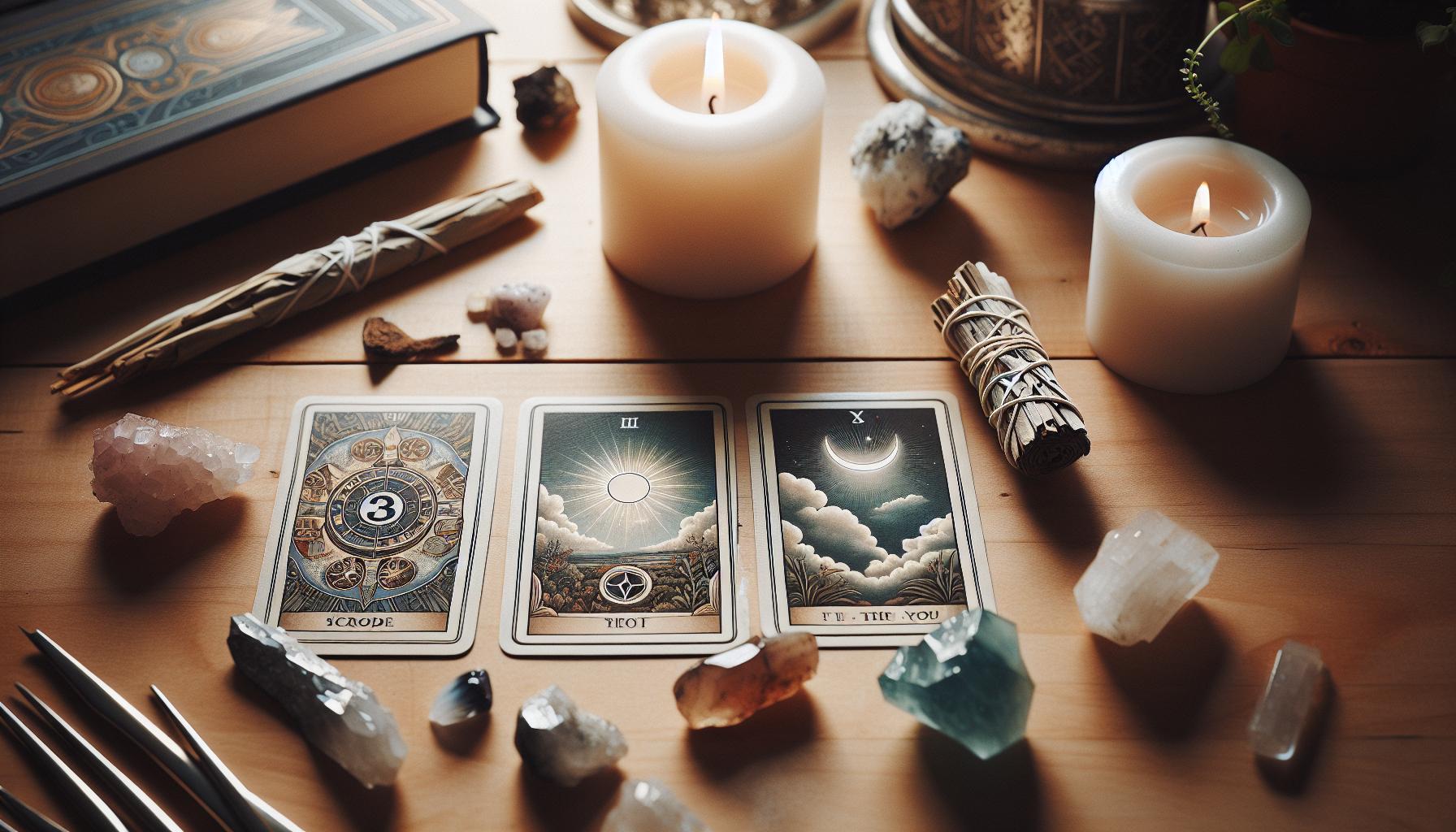
Setting Up Your 3 Card Tarot Reading
Setting up a 3-card tarot reading can be an enlightening experience, guiding you through personal insights and revelations. This simple yet powerful spread can offer clarity on a specific question, illuminate past influences, and provide a glimpse into potential future outcomes. What makes the 3-card reading accessible for beginners is its straightforward approach, allowing room for interpretation while fostering a deeper connection with your intuitive self.
To begin, find a quiet space where you feel comfortable and undisturbed. Surround yourself with items that enhance your reading environment-whether that’s candles, crystals, or incense. Center your thoughts by taking a few deep breaths and focusing on your intention for the reading. You might want to phrase your question clearly in your mind or write it down. This sets a strong foundation for your reading, helping you to tune into the energy of the cards.
When you’re ready, shuffle your deck while holding your question in mind. As you shuffle, pay attention to the cards that stand out or resonate with you. This intuitive approach can guide your choice of which cards to draw. Once you feel ready, draw three cards and lay them out in front of you from left to right. Each card will signify a key aspect of your inquiry:
- Card 1: Past – Represents influences or events leading up to your current situation.
- Card 2: Present – Reflects your current state or influence regarding the question at hand.
- Card 3: Future – Indicates the potential outcome or future direction based on your current path.
After laying out the cards, take a moment to observe them. Each card’s imagery and symbolism can evoke different feelings and insights. As you interpret each card, consider both its traditional meanings and how it connects to your question. It may be helpful to jot down your thoughts in a journal, capturing insights and emotions that arise during the reading.
Remember, tarot is a personal journey, and each reading is unique. Don’t hesitate to allow your intuition to guide you, even if it leads you to insights that differ from standard interpretations. Embrace this opportunity to explore the wisdom of the cards as they provide reflections of your inner world, helping you to unveil paths that lie ahead.
How to Shuffle and Draw Cards Intuitively
To engage deeply with your tarot practice, the way you shuffle and draw cards can significantly enhance your intuitive abilities. It’s not just a mechanical process but a sacred ritual that connects you to the cards and their meanings, allowing your intuition to guide the reading. Consider shuffling the deck as a form of meditation: it’s an opportunity to clear your mind, focus on your question, and invite the energy of the universe to participate in your reading.
As you shuffle, hold your intention firmly in your mind. What do you want clarity on? Whether it’s about career choices, relationship dynamics, or personal growth, clearly articulating your question helps to center your thoughts. There are various ways to shuffle, so choose one that resonates with you. You might prefer a traditional overhand shuffle, where you split the deck and let cards fall from one hand to the other, or a more playful riffle shuffle, mixing the cards in a way that feels satisfying.
When you feel ready to draw cards, pause for a moment. You can fan the cards out and intuitively pick a few that stand out to you, or you might feel compelled to cut the deck and take the top three cards. Trust your instincts during this phase-does a particular card catch your eye, or do you feel drawn to a specific point in the deck? Remember, each card you select is a whisper from your intuition, guiding you toward the insights you seek.
After you’ve drawn the cards and laid them out in your three-card spread, take time to observe each one. Notice the imagery and colors; what emotions does each card evoke? For example, if you pull the Six of Cups in the past position, you might reflect on your childhood memories or a sense of nostalgia in your current question. Allow these reflections to weave into your understanding of the reading. Trust that your unique experiences and insights are just as valid as traditional card meanings; this is your personal journey with tarot, and your interpretation will always hold value.
Interpreting the Past, Present, Future Spread
Understanding how to interpret a Past, Present, Future spread can truly transform your tarot practice, offering deep insights into your life’s journey. Each position in this three-card layout serves a distinct purpose, shedding light on how your past influences your present and how both inform your future. This spread effectively creates a narrative, allowing you to analyze the interconnectedness of your experiences and choices.
For the Past card, consider how your previous experiences shape your current situation. Pulling a card like the Six of Cups, for example, might prompt you to reflect on childhood memories, suggesting that nostalgia could play a role in your current emotional state. Ask yourself how past lessons influence your present attitudes or behaviors towards relationships, career, or personal growth.
Moving to the Present card, focus on where you currently stand. If you draw the Two of Swords, it may indicate indecision or a need to make a choice. This position asks for reflection on the circumstances that have led you to this moment and encourages you to recognize your power in shaping the future. Observe how external factors and your internal mindset intersect.
Finally, the Future card offers a glimpse into what lies ahead based on your current path. A card like the Wheel of Fortune can suggest a favorable turn in events. It emphasizes the importance of recognizing the cyclical nature of life-understanding that your decisions can lead to new opportunities. This position encourages you to remain open and adaptable, preparing to embrace changes that may come your way.
When interpreting this spread, it’s essential to weave together the insights from all three cards. Consider how the past informs your present and guides your future. Engage with the imagery and meanings of the cards, allowing your intuition to lead the way. Reflective journaling can be helpful here; jot down your thoughts and feelings about each card’s message. Remember, tarot is a tool for understanding and growth, making it accessible for everyone, whether you are a seasoned reader or just starting your journey.
Deep Dive: Individual Card Interpretations
The world of tarot is vast, and each card holds a unique energy and potential message for the reader. Understanding individual card meanings enhances your overall reading experience, especially when conducting a three-card spread, as it allows you to draw upon rich narratives and deeper insights. Here, we’ll explore key interpretations for both the Major and Minor Arcana cards to help you navigate this enchanting landscape.
Key Card Meanings
Major Arcana
These 22 cards represent significant life themes and archetypal energies that can indicate deep personal transformations. They often reflect pivotal moments in your life.
- The Fool: New beginnings, spontaneity, and a sense of adventure. It encourages you to take risks with an open heart.
- The Lovers: Represents relationships, choices, and harmony. It invites you to assess your connections with others.
- The Tower: Symbolizes sudden upheaval or revelation. This card challenges you to rebuild and reassess after chaos.
Minor Arcana
These 56 cards reflect daily experiences and provide guidance on practical matters related to emotions, intellect, and actions.
- Four of Cups: A feeling of discontent or reevaluation. It encourages you to look for opportunities that may be overlooked.
- Eight of Pentacles: Focused work and mastering a skill. It suggests dedication to your goals and continuous improvement.
- Page of Swords: Darting communication and curiosity. This card urges you to be vigilant and engage with your thoughts.
Interpreting Card Combinations
When interpreting the meanings of individual cards in the context of a three-card spread, consider how they interact. The conversation among the cards can reveal deeper insights. For instance, if your Past card is The Six of Cups, indicating nostalgia and joy from previous experiences, and your Present card is the Two of Swords, this might illustrate a conflict between wanting to move forward but feeling held back by past emotional ties.
Reflect on how the card meanings align with the question or concern you have in mind. By drawing upon both the literal meanings and your intuitive feelings, you can create rich tapestries of understanding. Pay attention to the imagery-sometimes, a card’s art speaks volumes and directs your intuition.
Practical Tips for Beginners
As you familiarize yourself with individual cards, keep a tarot journal where you document your pulls, interpretations, and evolving insights. This practice not only helps build your memory of the cards but also enhances your intuitive skills. Experiment with different placements and spreads to see how card meanings can shift based on their context in the reading.
Embrace the journey. Each card you encounter opens up a world of reflection and wisdom. Trust that through practice and patience, you’ll grow more confident in your readings, uncovering the subtle messages the tarot has to offer. Remember, tarot is a tool for exploration and guidance, available to everyone willing to engage with it meaningfully.
Common Mistakes in Beginner Tarot Readings
Entering the realm of tarot can feel both exhilarating and overwhelming, especially for beginners. One of the most common pitfalls is approaching readings with rigid expectations. Many new readers hope for clear, definitive answers from the cards instead of understanding that tarot is a tool for guidance and personal reflection. This mindset can lead to frustration and misinterpretation. Remember, tarot readings are often more about exploring possibilities than providing absolutes.
Another frequent mistake involves neglecting the importance of intuition. Beginners might focus heavily on memorizing card meanings without allowing their instincts to contribute to the reading. While understanding the standard interpretations is essential, connecting with the imagery and emotions the cards evoke is equally important. For example, if you pull the Five of Cups, you might recall a personal loss; your unique experience can enrich the reading beyond textbook definitions.
Poor card placement is yet another common error. In a three-card spread, the positions (often representing past, present, and future) provide context that can dramatically alter a card’s meaning. Failing to consider this can lead to misalignment of insights. Imagine drawing the Hermit in the ‘Present’ position; this likely suggests introspection. But if placed in the ‘Future,’ it may indicate an upcoming period of solitude and contemplation.
Lastly, keep a journal. It’s easy to forget the nuances of a reading, particularly as you accumulate more experiences. Documenting your readings helps track patterns, reveals your evolving interpretations, and enhances your intuitive skills over time. Reflection transforms your practice from mere card reading to a meaningful exploration of self and spirit. Embrace these early missteps as part of your learning journey, and let them guide you toward deeper understanding and confidence in your tarot practice.
Enhancing Your Reading with Intuition
When engaging with Tarot, intuition isn’t just a bonus-it’s a crucial aspect of a meaningful reading. Think of Tarot as a conversation rather than a definitive answer sheet. While the cards have established meanings, how you connect those meanings to your own feelings and experiences is where the magic happens. Your intuition acts as a bridge, linking the abstract symbols of the cards with the reality of your situation, allowing for deeper insights.
To enhance your reading with intuition, start by quieting your mind before the session. Create a calm environment that invites reflection. As you shuffle the cards, focus on your breath and the question at hand. This grounding exercises your intuitive muscles, preparing you to receive messages beyond the standard interpretations. Feel free to employ open-ended questions that allow for exploration-rather than yes or no queries. Ask yourself, “What does this situation need me to understand?” instead of looking for a single answer.
Once you’ve drawn your cards, take a moment to absorb their imagery. Sit with each card and examine what stands out-colors, symbols, or even your emotional response. For instance, if you draw the Two of Swords, the traditional meaning refers to difficult decisions or stalemates. However, the blindfold on the figure might evoke feelings of uncertainty in you. Perhaps it mirrors an area of your life where you feel blocked. Recognize these personal connections, for they often lead to the most profound insights.
As you practice, don’t shy away from trusting your gut feelings about the cards. Each reader will instinctively resonate differently with the imagery and themes presented. Journal your thoughts and interpretations. Over time, this record will become a powerful guide, showcasing how your intuitive insights deepen and evolve. By embracing the wisdom of your intuition, you transform your tarot practice into a personal exploration of self, rich with meaning and clarity.
Journaling Your Tarot Insights and Growth
To truly deepen your connection to Tarot and its insights, journaling your experiences after each reading can be incredibly valuable. This practice not only helps crystallize your thoughts and feelings about the cards but also charts your growth as a reader. The act of writing can transform fleeting moments of inspiration into lasting wisdom. Consider it an extension of your Tarot practice, where the page becomes a mirror reflecting your evolving understanding of both the cards and yourself.
Start your journal after your 3-card reading by summarizing the core insights you gathered. What immediate thoughts came to mind when contemplating each card? Was there a particular image or symbol that resonated with you? Documenting these initial impressions is crucial. For example, if you drew the Empress, you might note feelings of abundance or nurturing, leading you to explore areas of your life where you seek growth or support. Capture these spontaneous reflections, as they often hold the keys to personal revelations.
Key Elements to Include in Your Journaling
- Date of Reading: A simple record to see how your insights evolve over time.
- Card Details: Note the cards drawn, along with their position (Past, Present, Future) and any card reversals.
- Personal Intuition: Write down any immediate feelings or thoughts you had during the reading. Did a specific card trigger a memory or feeling?
- Questions Prompted: Reflect on any new questions that arise from your reading. This can guide future readings and deepen your exploration.
- Lessons Learned: Consider how the reading applies to your life and what action you might take moving forward.
As you continue this practice, you’ll likely notice patterns forming over time. Perhaps the same cards recur, or your understanding of a particular symbol evolves. This tracking of growth not only builds confidence but also demystifies the Tarot’s messages. By returning to past entries, you may find insights that were not apparent during the initial reading, reinforcing that Tarot is both a tool for guidance and a path for self-discovery. Embrace this journey-your journal is not just a record, but a sacred space for your evolving relationship with the Tarot.
Building Confidence with Daily Tarot Practice
Building your confidence through daily Tarot practice can transform your readings from tentative explorations into powerful insights. As you engage with the cards regularly, you begin to cultivate a natural intuition and a deeper understanding of their meanings. The key is consistency-by incorporating a simple daily routine, you’ll start to notice how your relationship with the Tarot evolves, helping you trust your instincts and interpretation abilities more.
Start with a manageable goal, such as drawing one card each morning. Take a moment to reflect on its meaning and how it resonates with your life at that moment. Ask yourself open-ended questions: What does this card signify for me today? What energy should I embody? This approach not only warms you up for bigger readings later but also trains your intuition to become more responsive to the cards’ energies. Over time, you might find that these daily reflections blossom into more profound readings as you enhance your connection to the Tarot.
To further build your confidence, consider joining a community of fellow Tarot enthusiasts. Platforms like social media groups, forums, or local meet-ups can offer support and different perspectives. Sharing your daily card draws and insights with others can encourage open discussions and expose you to various interpretation styles. You’ll also gain encouragement from peers who are on a similar journey, reassuring you that your interpretations are valid and significant.
Lastly, remember to be patient with yourself. Confidence in Tarot reading grows gradually, much like any skill. Celebrate even the smallest victories, whether it’s accurately interpreting a card or successfully answering a personal inquiry. Each reading, regardless of how you perceive its outcome, builds your connection to the cards. The more you practice, the more you’ll understand that Tarot is not solely about predicting the future but is a powerful tool for personal reflection, guidance, and empowerment. Embrace this journey with an open heart, and enjoy the magic that unfolds as your practice flourishes.
Exploring Advanced Techniques for Deeper Readings
Exploring the depths of Tarot reading can transform your 3-card spreads into powerful tools for insight and reflection. As you become more comfortable with the basics, delving into advanced techniques will expand your understanding and enhance your intuitive capabilities. Whether you’re seeking clarity on specific questions or simply exploring your subconscious, these methods provide richer layers to your readings.
One effective approach is to integrate symbolism and correspondences from other spiritual practices. For instance, consider the astrological associations of each card. If you draw The Fool, you might connect it to the planet Uranus, known for its themes of innovation and change. This layer of meaning can deepen your interpretation by framing the card’s significance within a broader context. Similarly, you can explore numerological meanings-understanding that the number of the card might resonate with specific energies or themes relevant to your situation.
Another advanced technique involves the use of storytelling. As you lay out your cards, begin to weave a narrative that links them together. For example, if your spread reveals The Empress, The Tower, and The Star, imagine a story where nurturing creativity leads to upheaval, ultimately resulting in hope and renewal. This method helps you see connections you might miss when focusing on each card individually. It not only enhances your interpretive skills but also creates a more engaging experience for anyone you may be reading for.
Incorporating meditative practices can also deepen your Tarot experience. Prior to a reading, spend a few moments in silence with your deck. Visualize a light surrounding your cards, inviting clarity and understanding. Focus on your breath, allowing insights to gently rise to the surface. This practice not only calms your mind but also opens your intuition, allowing you to receive messages more clearly. After your reading, consider journaling about any feelings or thoughts that emerged during this meditative state. This reflection can offer invaluable insights into your personal growth and understanding of the cards.
As you explore these advanced techniques, remember to be patient with yourself. Each reading is a stepping stone toward greater mastery. Trust that the cards have a unique message for you, and embrace the journey of discovery they offer. The more you practice, the more natural these advanced methods will become; soon, your readings will echo the depths of your intuitive wisdom.
Faq
Q: What is a 3 card Tarot reading and how does it work?
A: A 3 card Tarot reading is a simple yet powerful spread that provides insights into your past, present, and future. Each card represents a different time frame, helping you uncover patterns and guidance in your life. To perform this reading, focus on your question, shuffle the cards, and draw three, interpreting them sequentially.
Q: How should I formulate a question for my 3 card Tarot reading?
A: Formulate open-ended questions to gain deeper insights. Instead of asking yes/no questions, try something like, “What should I know about my relationship?” This encourages a more meaningful reading. Tailoring your question to reflect specific areas of interest will enhance the clarity of your results.
Q: Can I use any Tarot deck for a 3 card reading?
A: Yes, you can use any Tarot deck to perform a 3 card reading. The key is to choose a deck that resonates with you personally. Different decks have unique artwork and symbolism, which can greatly influence your interpretation. Explore options until you find one that speaks to your intuition.
Q: What should I do if I don’t understand the meanings of the cards I draw?
A: If the meanings are unclear, refer to a Tarot guidebook or online resources for interpretations. Additionally, take a moment to connect with your intuition; sometimes your personal feelings or experiences can provide insight. Don’t hesitate to journal about your interpretations to clarify them over time.
Q: How can I deepen my understanding of the individual cards during a reading?
A: To deepen your understanding, take time to study each card’s symbolism and traditional meanings. Focus on the imagery and your emotional responses when you see them. Incorporate these interpretations into your readings, and consider practicing with a Tarot journal to record insights and developments.
Q: What are some common mistakes to avoid in beginner Tarot readings?
A: Beginners often rush through readings or focus solely on the book meanings without personal intuition. Avoid these pitfalls by taking your time, reflecting on each card, and trusting your instincts. Also, ensure you’re in a quiet space to minimize distractions, enhancing your connection to the cards.
Q: Is it necessary to cleanse my Tarot deck before a reading?
A: While not strictly necessary, cleansing your Tarot deck can enhance your readings by removing any residual energies. You can cleanse your cards by smudging them with sage, leaving them in sunlight, or using crystals. This practice helps reset the energy and prepares you for clear insights.
Q: How can I use journaling to improve my Tarot readings?
A: Journaling is a valuable tool for reflection and growth. After each reading, write down your questions, the cards drawn, and your interpretations. Note any patterns you observe over time. This practice not only helps track your progress but also fosters a deeper connection with your intuitive abilities.
In Summary
Congratulations on taking your first steps into the fascinating world of tarot! You’ve learned how to perform a 3 Card Tarot Reading, a fundamental technique that reveals insights into your past, present, and future. Remember, this practice not only offers guidance but also deepens your intuitive abilities. To continue enriching your tarot journey, explore our comprehensive guide on the meanings of tarot cards here, or try your hand at a free online 3-card reading here for real-time insights.
Do you feel inspired to connect further? Consider signing up for our newsletter for ongoing tips and insights, or check out our detailed courses to enhance your reading skills. Your tarot adventure is just beginning-embrace it! Don’t hesitate to share your readings and experiences in the comments below; we’re excited to hear from you. Until next time, trust your intuition and keep exploring the magic of tarot!
Get our latest guides, news, and insights highlighted in your Google Search & AI Overviews.