✨ This article was AI edited. Editorial responsibility: Easy-Tarot.net.
Produced with AI. This article was artificially generated. Editorial responsibility: Easy-Tarot.net.
For centuries, the art of reading cards has been shrouded in deliberate mystique. 19th-century occult societies often burdened the system with convoluted astrological tables and esoteric jargon that intimidated beginners. Simply tarot cuts through this complexity, returning cartomancy to its most practical role: a direct, honest psychological mirror that illuminates real-world choices.
Core Principles of Simply Tarot
- Plain-English Interpretations: Translate archetypes into everyday relatable situations rather than repeating cryptic Victorian phrases.
- Emotional Pragmatism: Focus on what a card advises you to do today regarding communication, boundaries, work, or wellness.
- Intuitive Visual Anchors: Trust the immediate human scene depicted on the card instead of cross-referencing three conflicting reference books.
- Stress-Free Card Handling: Abandon superstitious anxieties about touching cards with the wrong hand or storing decks in specific fabrics.
The Simply Tarot Philosophy: Clarifying the 78 Cards
At its core, a standard tarot deck contains 78 pictorial keys divided into two primary sections: the 22 Major Arcana (major life chapters and overarching spiritual archetypes) and the 56 Minor Arcana (daily mundane circumstances, interactions, and choices). Rather than treating these as sacred secrets, the simply tarot framework regards them as a comprehensive catalog of human experiences.
When you strip away archaic terminology, the cards speak directly to modern challenges: boundary disputes at work, navigating romantic vulnerability, handling financial stress, and finding purpose during periods of burnout. By simplifying the vocabulary, the reader unlocks faster insights and clearer intuition.
Comparison: Dense Esoteric Cartomancy vs. The Simply Tarot Approach
| Dimension | The Simply Tarot Approach | Traditional Esoteric Cartomancy |
|---|---|---|
| Primary Language | Plain English, modern psychological concepts, practical actions | Archaic symbolism, Kabbalistic paths, astrological decans |
| Reading Focus | Empowerment, personal agency, and immediate next steps | Fatalistic predictions, rigid future timelines, esoteric dogma |
| Layout Complexity | Streamlined 1 to 3 card spreads focused on a single clear question | Elaborate 10-15 card spreads requiring complex cross-positional math |
| Rule Rigidity | Permissive, flexible, and adaptive to individual intuition | Strict taboos regarding deck ownership, wrapping, and handling |
| Accessibility | Beginners can conduct meaningful self-readings on day one | Requires months of memorization before feeling qualified to read |
The Three Pillars of Plain-Language Interpretation
To read any card simply and effectively without opening a guidebook, rely on three intuitive anchors:
1. Who is on the card and what are they doing?
Examine the central figure’s physical posture. Is the figure sitting comfortably on a throne (stability, authority), running toward an obstacle (haste, urgency), or walking away from cups stacked in the dark (letting go, emotional departure)? Body language is universal. What a character’s stance communicates in daily life is exactly what it represents in a reading.
2. What is the emotional weather and color palette?
Notice the sky and landscape. A bright golden background suggests clarity, warmth, and vitality. A stormy grey background with jagged waves indicates mental turmoil or emotional conflict. Lush green gardens symbolize fertility, steady organic growth, and financial health.
3. What is the immediate real-world translation?
Translate the archetype into a direct sentence you could say to a friend over coffee. For instance, instead of saying “The Hierophant indicates traditional ecclesiastical orthodoxy and doctrinal compliance,” simply state: “This situation calls for following established rules and seeking mentorship from an experienced guide.”
Simplifying Daily Spreads: The Power of the Triad
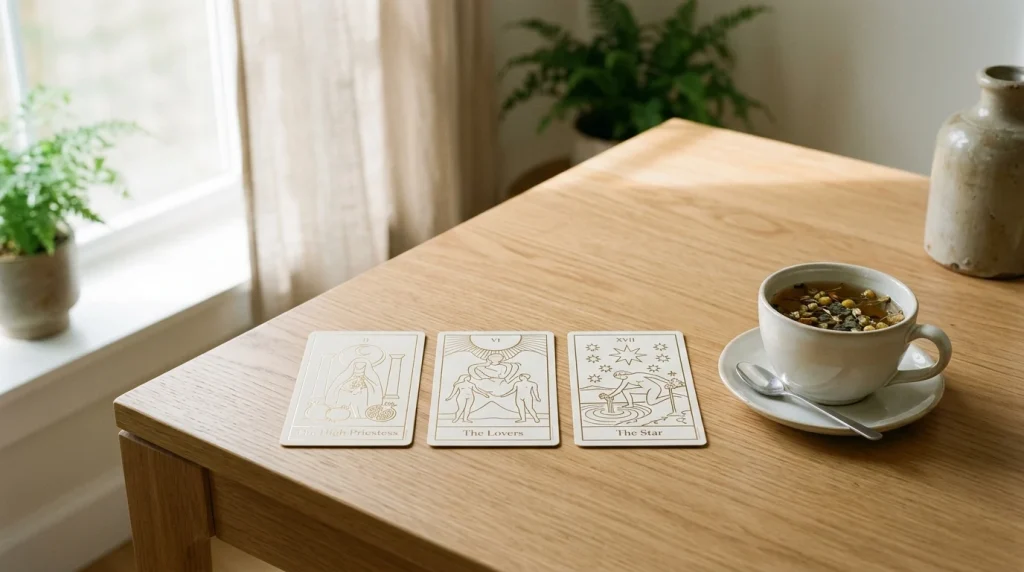
You do not need an entire table full of cards to gain immense clarity. In fact, fewer cards consistently yield sharper insights. The core simply tarot spread uses three cards:
- Card 1: Where Energy is Flowing: What aspect of your life currently has momentum and attention?
- Card 2: What Needs Adjustment: What habit, communication pattern, or assumption is creating friction?
- Card 3: The Practical Next Step: What tangible, constructive action should you take within the next 24 hours?
For more streamlined spread frameworks, explore our beginner guide on foundational reading rituals and learn the easiest ways to interpret upright and reversed cards.
Dispelling Common Superstitions Around Card Reading
One of the chief missions of simply tarot is eliminating unnecessary anxiety and gatekeeping. Here are the most prevalent myths put to rest:
- “You must be gifted your first deck”: Completely false. Purchasing your own deck establishes personal ownership and intention.
- “Other people cannot touch your deck”: A deck is printed paper. Energy does not permanently taint card stock; a simple shuffle or knock on the deck easily resets focus. Learn more in our guide on using someone else’s tarot cards.
- “Drawing the Death card predicts physical demise”: Death (Card XIII) almost universally symbolizes the closure of an old life chapter and the necessary clearing of space for new growth.
- “Cards will predict an unavoidable fate”: Tarot reflects probabilities and current energetic trajectories based on past choices. You possess complete free will to alter course at any time.
Frequently Asked Questions About Simply Tarot
Is simply tarot less accurate than complex esoteric reading methods?
Not at all. In practical cartomancy, clarity is power. By removing mental clutter and confusing jargon, you connect directly with your core intuitive perceptions, resulting in readings that are frequently far more precise and actionable.
Can I read simply tarot using any deck?
Yes. While illustrated decks like the Rider-Waite-Smith are easiest because every Minor Arcana card displays a complete human scene, the plain-language method can be applied to any deck with pictorial archetypes.
What should I do if a card doesn’t immediately make sense?
Take a breath, look at the central character’s expression, and ask yourself: “If this card were giving me one sentence of advice right now, what would it say?” Trust your very first instinctive response.
Do I need to clean or cleanse my deck before reading simply?
While taking a mindful breath before shuffling helps center your mental focus, elaborate purification rituals are optional personal preferences rather than mandatory spiritual requirements.
Get our latest guides, news, and insights highlighted in your Google Search & AI Overviews.