Have you ever wondered how Tarot cards connect with the future? Many people turn to Tarot for guidance, seeking insights on what lies ahead. While some view Tarot as a tool for predictions, it is important to understand the difference between possibility and probability in these readings. Tarot can illuminate potential paths and highlight choices, but it doesn’t dictate a fixed future. This topic is vital for anyone looking to harness the power of Tarot in their lives, whether you’re a skeptic or a seasoned reader. By exploring how Tarot works-beyond mere fortune-telling-you can gain clarity and empower yourself to navigate your own destiny. Join us as we delve into the intricate dance between chance and choice that Tarot offers, unlocking the mysteries of what the cards can reveal.
Understanding Tarot: History and Basics
The origins of Tarot can be traced back to the 15th century in Europe, where these cards began as a game rather than a tool for divination. Over the centuries, they evolved into a mystical system, intertwining with various spiritual and esoteric traditions. Today, many perceive Tarot not merely as entertainment but as a profound means of insight and reflection. Understanding this history enriches our relationship with the cards, enhancing their ability to serve as a mirror to our experiences and emotions.
At its core, Tarot comprises 78 cards divided into two main categories: the Major Arcana and the Minor Arcana. The Major Arcana cards, numbering 22, depict significant life themes and spiritual lessons, such as The Fool, The Lovers, and The Wheel of Fortune. In contrast, the Minor Arcana consists of 56 cards divided into four suits (Cups, Wands, Swords, and Pentacles), which address everyday events and experiences. Each suit has its specific symbolism; for instance, Cups represent emotions and relationships, while Swords relate to thoughts and challenges.
When exploring whether Tarot can predict the future, it’s crucial to appreciate the nuances in reading these cards. Most practitioners believe Tarot provides insights into potential outcomes rather than concrete predictions. The cards reflect possibilities influenced by current choices and energies, aligning with the philosophical concept of free will. For example, drawing the Two of Wands might suggest looking ahead and considering options but does not confine you to a specific path-rather, it invites reflection on the choices you hold.
As you begin or deepen your Tarot practice, remember that connecting with your intuition is paramount. Start by familiarizing yourself with the card meanings and experimenting with various spreads, like a three-card spread representing the past, present, and future. Dark times may emerge as you navigate Tarot, yet each card presents a potential lesson, prompting you to evaluate your circumstances and decisions actively. This exploration is less about foretelling fate and more about understanding your inner landscape, enabling you to embrace the possibilities and probabilities that life presents.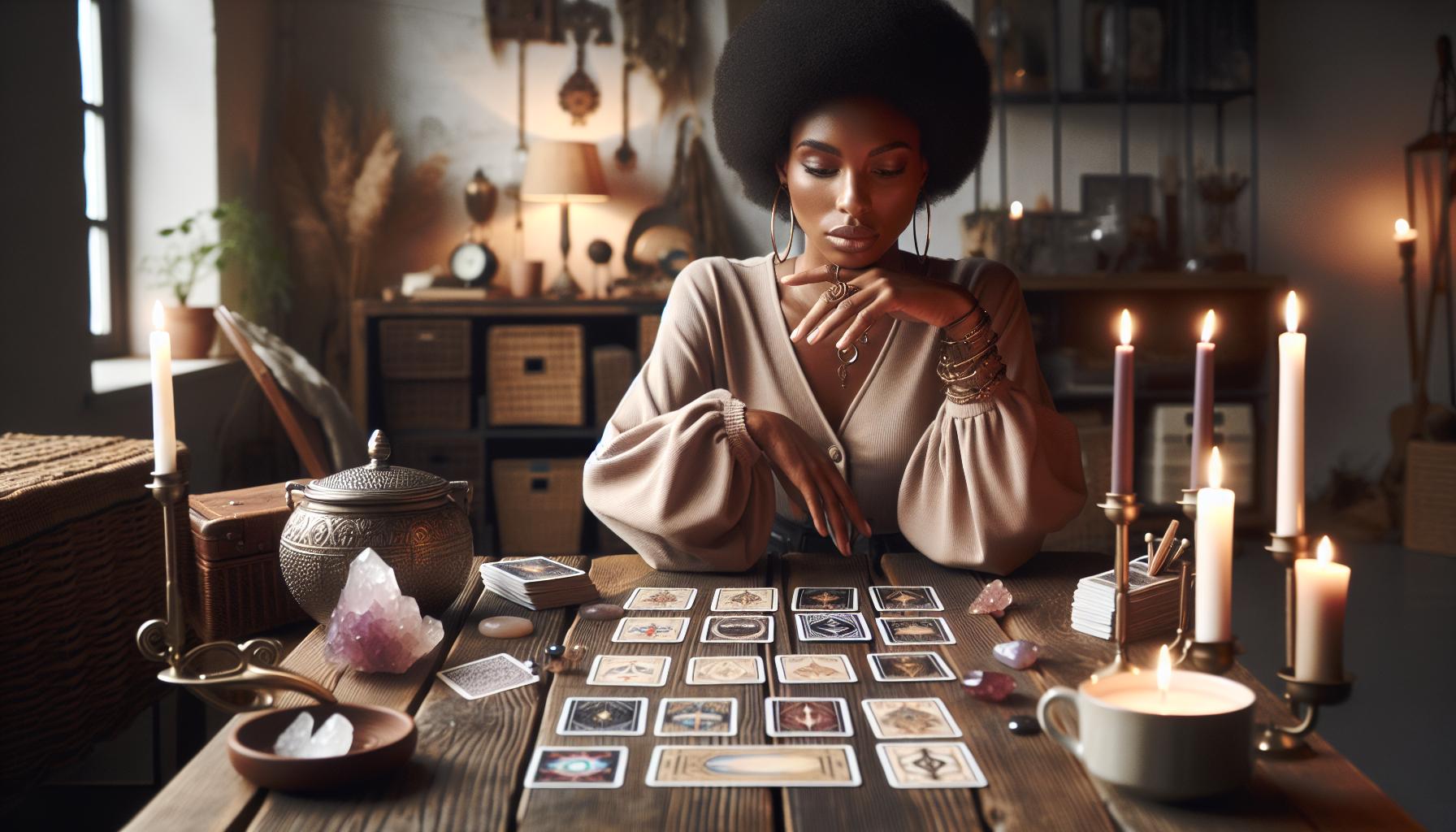
How Tarot Cards Are Read: Techniques and Spreads
To truly grasp how Tarot cards are interpreted, it’s essential to understand that reading Tarot is an art as much as it is a technique. Each card carries its own meaning, shaped by the context of the reading, the question posed, and the energy surrounding the querent. Whether you’re a novice or looking to deepen your practice, knowing various techniques and spreads can greatly enhance your experience and insights gained from the cards.
One popular approach to reading Tarot is using various spreads that help organize the information and guide your interpretation. A simple yet effective spread is the three-card spread, often used to explore the past, present, and future. Here’s a brief overview of how it works:
- Card 1: Past influences that shape the current situation.
- Card 2: Present circumstances and the energy around the querent.
- Card 3: Potential future outcomes based on current choices.
This spread invites reflection on how past experiences inform present decisions, emphasizing that future paths are not set in stone.
As you progress to more complex readings, consider incorporating the Celtic Cross spread, which provides comprehensive insights into various aspects of a question or life situation. This ten-card spread touches on themes like obstacles, aspirations, and influences from the environment. By analyzing each card’s position and meaning, you can uncover deep layers of insight, encouraging an exploration of potential life pathways rather than definitive answers.
Interpreting cards in combination is another technique that adds richness to your readings. For example, if you draw the Two of Swords alongside the Five of Cups, you might perceive a conflict between indecision and feelings of loss. This combination highlights emotional struggles and the need to make a choice, suggesting it’s essential to confront fears or disappointments and seek clarity moving forward.
Ultimately, when reading Tarot, the focus should be on potential rather than prediction-embracing the notion of possibility over probability. Each reading serves as a mirror reflecting choices and energies, allowing querents to navigate their life’s journey with greater awareness. Trust your intuition as you interpret the cards, remembering that the magic of Tarot lies in its ability to foster self-discovery and empower decision-making.
The Science Behind Tarot: Myth vs Reality
Exploring the relationship between Tarot and the concept of prediction can invite a spectrum of beliefs and skepticism. Many individuals wonder if Tarot can actually forecast the future or if it merely reflects current possibilities. The magic of Tarot lies in its capacity to guide, offering insights that illuminate potential paths, rather than guaranteeing specific outcomes. This viewpoint aligns with the idea of using Tarot as a tool for self-reflection and decision-making rather than a clairvoyant medium.
At its core, Tarot operates on the principle of archetypes and symbols, connecting deeply with the subconscious mind. The cards serve as mirrors, reflecting the energy, choices, and circumstances present in one’s life at the moment of the reading. Each card carries a wealth of meaning and context; for example, pulling the Empress could signify abundance and nurturing energy, urging the querent to cultivate creativity. Conversely, the Tower card might symbolize sudden change or upheaval, prompting an exploration of fear and resistance to transformation. By understanding these meanings, you can gain clarity on how your current situation is influenced by past experiences and present decisions.
It’s crucial to recognize that while Tarot can highlight potential future scenarios based on existing trajectories, it does not possess a definitive forecast. Instead, it emphasizes the role of choice and free will in shaping outcomes. For instance, during a reading, the appearance of the Two of Wands could suggest a crossroads, signaling an imminent decision that could diverge toward different paths. This invites the querent to reflect on their desires and fears surrounding the choice, underlining that while the cards can reveal possible futures, actual outcomes depend on actions taken.
Ultimately, embracing the interplay between possibility and probability enhances your Tarot readings. Rather than seeking absolute predictions, consider Tarot as a spiritual compass, offering guidance shaped by personal insights and circumstances. This approach fosters empowerment and reinforces the belief that individuals are not merely at the mercy of fate; rather, they are active participants in sculpting their destiny through conscious choices and intuitive awareness.
Can Tarot Predict the Future? Exploring Claims
Many people approach Tarot with a mix of curiosity and skepticism, particularly regarding its ability to predict the future. The allure of tarot lies not just in its mystical origins or beautiful imagery, but in its capacity to provide insights that can illuminate potential paths ahead. While some readers and querents may claim that Tarot can accurately forecast specific events, it’s essential to understand that its true power lies in revealing possibilities rather than certainties.
Tarot does not function like crystal ball predictions but instead serves as a mirror reflecting your current circumstances and emotional state. Each card is steeped in rich symbolism and archetypes that connect with the human experience. For example, drawing the Wheel of Fortune may signal a change in luck or a turning point in life, urging you to remain adaptable and open to new opportunities. This card reflects potential futures influenced by present actions and decisions rather than an unchangeable fate.
To explore the nuanced relationship between Tarot and future predictions, consider the importance of context during readings. The context in which cards are drawn-be it through specific spreads or the question asked-can shape the insights offered. The Celtic Cross spread, for example, provides a comprehensive view of one’s situation and helps decipher various influences at play. A card like the Lovers, which often addresses choices and partnerships, can prompt discussions about a significant decision that will impact future outcomes. This understanding of Tarot as a guiding tool rather than a definitive predictor empowers readers to engage actively in their life’s journey.
Ultimately, the real magic of Tarot lies in its ability to spark introspection and encourage personal growth. It highlights the essential truth that while cards may suggest various possibilities, it is the querent’s free will and conscious choices that shape their destiny. Embracing this perspective diminishes the pressure of seeking absolute predictions and fosters a more enriching practice of Tarot as a source of insight, clarity, and empowerment. By trusting this process, readers can cultivate their intuitive abilities and approach future possibilities with confidence and open-mindedness.
Possibility vs Probability: The Role of Free Will
The beauty of Tarot lies in its ability to reflect our choices, emotions, and the myriad possibilities life offers, all while acknowledging our free will. While some might approach a Tarot reading seeking definitive answers about the future, the reality is nuanced. Tarot serves not as a crystal ball that predicts every twist and turn in our lives, but as a tool that illuminates the paths available to us based on our current circumstances. Understanding this relationship between possibility and probability can empower querents to engage actively in shaping their own destinies.
When you draw a card like the Two of Swords, it may indicate a decision that requires careful thought and contemplation. Instead of foretelling a specific outcome, this card highlights your current state of indecision and encourages you to consider the potential consequences of your choices. The strength of this reading lies in recognizing that the future is not set in stone; your actions-fueled by your will and judgment-can pivot the direction of your life. This opportunity to influence outcomes reinforces the idea that Tarot invites you to explore possibilities rather than predict certainties.
Moreover, the context of a reading plays a pivotal role in this dynamic. Utilizing different spreads, such as the Three-Card Spread, you can uncover layers of meaning that emphasize your agency. For instance, a past, present, future spread not only tells a story of where you’ve been and where you are now but also encourages reflection on how your choices can shape what lies ahead. Each reading provides insights that can help ground your decision-making process, reminding you that you are not merely a passive observer of your fate but an active participant.
Ultimately, embracing the interplay between possibility and free will can be liberating. It invites you to see Tarot as a guide-a way to navigate life’s complexities while honoring your intuition and choices. Trusting this process enables you to approach readings with curiosity and confidence, illuminating your paths forward and acknowledging the power you hold in crafting your future.
Interpreting Card Combinations: Depth and Intricacies
To truly harness the power of Tarot, interpreting card combinations is essential, as they reveal deeper insights that single cards alone may not convey. Each card in Tarot is like a voice in a choir; when combined, they create a harmonious message that reflects the nuances of the question at hand. This intricate interplay allows us to explore the myriad possibilities and probabilities that shape our experiences and futures.
When interpreting card combinations, it helps to focus on how the meanings of the individual cards interact with each other. For example, if you draw the *The Emperor* alongside the *Three of Cups*, you might interpret this as a call to balance authority and joyous community celebrations. Here, *The Emperor* may represent structure and leadership, while the *Three of Cups* invites a sense of togetherness and rejoicing in milestones. This dynamic suggests that embracing leadership roles can lead to joyful collaborations, highlighting a path that honors both personal authority and communal connection.
Techniques for Card Combination Interpretation
Here are some practical steps to enhance your interpretation skills:
- Look for Relationships: Pay attention to whether the cards support or contradict each other. For instance, pairing the *Tower* with the *Sun* indicates a significant upheaval followed by clarity and optimism.
- Consider Positions in the Spread: If a card is in a past position, it informs how its influence shaped the present. The *Six of Swords*, showing a transition, can indicate moving away from difficulties, which will set the stage for the present circumstances.
- Explore Elemental Correspondences: Group cards by their elemental suits (Wands, Cups, Swords, Pentacles) to uncover thematic connections or tensions. For example, combining the *Queen of Wands* and the *Five of Pentacles* reveals a juxtaposition of confidence against feelings of lack or struggle.
- Use Symbolism and Intuition: Allow your intuition to guide you. Symbols such as colors, imagery, and numerology within the cards can deepen your interpretation. A vibrant *Page of Cups* alongside the muted *Four of Swords* suggests a call to awaken creativity while also acknowledging the need for rest and integration.
By mastering these techniques, you will gain confidence in navigating the complex narratives that unfold through card combinations. Each reading becomes a collaborative journey with the cards, inviting you to explore not just what may come but what you can do to shape your future. Remember, Tarot does not dictate fate; it highlights choices and influences, empowering you to harmonize your life’s symphony through informed intentions and actions.
Psychology of Tarot: Insights into the Self
The connection between Tarot and psychology is profound, urging us to explore our inner landscapes and understand the motivations behind our choices. While some may see Tarot as a mystical tool for prediction, it’s essential to recognize its potential as a mirror reflecting our subconscious thoughts and feelings. This insight can be a powerful catalyst for self-discovery and personal growth. By engaging with the imagery and symbolism of the cards, we can unlock deeper layers of understanding about ourselves and our life experiences.
When you engage with a Tarot reading, you are essentially embarking on a conversation with your inner self. The cards serve as prompts, offering insights into your current emotional state and illuminating choices that may not be obvious at first glance. For example, drawing the *High Priestess* might encourage you to trust your intuition and seek inner wisdom, while the *Two of Swords* may indicate a need to confront difficult decisions rather than avoiding them. Each card speaks not just to potential futures, but to the motivations and desires present within you at this moment.
Techniques for Deep Self-Reflection
To use Tarot as a tool for psychological insight, consider these practical techniques:
- Journaling Post-Reading: After a reading, spend time writing down your thoughts and feelings. Reflect on how the insights resonate with your current life situation. This practice can deepen your understanding and reinforce the messages received.
- Ask Open-Ended Questions: Instead of yes/no inquiries, pose questions that invite exploration, such as “What do I need to know about my current relationship?” or “How can I navigate my career challenges?” This encourages a more meaningful dialogue with the cards.
- Pair Cards with Feelings: When interpreting cards, take note of how they make you feel. For example, if the *Five of Cups* brings up sadness, consider what that sadness reveals about your past experiences and future desires.
- Reflect on Patterns: After several readings, look for recurring themes or cards. These patterns might indicate unresolved issues or areas in your life that need attention.
Ultimately, the journey with Tarot is not solely about foreseeing the future but about gaining clarity in the present. It’s about understanding the choices before you and recognizing that your decisions shape your path. As you cultivate this awareness, you empower yourself to navigate life’s uncertainties with greater confidence and intention, harmonizing possibility with your inherent freedom to choose.
Real-Life Tarot Readings: Stories of Outcomes
Connecting with the power of Tarot can unveil profound insights into our lives, but how does this translate to real-world outcomes? Many individuals have experienced Tarot readings that not only resonated with their current situations but also provided guidance that they later found pivotal in their decision-making processes. For example, a young professional sought clarity about a potential job offer. During her session, the Eight of Pentacles appeared, urging her to focus on the craftsmanship of her work rather than just the title or salary. Inspired by this insight, she decided to ask more about the specific projects she would undertake. As a result, she discovered that it aligned perfectly with her passions and career goals, leading to a rewarding position that she cherished.
It’s essential to realize that Tarot readings serve as navigational tools rather than definitive forecasts. Consider the story of a client confronting a tough personal relationship. A reading revealed the Tower, often associated with upheaval, prompting her to assess the foundations of her connection. Instead of a predetermined outcome, the cards encouraged proactive reflection. The themes of the reading led her to initiate crucial, honest conversations that ultimately transformed the relationship for the better. This shift was not about the cards predicting an end but about illuminating choices and potential outcomes that required her engagement.
Experiences like these illustrate a vital principle: Tarot emphasizes the role of personal agency within potential futures. Each card can act as a beacon, shedding light on options and obstacles. For instance, a couple navigating financial strife pulled the Five of Pentacles, a card symbolizing hardship. Rather than foretelling doom, it inspired them to seek creative solutions together, fostering teamwork and resilience. Their journey showcases how Tarot can highlight areas of concern while encouraging proactive steps towards a more favorable outcome.
In sum, Tarot readings can reveal patterns and possibilities that empower individuals to make conscious choices. The stories of those who have embraced Tarot illustrate its role as a guide, fostering not just reflection but active participation in shaping one’s destiny. Whether believers or skeptics, embracing the wisdom of Tarot can lead to transformative outcomes, allowing us to navigate life’s uncertainties with grace and intention.
Common Misconceptions about Tarot Predictions
Many people approach Tarot with a mix of curiosity and skepticism, often influenced by common misconceptions about its predictive powers. One of the most prevalent myths is that Tarot cards can tell your future definitively, as if they possess some form of prophecy. In reality, Tarot serves as a tool for reflection and insight rather than an unchangeable forecast of events. The cards can highlight influences, reveal patterns, and suggest possibilities, but the ultimate direction of one’s life is shaped by personal choices and external factors.
Another misconception is that Tarot readings are only valuable for those facing crises or big decisions. This belief undermines the everyday potential of Tarot as a source of guidance and clarification. For many, regular Tarot sessions can illuminate daily challenges and encourage growth in mundane situations. For instance, a reader might draw the Two of Wands, representing the exploration of new opportunities. Instead of waiting for a crisis to use the cards, that individual can proactively consider their next steps, leading to personal development and informed decision-making.
The Role of Intent
Some individuals may also believe that Tarot is only effective if one possesses innate psychic abilities. This idea can discourage beginners from experimenting with Tarot. In truth, the effectiveness of a reading often hinges on the reader’s intent and willingness to engage with the cards. Each card’s symbolism offers layers of meaning; even novice readers can derive significant insights by asking thoughtful questions and reflecting on their intuition. For example, drawing the Hermit may initially seem simple, but it can spark various interpretations about solitude, self-reflection, and the quest for wisdom, depending on the context of the question asked.
Lastly, there’s the notion that Tarot predicts doom and gloom. This stereotype often stems from representations in popular culture. In reality, Tarot cards communicate a broad spectrum of messages. A card like the Death card, often feared, typically symbolizes transformation and new beginnings rather than an actual end. Embracing the full range of interpretations can reframe how one perceives potential outcomes.
Understanding these misconceptions empowers readers to harness the full potential of Tarot. By cultivating an open mindset, individuals can better use Tarot’s unique insights as they navigate life’s complexities, realizing that they hold the reins of their own destiny.
Using Tarot for Decision Making: A Practical Guide
Making decisions can often feel overwhelming, especially when faced with uncertainty about the future. Many find that utilizing Tarot cards can serve as a powerful tool in navigating choices. While Tarot doesn’t definitively predict what will happen, it can illuminate possibilities, providing insight that helps clarify your options. This guide will explore how to effectively use Tarot for decision-making, balancing intuitive reflection with practical application.
To begin, establish a focused intention for your reading. Consider a specific question or decision you are grappling with, as clarity will enhance the meaningfulness of the insights you receive. You may want to write down your question before shuffling the cards; this act of formulation can help ground your thoughts and intentions. For example, if you’re contemplating a career move, your question could be: “What should I consider before making this change?”
Next, choose a spread that aligns with your goal. Beginners might find a simple three-card spread effective, where each position represents the past influences, present circumstances, and future possibilities regarding your decision. As you lay out your cards, take a moment to observe not just the individual cards, but the overall narrative that emerges from their combination. This approach invites deeper reflection on how past experiences shape your current situation and potential outcomes.
Here’s a quick guide to interpreting this three-card spread:
| Card Position | Meaning | Example Cards |
|---|---|---|
| Past | Influences that have led to your current situation. | Six of Cups (nostalgia, past influences) |
| Present | Your current feelings, challenges, and opportunities. | The Magician (resourcefulness, potential) |
| Future | Possible outcomes and directions to consider. | Wheel of Fortune (cycles, change) |
As you interpret the cards, maintain an open mindset, allowing the symbols and meanings to resonate with your personal circumstances. Look for connections or contrasts in the cards’ messages; for instance, if the past card suggests missed opportunities while the future card indicates new cycles, you might glean that your past experiences can serve as valuable lessons for future decisions.
Using Tarot in this way not only supports your decision-making process but also fosters greater self-awareness and intuition. Remember that the cards are not telling you what to do but rather opening pathways for reflection and exploration. This practice can empower you to approach your choices with confidence, helping you realize that while possibilities abound, the ultimate direction of your life rests in your hands. As you continue to engage with Tarot, you’ll likely find that your intuitive abilities deepen, enhancing your trust in your own insights.
Enhancing Your Intuition: Trusting the Cards
Connecting with your intuition can transform your experience with Tarot, enabling you to trust the cards as a guide rather than a definitive answer. Each time you shuffle the deck, you’re engaging in a dialogue with your subconscious, tapping into a deeper understanding of your situation. Embracing this perspective allows Tarot to become a mirror reflecting your inner thoughts and feelings, rather than a mere tool for prediction.
One effective way to enhance your intuition is through practice and reflection. Start by keeping a Tarot journal where you note your readings, interpretations, and the decisions influenced by these insights. Over time, you’ll begin to notice patterns in your responses and how the symbolism of the cards resonates with your real-life experiences. For instance, if you frequently draw the Two of Swords when grappling with indecision, reflect on its themes of choice and balance-this can guide you towards more decisive action.
Using simple spreads can also foster intuitive growth. A five-card spread focusing on the past, present, obstacles, advice, and outcome can facilitate a comprehensive understanding of your journey. As you lay out the cards, pay attention not just to their traditional meanings but also to what emotions or thoughts arise. An unusual instinct or a vivid image that comes to mind can be just as valuable as textbook interpretations. For example, if the Tower appears and evokes feelings of upheaval beyond its conventional meanings, take note; this could indicate an imminent change in your life, based on your personal context.
Finally, don’t shy away from utilizing meditative practices before readings. Grounding yourself through meditation or mindfulness can open pathways to clearer insights. Visualizing your question can create a focused intention, allowing the cards to speak more directly to your situation. When you cultivate an environment of openness and trust, both in the cards and within yourself, you’ll find that your intuitive abilities flourish, transforming how you interact with the Tarot and its insights into possibility versus probability. Embrace the journey, knowing that Tarot is not just about foreseeing the future, but about exploring the myriad paths that lie ahead.
Advanced Techniques: Deepening Your Tarot Practice
The journey into deepening your Tarot practice is as much about understanding yourself as it is about the cards themselves. A unique approach involves viewing Tarot as a language-a rich tapestry of symbols and meanings that speak to different experiences and contexts. The interplay of possibility and probability in your readings can come alive through advanced techniques that encourage exploration rather than just prediction.
Creating Intuitive Contexts
One powerful way to deepen your practice is to engage in collaborative readings. This means inviting a friend or a fellow Tarot enthusiast to exchange insights about each other’s readings. You can use a simple three-card spread, each representing a question like “What is the challenge?”, “What is the advice?”, and “What is the outcome?”. As you share your interpretations, you may notice themes and connections that enrich your understanding of how the cards can speak to various aspects of life. For example, the appearance of the Ace of Cups in both readings can embody the theme of emotional renewal, whether in love or personal projects, highlighting its potential across different scenarios.
Exploring Synchronicity
Another profound technique is to harness the principle of synchronicity in your readings. Begin by journaling your daily experiences alongside your Tarot reflections. Look for coincidences or recurring symbols that might connect your life events with specific cards. For instance, if multiple encounters with water-themed imagery align with a reading of the Six of Cups, reflect on how nostalgia and memories are influencing your current emotional state. This kind of practice invites the cards to weave into the fabric of your daily life, enhancing your ability to see the tapestry of possibilities that your future can hold.
Incorporating Other Modalities
You can further elevate your understanding and intuition by incorporating different modalities, such as astrology or numerology, into your Tarot practice. Each card carries inherent numerological significance (e.g., the Three of Pentacles relates to collaboration and mastery). By analyzing how the corresponding astrological signs align with the Tarot cards you draw, you deepen your interpretive capabilities. For example, if a reading points to the Empress, which resonates with Venus, explore themes of love, beauty, and abundance in your life at that moment.
Practicing Mindful Reflection
Finally, consider the role of mindfulness in your practice. Set aside dedicated time to meditate on the cards you draw. Ask open-ended questions such as “What lesson does this card hold for me today?” or “In what areas of my life does this card resonate?” Allow the answers to surface without judgment. This practice not only enhances your intuition but also builds a deeper relational understanding of the cards, linking the abstract concepts of it being possible versus probable outcomes.
As you delve into these advanced techniques, remember that the essence of Tarot lies in self-discovery and the myriad paths that can unfold through your choices. Embrace the mystery and enjoy your journey, knowing that every reading brings you closer to your own potential.
FAQ
Q: Can Tarot cards predict my future accurately?
A: Tarot cards can provide insights into future possibilities, but they do not guarantee specific outcomes. Their predictions are based on the current energies and choices available to you. Consider Tarot as a tool for guidance, helping you to understand potential paths and make informed decisions.
Q: How does probability relate to Tarot card readings?
A: Probability in Tarot readings involves assessing the potential outcomes based on current circumstances and choices. While Tarot reflects possible futures, free will plays a significant role in determining which path you ultimately take. Use Tarot to explore choices and their likelihood rather than definitive predictions.
Q: What is the significance of free will in Tarot predictions?
A: Free will is crucial in Tarot predictions, as it allows individuals to shape their destinies. Tarot can highlight possibilities, but the choices you make can alter the course of events. Reflect on readings as opportunities to empower your decision-making and influence outcomes.
Q: Can Tarot help me make better decisions about my future?
A: Yes, Tarot can assist in decision-making by revealing different perspectives and potential outcomes. By reflecting on the messages from the cards, you can gain clarity and confidence in your choices. Consider using Tarot as a supportive tool in your personal development journey.
Q: How do I interpret Tarot readings related to my future?
A: To interpret Tarot readings about your future, consider the context of the question, the meanings of the cards drawn, and how they relate to your current situation. Focus on themes and patterns in the reading, which may indicate trends or choices affecting your future.
Q: Are Tarot readings just for fortune-telling?
A: No, Tarot readings are not solely for fortune-telling. They are reflective tools for personal insight, helping individuals navigate life’s challenges and decisions. Tarot encourages self-exploration and emotional clarity rather than merely predicting future events.
Q: Why do some believe Tarot can predict the future?
A: Many believe Tarot can predict the future because it can reveal underlying patterns and energies influencing one’s life. While Tarot offers guidance on potential outcomes, it ultimately emphasizes that future events can change based on decisions made in the present.
Q: What role do Tarot card combinations play in predicting outcomes?
A: Tarot card combinations can enhance the depth of readings by revealing intricate relationships between different aspects of your life. The interplay of cards provides richer insights into future possibilities and highlights the complexities of your situation, guiding you toward better choices.
Future Outlook
As you explore the fascinating intersection of possibility and probability in Tarot, remember that the cards are a powerful tool for reflection and insight rather than a strict forecast of what will be. They help illuminate choices and potential paths, inviting you to engage with your intuition and wisdom. If you’re eager to dive deeper, consider checking out our beginner’s guide on how to read Tarot cards to enhance your skills and understanding [[1]].
Ready to unlock more mysteries? Join our community for daily Tarot card insights that can guide you on your journey [[2]], and explore our free Tarot readings to get personalized guidance tailored to your unique situation [[3]]. Don’t hesitate-take the next step in your Tarot journey today and discover the potential that lies ahead! Your journey begins with a single card; share your thoughts or experiences below, and let’s grow together in this magical practice.