Have you ever wondered if tarot cards challenge your beliefs about religion? This question touches many people, whether they’re curious skeptics or seasonally spiritual explorers. Tarot, often seen as mystical or esoteric, has deep historical roots intertwined with Christianity, particularly Catholicism, prompting a mix of opinions. For some, tarot serves as a powerful tool for reflection and guidance, while others fear it may contradict their spiritual values. As we delve into this topic, we’ll explore various perspectives on the intersection of tarot and religion, encouraging an open conversation about beliefs, doubts, and personal growth. Your journey in understanding tarot can foster not only a deeper connection to your intuition but also a broader appreciation for diverse spiritual practices. Join us as we uncover the diverse views surrounding this fascinating subject and help demystify tarot’s role in the spiritual community.
Are Tarot Cards a Form of Spiritual Practice?
Many people wonder whether tarot cards serve simply as a deck for fortune-telling or if they embody something deeper-a true spiritual practice. At its essence, tarot reading can facilitate profound self-exploration and intuitive development. The cards act as mirrors, reflecting our thoughts, feelings, and subconscious beliefs, guiding us through a contemplative journey that respects personal insights and individual experiences.
Engaging with tarot can be likened to a form of meditation or journaling. Each card drawn during a reading invites you to connect with your intuition, encouraging you to ask meaningful questions and engage with your inner self. For instance, a beginner might choose a simple three-card spread-representing the past, present, and future-to gain clarity on a specific situation. As you interpret the cards, take time to ponder how their meanings resonate with your life.
One of the beautiful aspects of tarot is its accessibility; it doesn’t require a dogmatic approach. Many practitioners blend tarot with their spiritual or religious beliefs, finding harmony rather than conflict. This flexibility allows users to adopt a practice that complements their worldview, whether they are skeptics exploring the cards out of curiosity or believers integrating them into their spiritual routines.
It’s essential, however, to approach your tarot practice with an ethical mindset. Respect the tool as one for personal growth, avoiding the temptation to use it solely for predictive purposes. Engage with the cards in a way that honors both your journey and the insights they provide. In doing so, tarot becomes not just a reading tool but a meaningful component of your spiritual exploration.
Religious Views on Tarot Cards: A Spectrum
Many people hold diverse beliefs about tarot cards, which reflect a rich tapestry of perspectives shaped by cultural, spiritual, and religious contexts. At one end of the spectrum, some view tarot as a forbidden practice, arguing that it contradicts their faith, particularly in more conservative religious traditions. For example, certain Christian viewpoints hold that tarot can lead individuals away from reliance on God, viewing it as a form of divination that invites unwanted spiritual influences. This perspective often arises from the idea that seeking knowledge or guidance through tarot cards might undermine the central role of prayer and scripture in a person’s spiritual life.
Conversely, numerous others find a way to harmonize tarot with their spiritual beliefs. Many modern Christians and practitioners from various backgrounds appreciate tarot as a tool for self-reflection and personal insight rather than as a literal fortune-telling device. This perspective sees tarot as compatible with faith, emphasizing that the cards serve as prompts for contemplation and meditation, helping individuals connect more deeply with their intuition and inner wisdom. For instance, someone might use tarot to explore personal challenges in a structured way, allowing them to approach their issues with clarity while still maintaining their spiritual routines.
Inclusivity is a hallmark of many tarot practices, allowing individuals of all faiths-including skeptics-to engage with the cards. This fluidity invites believers to interpret tarot through their unique lenses, enriching both their spiritual and personal growth. In this light, tarot is seen not as a substance to be feared but as a sacred tool that complements one’s existing beliefs and spiritual practices. Ultimately, the relationship between tarot and religion can be highly individual, often requiring thoughtful consideration and respect for differing views.
In exploring these various perspectives on tarot and religion, it’s essential to acknowledge that experiences will be unique to each practitioner. Whether one approaches tarot as a pure spiritual tool, a psychological aid, or a fun hobby, the key is an adaptable mindset that respects and honors both personal beliefs and intuitive insights. This respectful dialogue empowers individuals to shape their own paths, celebrating the diversity of perspectives within the rich landscape of spiritual exploration.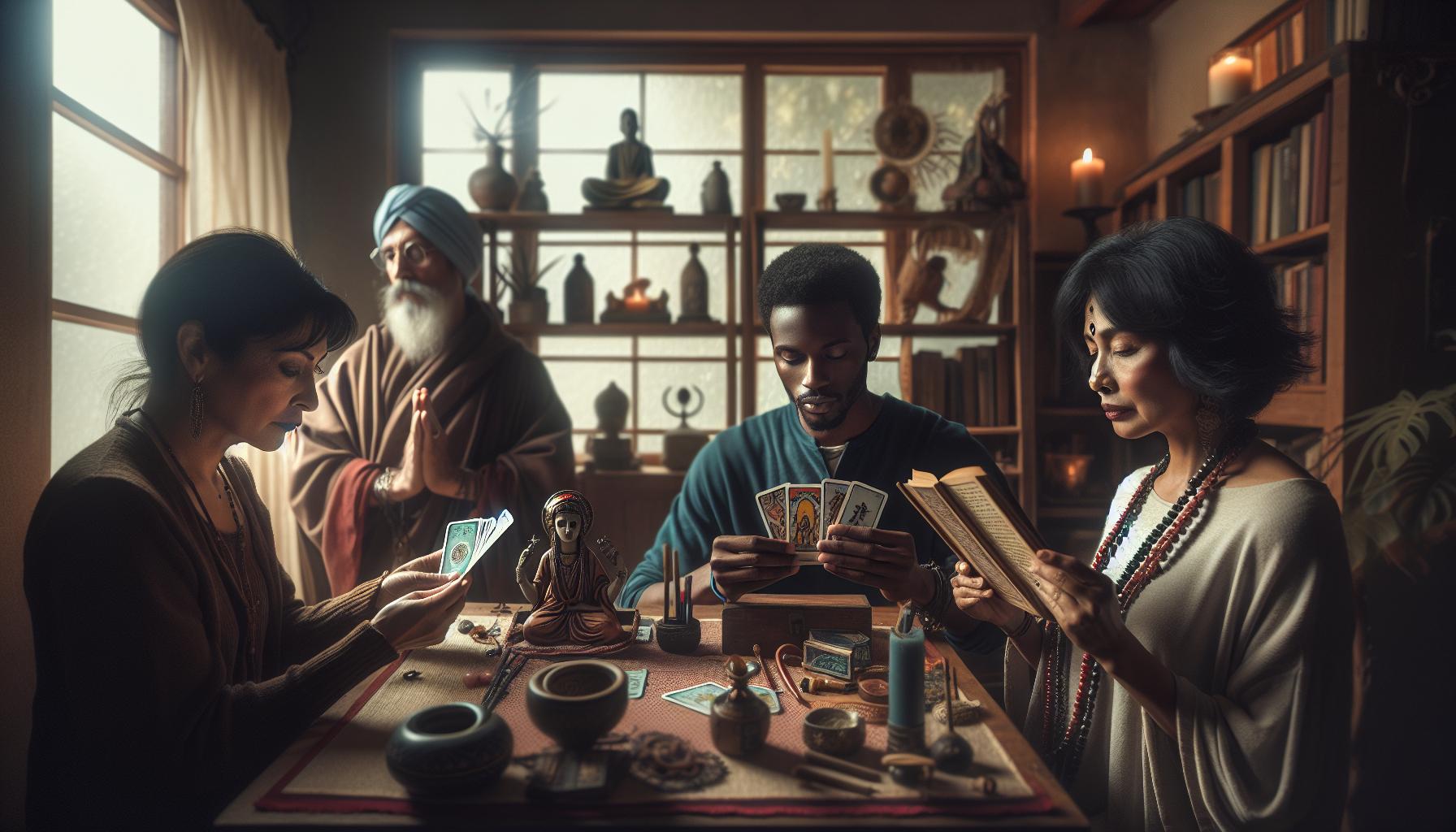
Conflict or Harmony? Tarot and Faith Traditions
While tarot cards often spark debate within various faith traditions, there’s a fascinating interplay of conflict and harmony that deserves exploration. Many traditional religious teachings, particularly within conservative branches of Christianity, view tarot as a form of divination that places one’s trust in symbols and cards instead of in God. This perspective can be rooted in concerns that engaging with tarot might lead believers away from scripture and reliance on prayer. In this context, tarot is sometimes seen as an invitation to unwanted spiritual influences, creating a chasm between those who follow strict doctrinal interpretations and those who perceive tarot as a harmless tool for introspection.
On the other end of the spectrum, there are practitioners who harmoniously integrate tarot into their spiritual journeys. Many modern Christians and spiritual seekers approach tarot as a means of self-reflection, emphasizing that the cards can be valuable prompts for meditation and a deeper understanding of oneself. This view appreciates tarot not as a definitive guide to the future, but as a resource that helps illuminate personal challenges and decisions. For instance, a reader might draw The Lovers card when grappling with a relationship issue, using it to facilitate a conversation about love and choice, thus incorporating their beliefs in divine guidance while appreciating the intuitive insights the cards provide.
Inclusivity characterizes many contemporary tarot practices, as they allow room for individuals across different faiths-including skeptics-to engage with the cards. This nurturing space invites believers to interpret tarot through their unique lenses, often enriching their spirituality rather than competing with it. By viewing tarot as a sacred tool for personal growth and exploration, individuals can navigate their beliefs in a way that honors both their spiritual traditions and personal experiences.
Ultimately, the relationship between tarot and faith traditions can be deeply personal and varied. By fostering a non-judgmental dialogue around these practices, individuals are encouraged to embrace their own paths, finding balance in the intersection of spirituality and the intuitive wisdom that tarot offers. Whether one perceives tarot as a mystical device or a simple means of reflection, the key lies in maintaining an open heart and a curious mind, allowing the cards to support one’s journey in a manner that feels right for them.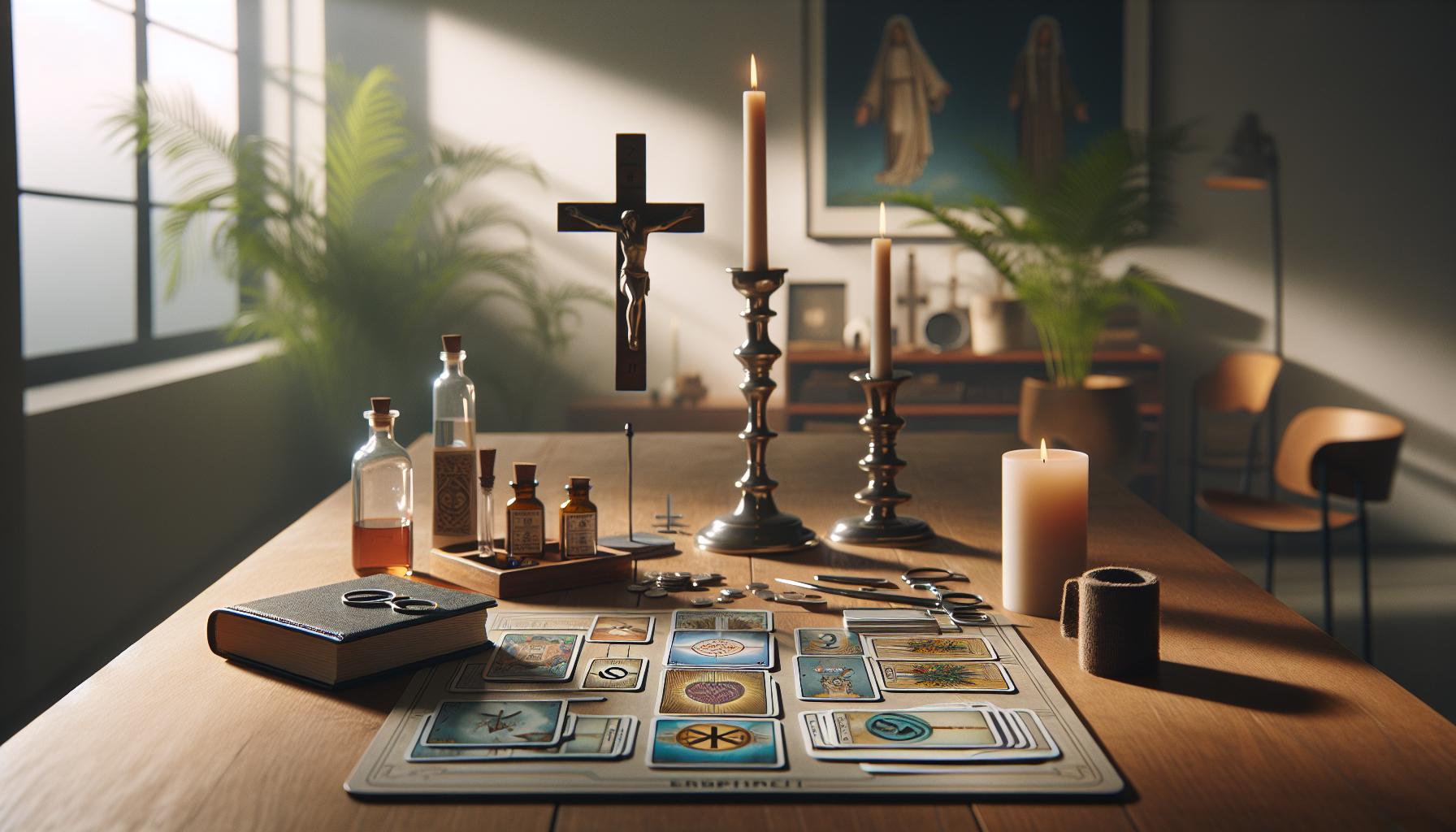
Debunking Myths: Tarot Cards and Religion
Despite tarot’s rich history and evolving interpretations, misconceptions link it to religious conflicts that merit exploration. Many people still perceive tarot as inherently anti-religious or tied only to occult practices. However, this perspective often overlooks the nuances in how tarot can coexist with, or even enrich, various religious beliefs.
To dismantle prevalent myths surrounding tarot and religion, it’s essential to recognize that tarot is not a religion but a tool for introspection and exploration. Some view tarot as a means to access divine wisdom, employing the cards as catalysts for meditation and self-examination. For example, when drawing the High Priestess card, a reader might reflect on themes of intuition and inner knowledge, creating a space where spiritual insight and personal discovery can thrive harmoniously.
Importantly, the idea that tarot invites negative spiritual influences or diverts believers from their faith is not universally held. Many practitioners successfully harmonize their spiritual practices with tarot. This includes individuals from various faith traditions, including Christianity, who see tarot as a complementary tool rather than a contradictory one. They often utilize the cards for guidance on personal matters while maintaining their connection to their faith through prayer and reflection.
Ultimately, the path to understanding tarot’s role in spirituality lies in personal experiences and beliefs. By engaging with tarot openly and respectfully, individuals can dismantle barriers and enrich their spiritual journeys, whether they approach tarot as a source of guidance, a method of self-reflection, or a blend of both. Embracing this diversity fosters a more inclusive and accepting conversation about tarot’s place in contemporary spirituality, encouraging both skeptics and believers to explore its potential without fear or judgment.
Understanding Tarot as a Tool for Self-Exploration
Engaging with tarot can offer profound insights and serve as a meaningful tool for self-exploration, regardless of one’s religious background. Many practitioners use tarot to delve into their inner worlds, uncovering thoughts and feelings that may not surface in everyday life. Cards act as mirrors, reflecting our subconscious and encouraging us to confront our beliefs, challenges, and aspirations. This process can lead to personal empowerment and enhanced self-awareness, as individuals learn to interpret the symbols and messages in a way that resonates deeply with their unique experiences.
Utilizing tarot for self-exploration often begins with understanding the meanings behind the cards. Each card holds a wealth of symbolism and can represent different aspects of our lives. For example, the Fool symbolizes new beginnings and adventure, nudging you to take risks. In a reading, drawing this card might prompt reflection on where you might need to embrace change or let go of fear. Conversely, drawing the Tower can indicate upheaval-an invitation to assess what in your life may be unraveling and prompting necessary transformation. Recognizing such themes helps facilitate personal inquiry and growth.
Practical application of tarot for self-reflection can be structured and straightforward. Consider starting with a simple three-card spread: past, present, and future. Pull three cards, laid out sequentially, and contemplate their messages. Here’s how you might approach it:
- Card One (Past): Reflect on how past experiences shape your current situation.
- Card Two (Present): Analyze your present challenges and emotional states.
- Card Three (Future): Consider potential outcomes or guidance for moving forward.
This method not only allows for structured contemplation but also fosters a dialogue with your own intuition. As you engage with the imagery and themes, take notes on your thoughts and feelings. This practice can encourage a deeper understanding of your motivations and desires, helping bridge any gaps between your spiritual pursuits and personal life.
Ultimately, tarot is not just about predicting the future; it’s a tool for engaging in a dialogue with oneself. By approaching the cards with an open mind and heart, you’ll often find new layers of meaning that resonate with your personal journey. Whether you’re a skeptic or a devout believer, the journey through tarot can enhance your spiritual practice, fostering a nurturing environment for introspection and personal evolution.
Interpreting Tarot Through a Religious Lens
Engaging with tarot through a religious lens can reveal a rich tapestry of beliefs and interpretations that vary widely from one spiritual tradition to another. Many practitioners of tarot see these cards as a bridge between the physical and spiritual realms, enhancing their understanding of life’s deeper meanings. For some, tarot is not inherently opposed to their faith; rather, it serves as a complementary tool for spiritual introspection and guidance. The key lies in how each individual integrates tarot into their already existing belief systems.
A common approach is to view tarot cards as symbols that resonate with specific archetypes present in many religious traditions. For example, the symbolism found in the Major Arcana can often parallel themes from various spiritual teachings-such as the journey of the Fool resembling the Hero’s journey in many myths and religious stories. By interpreting tarot cards through this lens, one can explore personal faith and spirituality, finding ways that these insights resonate with their own beliefs.
In addition, many believers across diverse traditions utilize tarot as a method of contemplation and prayer. This can manifest in practices such as meditative journaling where individuals draw cards and reflect on how the messages align with their spiritual journeys or current challenges. For instance, drawing the card of the Lovers may prompt an exploration of relationships, love, and moral choices, inspiring deeper reflection on one’s own values and doctrines.
However, it is crucial to approach this integration mindfully, ensuring that the use of tarot aligns with one’s personal beliefs. Engaging in discussions with like-minded communities can be helpful, as they provide insights into how others merge tarot with their spiritual practices. Whether one is a skeptic or a believer, tarot can act as a tool for understanding and growth, fostering a nurturing space for personal exploration within the framework of faith.
The Role of Intuition in Tarot Reading
When engaging with tarot, many people discover that intuition plays a central role in the reading process. Intuition can be thought of as a natural ability to perceive insights and feelings that are not immediately obvious. This inner voice often guides readers in interpreting the symbols on the cards, shaping the messages that resonate most with the querent’s situation. For those navigating the intersection of tarot and faith, tapping into intuition can enhance the experience, revealing deeper spiritual connections and insights that align with personal beliefs.
Understanding Intuition in Tarot Reading
At its core, intuition allows for a more personal and meaningful interpretation of the cards. Here’s how you can enhance your intuitive skills when reading tarot:
- Practice Mindfulness: Before beginning a reading, take a few moments to center yourself. Deep breaths and quiet reflection help to clear the mind and open the heart, making it easier to attune to intuitive insights.
- Use Your Senses: Pay attention to any sensations, emotions, or thoughts that arise as you draw each card. Does a particular card evoke a memory or a strong feeling? These impressions are often key to understanding the message intended for you or the querent.
- Trust Your Instincts: Intuition might guide you to focus on specific imagery, colors, or symbols within the card. Instead of relying solely on traditional interpretations, allow your personal insights to inform your reading.
- Journal Your Readings: Keeping a tarot journal can help track your intuitive impressions over time. Documenting how your intuition guides you can strengthen this skill and reveal patterns in your readings.
For beginners, it can feel daunting to trust your intuition fully. One effective approach is to conduct simple one-card pulls. Ask a question-perhaps related to your current spiritual journey-and then reflect on the feelings and thoughts that emerge when you see the card. Over time, this practice builds confidence and enhances the ability to articulate intuitive insights, making the reading experience more enriching.
For more advanced practitioners, integrating intuitive readings with traditional card meanings can deepen the experience. For example, while you might recognize The High Priestess as a symbol of intuition and inner wisdom, reflecting on what she evokes for you personally can lead to transformative insights relevant to your faith or life circumstances.
The journey of reconciling tarot with spirituality often finds a gentle companion in intuition. By honoring these insights, you allow for a reading experience that is not only insightful but also a sacred exploration of your inner self, fostering a connection between your practices and beliefs, regardless of the religious background.
Personal Stories: Tarot Experiences Across Beliefs
Many individuals from diverse faith backgrounds report profound experiences with tarot, often bridging their spiritual lives with the practice. For instance, a devout Christian may initially feel hesitant about using tarot, perceiving it as conflicting with their beliefs. However, upon exploring tarot as a tool for self-reflection rather than divination, they can appreciate its introspective qualities. They might share how a simple three-card spread, reflecting on past, present, and future, led them to insights about personal challenges that resonated deeply with their faith journey.
Equally compelling are stories from practitioners who align tarot with more esoteric spiritual beliefs. A practicing Wiccan might view tarot as a not just a divination tool but as an extension of nature’s cycles and energy. They often incorporate the cards into their rituals, using them to clarify intentions before a spell. In this context, tarot becomes a sacred object that channels higher wisdom, emphasizing harmony with the natural world and personal empowerment.
Transitioning to another perspective, some skeptics express their initial misgivings about tarot. A noted story involves an individual who dismissed tarot as mere superstition. However, after participating in a reading out of curiosity, they were struck by how accurately the cards addressed their emotional state and current dilemmas. This experience prompted them to re-evaluate their stance, seeing tarot as not merely mystical but a psychological tool for self-discovery that encourages thoughtful contemplation.
Through these narratives, it becomes clear that personal experiences with tarot can vary widely, often enhancing spiritual journeys rather than contradicting them. For anyone considering tarot, it can be beneficial to approach it with an open heart and mind, allowing for exploration without fear or judgment. Tarot is not inherently at odds with any belief system; rather, it can be a versatile tool for insight and reflection, inviting deeper understanding of oneself, regardless of one’s spiritual background.
Can Tarot Be Used Alongside Religious Practices?
Many practitioners find that tarot serves as a complementary tool alongside their religious practices, fostering deeper insights rather than posing a conflict. Tarot cards can evoke intuition and personal reflection, which many spiritual traditions encourage. For instance, individuals who regularly engage in prayer or meditation often describe tarot as a means to enhance their spiritual dialogue, helping them to visualize concepts and feelings that might otherwise remain abstract. A simple three-card spread, focusing on one’s intentions, can illuminate emotional roadblocks or affirm one’s path, creating a rich tapestry of understanding that aligns with the core principles of many faiths.
Integrating Tarot with Spiritual Rituals
For those who practice rituals or rites, such as in Wicca or other nature-based religions, tarot can be a powerful addition. Practitioners often use cards to set intentions before a ritual, grounding their energy and clarifying their desires. The act of drawing cards can also serve as a form of divination, offering insights into the energy surrounding the upcoming ceremony. By framing tarot as a sacred tool that connects them to higher wisdom, these practitioners can find harmony between their rituals and the insights provided by the cards, enriching their spiritual experiences.
Respecting Diverse Beliefs
Furthermore, it is vital to approach the use of tarot with respect towards one’s core beliefs. Some individuals may feel discomfort at the idea of incorporating tarot into their spiritual practices due to traditional religious teachings. Engaging with tarot gently and thoughtfully, such as focusing on its reflective aspects rather than mere fortune-telling, can ease this discomfort. Personal stories reveal that reflecting on tarot readings has led many to unexpected spiritual growth. For instance, a Christian practitioner might find that a tarot spread about their life choices leads them to deeper clarity in their faith, reaffirming values while exploring new perspectives.
In essence, tarot does not have to stand in opposition to religious beliefs. Instead, it can be a bridge for understanding, offering insights that resonate with one’s personal spirituality. By embracing tarot as a flexible, introspective tool, individuals can navigate their spiritual paths with confidence, curiosity, and compassion, whether they are deeply rooted in faith or simply exploring new avenues of self-understanding.
Ethical Considerations in Tarot Readings
are essential for creating a respectful and safe environment for all involved, especially given the varied beliefs about tarot’s place within spiritual and religious contexts. Practitioners should strive to navigate this landscape with care, reflecting a high moral standard in their interactions. This means being aware of the emotional and psychological impact a reading can have on a querent, acknowledging the trust placed in the reader.
One fundamental ethical practice is to remain impartial and non-judgmental. Whether someone approaches tarot from a perspective steeped in skepticism or deep faith, the reader’s role is to facilitate a space for exploration, not to impose their beliefs. Readers should strive to recognize the querent’s experiences and feelings, ensuring the reading centers around their needs and insights rather than the reader’s biases. This aligns with the understanding that tarot can serve various purposes, from self-exploration to spiritual guidance, depending on individual beliefs and circumstances.
Additionally, it is crucial to be transparent about the intentions behind a reading. Readers should explain that tarot is a tool for reflection and guidance rather than a means to predict the future with certainty. This can demystify the process for skeptics and provide comfort to those grounded in faith traditions that may view tarot with suspicion. Offering clarity about how to interpret cards can empower querents, promoting a sense of agency in their spiritual journey.
Lastly, ethical tarot readers must respect the querent’s autonomy. This involves actively listening to their concerns and allowing them space to voice their experiences and insights. By doing so, readers create a collaborative atmosphere, fostering a deeper understanding and connection between the querent and the tarot. Providing resources for further reflection, such as journaling prompts based on reading outcomes or recommending supportive literature, enhances the ethical commitment to the querent’s personal growth and exploration.
In conclusion, ethical tarot reading weaves respect, transparency, and support into the fabric of each session. By honoring diverse beliefs and encouraging querents to explore their paths without judgment, tarot becomes a powerful tool that can harmonize with spiritual practices, rather than posing conflict. Through mindful practices, readers can confidently guide individuals seeking solace, insight, and understanding on their journeys.
The Historical Relationship Between Tarot and Religion
The origins of tarot cards are steeped in mystery and have long been intertwined with various religious and spiritual traditions. Initially developed in the 15th century as a card game in Europe, tarot began to take on a mystical significance in the late 18th century. Figures such as Jean-Baptiste Alliette, known as Etteilla, popularized tarot as a tool for divination, linking its imagery to spiritual insights and esoteric knowledge. This transition from a mere pastime to a serious spiritual instrument showcased the cards’ potential beyond entertainment, and ushered in a transformative relationship between tarot and religion.
Over the centuries, interpretations of tarot have varied widely across cultures and spiritual paths. For some, tarot serves as a sacred tool for self-exploration and insight, often weaving in elements from the Christian mystical tradition or Kabbalistic teachings. The major arcana, for instance, depicts archetypal journeys that resonate with many spiritual narratives. The Fool’s journey, symbolizing the path of life and spiritual growth, echoes themes present in various religious teachings about the pursuit of enlightenment and the significance of faith.
However, the relationship between tarot and organized religion remains contentious. Many traditional religious perspectives view tarot with skepticism or outright condemnation, associating it with occult practices at odds with their teachings. In contrast, some modern practitioners find ways to integrate tarot into their spiritual practices while maintaining a strong connection to their faith. This creates a spectrum of beliefs where tarot is either embraced as a supplementary spiritual tool or rejected as contrary to religious teachings.
Reflecting on personal experiences often reveals how individuals from different faith backgrounds interact with tarot. Many report using the cards to enhance their understanding of their own spiritual journeys, suggesting that rather than being an affront to their beliefs, tarot can complement spiritual practices. By framing tarot as a means of reflection rather than prediction-promoting personal intuition and insight-believers can reconcile their use of tarot with their faith, demonstrating a harmonious relationship between the two, even amidst the broader historical tensions.
In summary, tarot’s historical relationship with religion is complex and dynamic, embodying both conflict and harmony. Whether viewed through a lens of skepticism or embraced as a channel for spiritual exploration, tarot continues to inspire dialogue, reflection, and understanding within diverse faith communities. By honoring this intricate interplay, practitioners can find empowerment, guidance, and deeper connection to their spiritual selves.
Finding Balance: Tarot for Skeptics and Believers
In the landscape of spirituality, tarot cards often spark a mix of intrigue and skepticism. Many view them as nothing more than colorful cards, while others consider them powerful tools for self-discovery and spiritual growth. Finding a balance between these perspectives-whether you approach tarot from a skeptical angle or with deep belief-can be enlightening and fulfilling.
For skeptics, tarot can be a framework for introspection rather than a mystical tool for divination. Engaging with tarot as a method for exploring personal thoughts can foster a unique journey of self-discovery. Start with a simple three-card spread to reflect on your present situation, challenges, and aspirations:
- Card 1: Current Position – Represents where you are now.
- Card 2: Challenges – Sheds light on obstacles in your path.
- Card 3: Aspirations – Encourages you to think about where you want to go next.
This approach demystifies the process, allowing skeptics to use the symbolism of the cards for personal reflection, making the experience accessible without needing to subscribe to the mystical connotations associated with tarot.
For those who embrace tarot within their spiritual practice, the cards can deepen the understanding of one’s faith and life journey. Consider incorporating tarot readings alongside your regular spiritual routines, such as prayer or meditation. This blend can enhance your insights and help you see your life path in a multifaceted way. Practitioners often report that certain cards resonate deeply with their spiritual beliefs, allowing them to find clarity and guidance.
Ultimately, whether you view tarot through a lens of skepticism or faith, the magic lies in its ability to facilitate conversation-both with ourselves and within our communities. Stand firm in your intuition, and remember, tarot is a personal journey. By cultivating an open mind and heart, you can navigate the captivating world of tarot that honors both skepticism and belief, creating a harmonious relationship that celebrates the diversity of spiritual exploration.
FAQ
Q: Are Tarot cards considered a form of divination in religious contexts?
A: Yes, Tarot cards are often regarded as a form of divination, which may conflict with certain religious teachings. Many faiths view divination as incompatible with spiritual beliefs, as it can be seen as seeking knowledge outside of divine guidance. For a deeper exploration of this topic, visit the section on Religious Views on Tarot Cards.
Q: How do different religions view the practice of Tarot reading?
A: Different religions have varying perspectives on Tarot reading. Some view it as a tool for self-reflection and guidance, while others see it as forbidden. For instance, Christianity may caution against Tarot’s divinatory nature, while spiritual practices in New Age beliefs often embrace it. Explore more in our section on Conflict or Harmony? Tarot and Faith Traditions.
Q: Can someone practice Tarot and still follow a religious belief?
A: Yes, many individuals find a way to integrate Tarot into their spiritual practices without abandoning their faith. It is essential to approach Tarot with mindfulness, ensuring it complements rather than conflicts with one’s religious beliefs. Consider reading our section on Can Tarot Be Used Alongside Religious Practices? for guidance.
Q: Do Tarot cards have historical ties to religions?
A: Historically, Tarot cards have ties to various religious traditions, including roots in early Catholicism. Initially viewed as a game, they evolved to encompass spiritual and mystical elements. To learn more about this history, check out The Historical Relationship Between Tarot and Religion.
Q: What are the ethical considerations for religious individuals using Tarot?
A: Ethical considerations include ensuring respect for one’s faith and the beliefs of others. Religious practitioners using Tarot should focus on personal insight and healing rather than fortune-telling. This topic is explored further in the section on Ethical Considerations in Tarot Readings.
Q: How can Tarot be a complementary tool for spiritual growth without contradicting religious beliefs?
A: Tarot can serve as a complementary tool for spiritual growth by facilitating self-exploration and reflection. Combining Tarot with prayer or meditation may enhance personal insights while respecting one’s faith. Discover more about this in Understanding Tarot as a Tool for Self-Exploration.
Q: Are there any warnings against using Tarot from a religious standpoint?
A: Yes, some religious viewpoints warn against Tarot, particularly viewing it as a gateway to potential spiritual dangers like misguidance or reliance on non-divine sources. It’s crucial for individuals to discern their comfort levels and explore these warnings in our Debunking Myths: Tarot Cards and Religion section.
Q: What practical steps can someone take to explore Tarot while honoring their religious beliefs?
A: To explore Tarot while honoring your faith, start by setting intentions for your readings that align with your spiritual values. Choose decks and spreads that resonate with you. For practical advice, see our section on Finding Balance: Tarot for Skeptics and Believers.
Wrapping Up
As we conclude our exploration on whether tarot cards are against religion, we’ve seen that perspectives vary widely, often reflecting personal beliefs and experiences. It’s essential to remember that tarot can coexist with many religious views, offering personal insights and guidance rather than opposing them. If you’re feeling inspired, take the next step on your journey-whether that means trying a tarot reading yourself, exploring more about the intersection of spirituality and tarot, or diving into our related articles on the benefits of tarot in personal development and spiritual exploration.
Don’t hesitate to share your thoughts or experiences in the comments below; your insights matter to our growing community. For continued learning, check out our guides on ethical card reading practices and the symbolism behind the tarot’s major arcana, and consider subscribing to our newsletter for regular updates and exclusive content. Remember, exploring tarot is about empowerment and understanding-embrace it as a tool for self-discovery!