Have you ever wondered about the origins of tarot, a tool that has captivated seekers of wisdom for centuries? Understanding when tarot was invented is not just about tracing back its history; it’s about discovering how this fascinating practice evolved and integrated into our spiritual journeys. From ancient decks used for games to the profound spiritual insights they offer today, tarot’s evolution mirrors our own search for meaning and connection. In this exploration, we’ll uncover the key moments in tarot’s history, revealing how it has transformed and how it can enrich your life now. Join us as we delve into the mythical past of tarot, illuminating its significance and offering clarity on its timeless appeal. Whether you are a curious beginner or a seasoned reader, this journey invites you to reflect on your own relationship with the cards and their underlying magic.
The Origins of Tarot: A Historical Overview
The roots of Tarot extend deep into the tapestry of history, intertwining with the cultural and spiritual evolutions of Europe. Often shrouded in mystery, the earliest Tarot cards emerged in the mid-15th century in Italy, originally designed as playing cards known as “tarocchi.” These decks included four suits with court cards, similar to modern playing cards, but over time, they transformed significantly, evolving into tools for divination and personal insight.
The Journey from Playing Cards to Divination Tools
Initially, Tarot was used primarily for leisure and games. The transition to a more mystical interpretation coincided with the Enlightenment and the burgeoning interest in esoteric symbolism. By the 18th century, Tarot decks began to be perceived not merely as tools for play but as vehicles for introspection and spiritual exploration. Figures like Antoine Court de Gébelin played a pivotal role in this transition, associating Tarot with ancient Egyptian wisdom, even though this connection was largely invented.
Myths and Misconceptions
Despite its rich history, many myths surround Tarot’s origins. One common misconception is that Tarot was exclusively a means for fortune-telling. In reality, many practitioners use Tarot for reflection, guidance, and personal growth. These cards can serve as mirrors, reflecting our subconscious thoughts and feelings. They invite practitioners to explore their inner landscapes, facilitating a dialogue between the self and the divine.
The evolution of Tarot is a testament to humanity’s quest for understanding and connection with the universe. By recognizing its multifaceted history, we can appreciate Tarot not just as a mystical practice but as a tool for personal empowerment that welcomes anyone, regardless of their belief system, to embark on their own spiritual journey. Embracing this perspective allows for a more inclusive and enriching experience with Tarot, bridging the gap between ancient traditions and contemporary practices.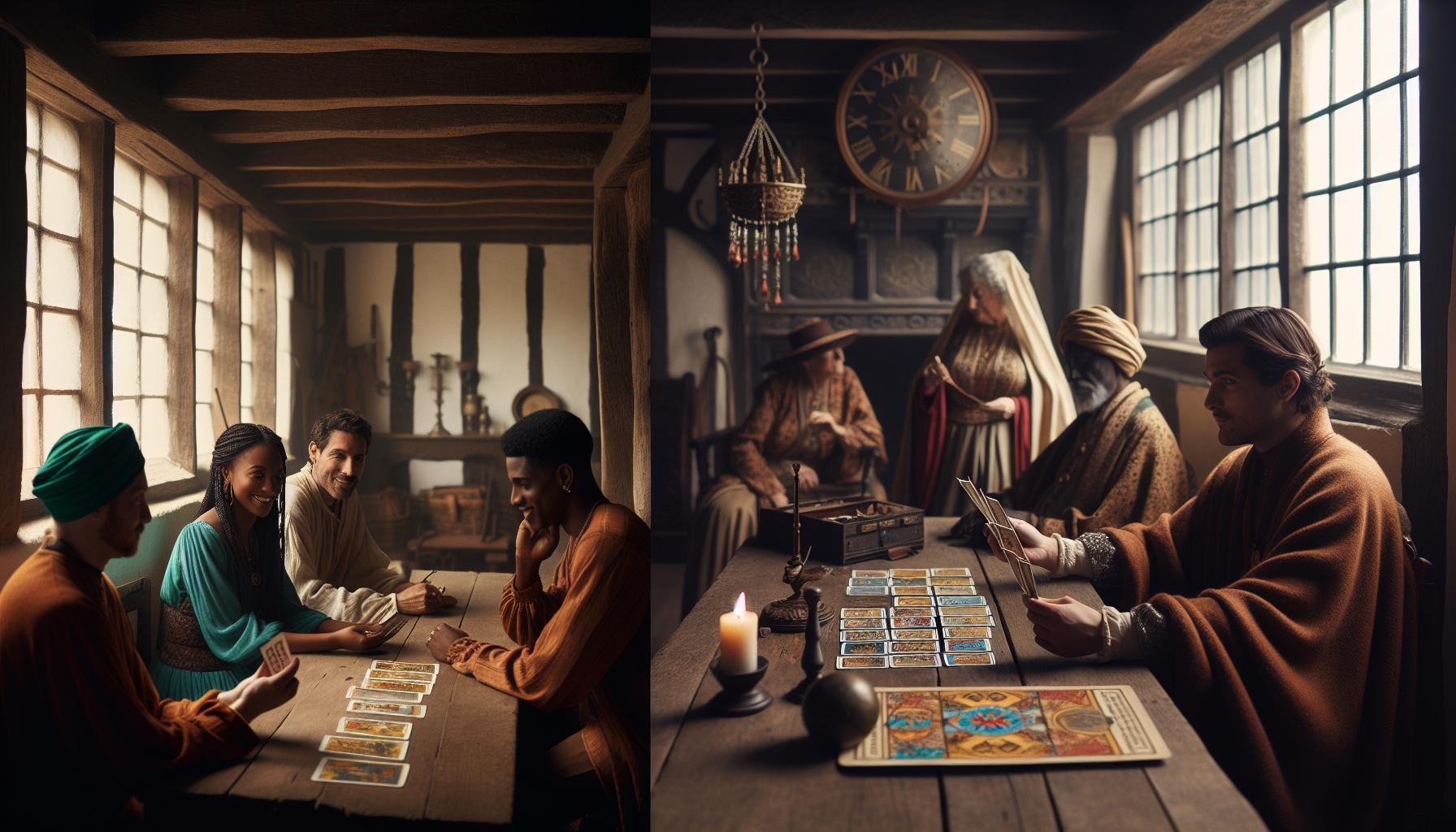
Early Uses of Tarot: From Games to Divination
From their inception in 15th century Italy, Tarot cards were primarily crafted for leisure, serving as colorful playing cards known as “tarocchi.” Initially, they were an embodiment of entertainment, enjoyed in games played by the nobility. The decks featured intricate illustrations and a blend of suits, contributing not just to a pastime but also to a rich cultural tapestry that reflected the society of their time. However, the allure of Tarot stretched beyond mere amusement; as the cards journeyed through history, they began to find a second life as tools for divination and spiritual inquiry.
As the Enlightenment unfolded in the 18th century, intellectual curiosity blossomed, leading many to seek deeper meanings and connections beyond the physical world. It was during this spirited era that Tarot started its metamorphosis into a vehicle for personal reflection and esoteric exploration. Pioneers such as Antoine Court de Gébelin romanticized Tarot, linking its origins to ancient Egyptian symbolism, and thus, they wove a narrative that elevated the cards from mere playthings to sacred instruments of insight. This shift marked a pivotal moment, as people began to see the potential for Tarot to illuminate their thoughts, feelings, and life paths.
The practical use of Tarot for divination emerged as individuals discovered that pulling cards could reveal truths about their inner selves. Many experienced practitioners transformed Tarot readings into a form of therapy, using the cards as tools for dialogue and understanding. Consider, for instance, a simple three-card spread; one card representing the past, another for the present, and the last for the future. As each card is drawn, it invites contemplation about one’s journey, fostering a profound connection to both the self and the universe.
Today, Tarot retains its dual heritage. While it remains celebrated for its historical roots as a game, its role as a modern tool for self-exploration and personal growth is equally prominent. Whether you’re a curious skeptic or an avid believer, Tarot offers a warm embrace, welcoming everyone to explore their inner landscapes in a supportive, non-judgmental manner. Embracing this practice not only honors its rich past but also celebrates its ongoing evolution as a meaningful tool for introspection and enlightenment.
Key Historical Figures in Tarot Development
Throughout history, several influential figures have shaped the Tarot into the tool for introspection and guidance that many cherish today. Understanding these key personalities can deepen your appreciation for the cards and illuminate their journey from mere playthings to profound instruments of insight.
One of the most pivotal figures in Tarot’s evolution is Antoine Court de Gébelin, an 18th-century French philosopher and freemason. His assertion that Tarot had ancient Egyptian roots sparked interest and speculation about its mystical properties. Gébelin proposed that the symbols and imagery in Tarot held esoteric wisdom that could unlock secrets of the universe. This romanticized vision helped shift Tarot from a gambling pastime into a serious tool for divination and spiritual inquiry. It paved the way for later works and interpretations that aimed to connect Tarot to broader spiritual and cultural narratives.
Another influential figure is Eliphas Lévi, a 19th-century occultist who further cemented Tarot’s status within magical and mystical traditions. His writings linked the cards to Kabbalistic principles and expanded their use throughout the esoteric community. Lévi created systems where Tarot was used as a means of understanding one’s self and the divine, instructing readers on how to interpret the cards in relation to one another. His interpretations remain foundational to many modern Tarot practices, emphasizing the cards’ symbolic richness.
In the 20th century, Arthur Edward Waite played a crucial role in popularizing Tarot with the publication of the Rider-Waite Tarot Deck. This deck, co-created with artist Pamela Colman Smith, transformed traditional representations with vividly illustrated scenes and deeper symbolism. Waite’s approach made Tarot more accessible, encouraging readers to engage with the imagery for self-reflection and understanding. His emphasis on spirituality and the psychological dimensions of the cards influenced countless practitioners and became the model for many subsequent decks.
The insights from these key figures highlight the transformation of Tarot over the centuries. From games of chance to a multi-faceted tool for self-discovery, the journey of the Tarot reflects the desires and curiosities of humanity throughout ages. As you explore Tarot, remember that you carry forth this legacy, tapping into a rich tradition while forging your own intuitive connection with the cards. Whether you seek guidance or simply wish to understand yourself better, the wisdom of the past awaits in each draw, ready to guide your journey.
Unearthing the Myths: Misconceptions About Tarot’s Past
Many misconceptions surround the history of Tarot, often relegating it to the realm of superstition and mystique. A common myth is that Tarot originated as a tool for malevolent practices. In reality, Tarot’s roots trace back to the 15th century in Europe, mainly as a deck of playing cards. It wasn’t until later that it gained a reputation for divination, particularly in the 18th century, spurred by figures like Antoine Court de Gébelin, who linked it to ancient Egyptian wisdom. This romanticized narrative, while captivating, overshadows the primary purpose Tarot served for centuries: entertainment and leisure, much like any other card game.
Another prevalent misunderstanding is the idea that Tarot begins with rigid interpretations defined by historical figures and esoteric traditions. While early Tarot decks did carry specific symbolism, the richness of Tarot lies in its adaptability and the personal connection each reader forms with the cards. Tarot serves as a mirror that reflects one’s inner thoughts, emotions, and situations-an intuitive tool open to interpretation based on the user’s experiences rather than a fixed script. Embracing this perspective encourages anyone, regardless of belief or skepticism, to approach Tarot with an open mind and a personal lens.
Additionally, many believe that Tarot is solely for the “gifted” or those with supernatural abilities. In truth, Tarot is accessible to everyone. The real magic of Tarot happens when individuals tap into their intuition, observing how the imagery resonates with their personal stories and dilemmas. For beginners, starting with a simple spread and a few key card meanings can open pathways to self-exploration. For instance, pulling a card daily can reveal insights about one’s mood or situation, building confidence in reading the symbols.
To demystify Tarot further, it’s essential to understand that it is not a crystal ball predicting the future, but rather a guide to navigating one’s current life path. Whether you are seeking knowledge, encouragement, or simply a deeper understanding of yourself, Tarot invites you to explore your inner landscape while embracing its rich history. By dismantling these misconceptions, you can appreciate Tarot as both a historical artifact and a modern tool for introspection, ensuring that it remains relevant and meaningful in today’s spiritual practices.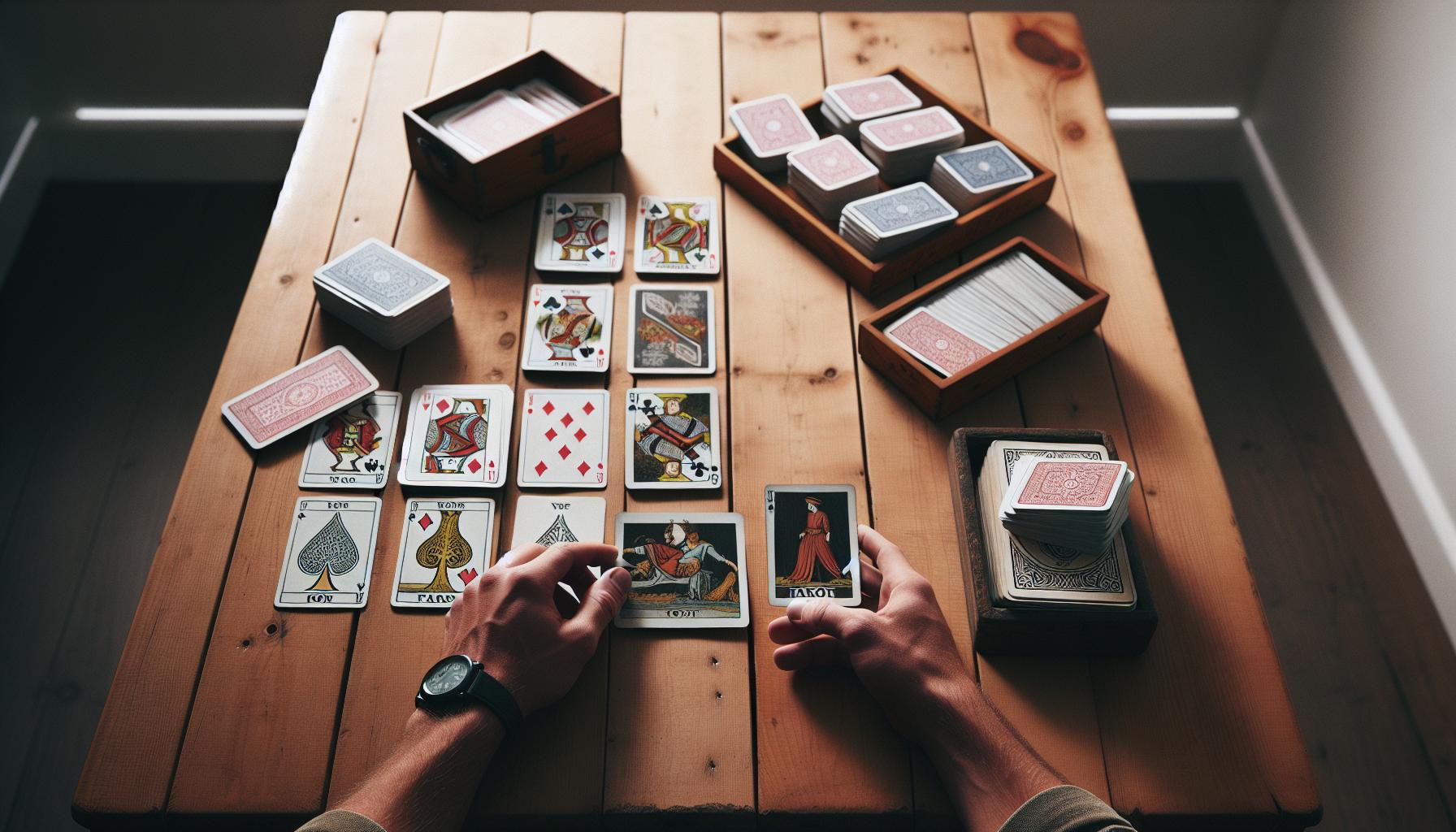
The Transition from Playing Cards to Tarot Decks
The transformation of playing cards into Tarot decks is a fascinating journey through cultural evolution and collective imagination. Initially, Tarot began as a deck of playing cards in the 15th century, primarily used for games and social entertainment among the aristocracy in Europe. These early decks, known as Tarocchi in Italy, comprised four suits similar to modern playing cards but also included a set of trumps that featured intricate and symbolic imagery.
Over time, these trumps began to distinguish themselves from regular playing cards, as their designs grew richer and more elaborate. The trumps, or “Major Arcana,” gave rise to a narrative quality that was absent in simpler card games. Each card depicted substantial themes, archetypes, and moral lessons, paving the way for a deeper exploration of human experience. This transition opened a channel for personal insight, making Tarot not just a game but an introspective tool.
As the 18th century approached, Tarot took on a new identity influenced by mysticism and esoteric traditions. This period saw figures like Antoine Court de Gébelin linking Tarot to ancient Egyptian knowledge, further elevating its status from mere pastime to a spiritual and divinatory tool. Consequently, the Tarot deck evolved into a structured system used for guidance and reflection, with each card representing different life situations and spiritual insights.
For beginners curious about this transition, it’s helpful to engage with the symbolism found in both playing and Tarot cards. Consider starting with a simple comparison: take a standard deck of cards and observe the suits and values, then look at an early Tarot deck and note the additional symbols and their meanings. This simple exercise can provide clarity on how Tarot’s structure supports a more profound understanding of life’s complexities. As you begin to explore Tarot, approach it not as a repository of fixed meanings but as a conversation starter between your intuition and the imagery on the cards. Engage with the symbols personally-what stories do they evoke for you? This active involvement in the reading process connects the past with the present, making Tarot a personal tool for self-discovery and guidance.
Understanding this transformation helps demystify Tarot. Embrace its historical origins, and witness how it maintains relevance today as a bridge between the mundane and the mystical, allowing everyone-skeptics and believers-to find their path in the meaningful imagery of the cards.
Symbolism in Early Tarot: Decoding the Imagery
The imagery within early Tarot decks is a treasure trove of symbolism, rich with meaning and layered interpretation. Each card is not just an artwork but a narrative thread weaving together themes of life, death, morality, and the human experience. Understanding this symbolism is key to unlocking the insightful power of Tarot. From the vibrant colors to the carefully chosen images, each element invites a dialogue with the reader’s intuition and personal stories.
At the core of Tarot’s symbolism are the Major Arcana cards, which depict significant life events and archetypes. For instance, The Fool, often illustrated as a carefree traveler about to step off a cliff, represents new beginnings and the potential for adventure. This card encourages readers to embrace spontaneity and trust in the journey ahead. By contrast, Death, while often misunderstood, symbolizes transformation and the end of one phase for the rebirth of another, urging a reflection on personal growth and change.
The suits in the Minor Arcana also carry distinct symbolism rooted in everyday experiences and emotions. Each suit-Cups, Swords, Wands, and Pentacles-relates to different aspects of life: Cups speak to emotions and relationships, Swords represent conflict and intellect, Wands embody creativity and action, and Pentacles indicate material matters and practicalities. Engaging with these cards requires an exploration of not just their surface meanings but also the deeper emotions they conjure.
To enhance your connection with this imagery, consider the following steps:
- Select a card: Choose a card from a Tarot deck that resonates with you.
- Observe the details: Take note of colors, figures, and any symbols present.
- Reflect on your interpretation: Ask yourself how this imagery relates to your current life situation or feelings.
- Journal your insights: Write down your thoughts, allowing for personal interpretations to unfold.
By regularly practicing this process, you’ll deepen your understanding of not just the cards but also your own inner world. Remember, the key to decoding Tarot’s imagery lies in a blend of historical context, personal reflection, and intuitive insight, making it an accessible spiritual tool for all, whether skeptics or seasoned readers.
The Influence of Renaissance and Esoteric Traditions
The Renaissance marked a transformative time for Tarot, intertwining it with the rich tapestry of esoteric traditions that emerged throughout Europe. This period of revitalization in art, science, and philosophy didn’t just change the way people viewed the world; it also significantly influenced the interpretation of Tarot cards. The revival of interest in ancient texts, alchemy, astrology, and hermeticism infused Tarot decks with deeper meanings and symbolism that went beyond mere gameplay.
During this era, Tarot ceased to be solely a form of entertainment and began to be viewed as a tool for spiritual insight and personal growth. Thinkers like Marsilio Ficino and Giovanni Pico della Mirandola championed the study of wisdom traditions, which included the Kabbalah, numerology, and ancient mythologies. Their perspectives opened avenues for new interpretations of Tarot, linking the cards to archetypes of the human experience. This connection helped lay the groundwork for Tarot as a medium for tapping into collective unconscious themes, much of which derived from psychological and philosophical metaphors present in Renaissance literature and art.
Esoteric Traditions and Tarot’s Evolution
As the esoteric traditions flourished, various groups began to adopt Tarot for their own purposes. The Hermetic Order of the Golden Dawn, founded in the late 19th century, played a pivotal role in this transformation. Members of this secret society, drawn from diverse backgrounds of mysticism and occult practice, integrated Tarot with the principles of Kabbalah and the elements of alchemy. This synthesis gave rise to new Tarot systems and decks, such as the Rider-Waite-Smith deck, which introduced globally recognized imagery and symbolism.
You can explore this fascinating evolution in your own readings. Begin by understanding the connections between the cards and esoteric symbols. For example, consider how The Magician card embodies the principle of mastery; it symbolizes the alignment of will and spirit as one taps into their potential. Reflect on how this card, with its elements of air, earth, fire, and water, relates to various aspects of your life-thus bridging the gap between Renaissance philosophies and your journey of self-discovery.
Practical Application in Tarot Readings
When conducting readings, allow the rich history of Tarot’s renaissance influences to shape your interpretations. Here are some steps to incorporate this deeper knowledge:
- Research symbolism: Familiarize yourself with how Renaissance art influences the Tarot card images.
- Engage with archetypes: Reflect on how different archetypes within the Major Arcana inform your understanding of personal challenges.
- Connect with intuition: Trust your intuitive insights as you draw connections between the cards and esoteric traditions.
By embracing the Renaissance and esoteric traditions within your Tarot practice, you nurture not only your understanding of the cards but also your spiritual path. This collaboration of history and intuition can enrich your readings and deepen your personal insights, making Tarot a powerful ally in your life’s journey.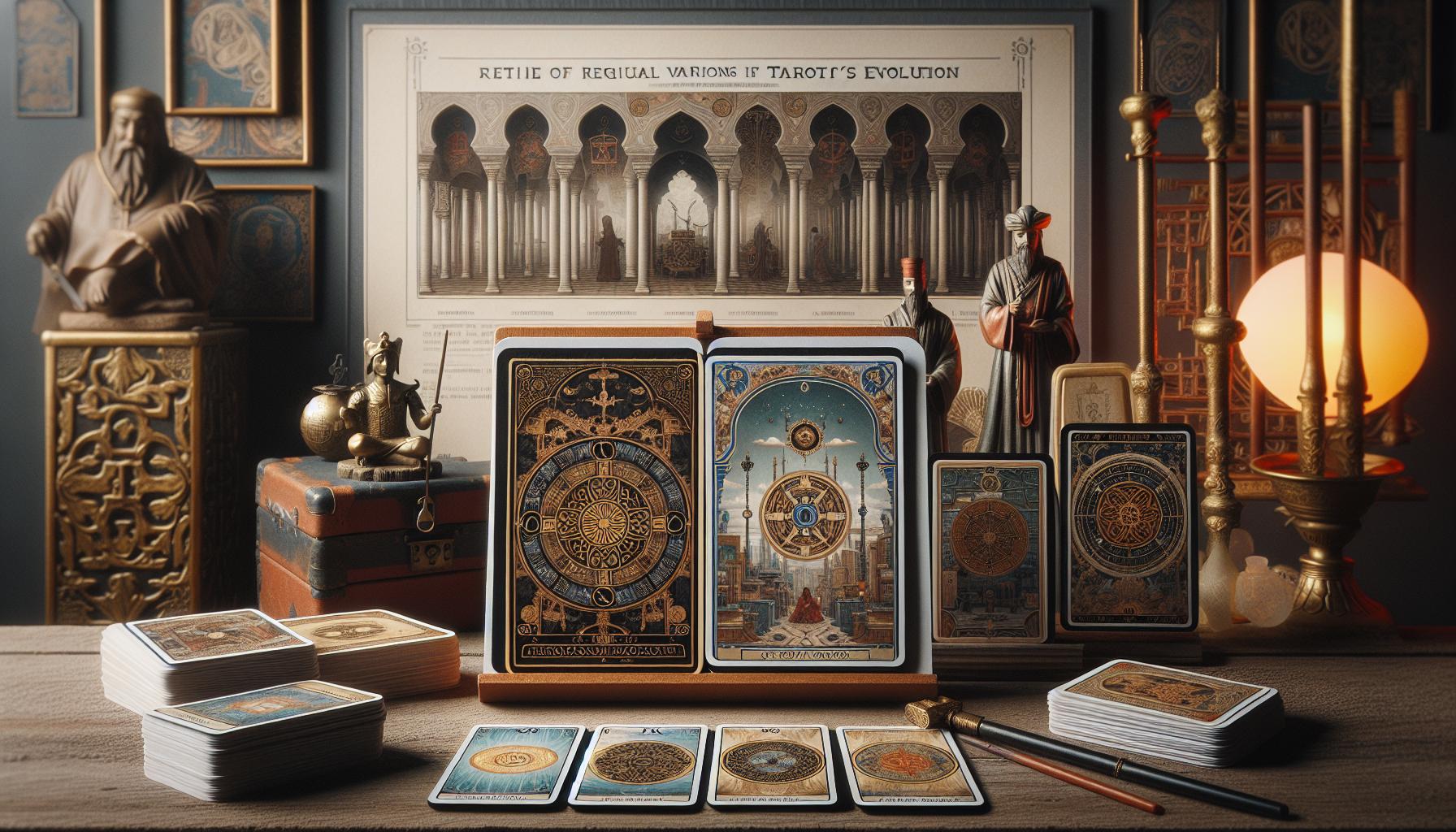
Regional Variations in Tarot’s Evolution
Tarot’s evolution reveals a fascinating tapestry woven from diverse cultural threads, with regional variations that highlight unique perspectives and practices. Initially born in 15th century Italy as a card game known as tarocchi, the journey of Tarot extends far beyond mere entertainment. As the cards traveled through Europe, they absorbed local beliefs and customs, transforming into the spiritual tools we recognize today.
In France, for instance, the Tarot took on a more esoteric flavor during the 18th century. The Tarot de Marseille, which emerged as one of the most classic decks, showcases distinct symbolic imagery and a straightforward structure that resonates with the practical and philosophical inquiries of its users. This deck highlights the blend of mysticism and accessibility, making it popular among both casual card players and serious practitioners.
Further northeast, in Eastern Europe, Tarot also evolved but reflected different influences. The Sibylline cards, prominent in countries like Hungary and Romania, incorporate local folklore and divinatory practices, emphasizing a form of reading that merges community wisdom with the card’s intuitions. Here, the interpretation of cards often includes elemental associations linked to local traditions, enriching the readings with cultural significance.
Exploring these regional variations can deepen your Tarot practice. If you’re drawn to the practical simplicity of the Tarot de Marseille, consider using it for straightforward questions about daily life. Alternatively, if your interests lie in deeper cultural wisdom, experimenting with Sibylline methods might lead you to insights that resonate with your personal background.
Ultimately, understanding the regional nuances of Tarot instills a sense of respect for its rich history and diverse cultural influences. You can enrich your readings by recognizing how different traditions inform the symbolism and meanings of the cards. Tarot offers a universal language of intuition, allowing for personal and collective interpretation-it’s inviting you to connect with its history while nurturing your unique spiritual journey.
Documented Tarot Decks: The First Known Examples
The history of Tarot is rich with intriguing examples of documented decks that not only shaped its traditions but also reflect the cultural and spiritual landscapes of their times. Among the earliest known examples is the Visconti-Sforza Tarot, created for the Duke of Milan in the 15th century. This beautifully illustrated deck, with its intricate gold leaf details and elaborate symbolism, is one of the oldest surviving Tarot decks and serves as a testament to the opulence of Renaissance Italy. The imagery in these cards often illustrated themes of nobility and wealth, providing a glimpse into the lifestyles and values of the elite class who commissioned them.
Another significant deck is the Tarot de Marseille, which emerged in France during the late 17th century. Notable for its simplicity and striking imagery, this deck became the foundation for many later Tarot decks. The straightforward designs allowed for a more universal interpretation of the cards, inviting a broader audience to engage with Tarot for both divination and gameplay. Its influence can still be seen in modern Tarot decks around the world, making it a cornerstone of Tarot history.
In Eastern Europe, the Sibylline cards stand out as a fascinating example of regional adaptation. These decks, prevalent in areas like Hungary and Romania, incorporate local folklore and mystical symbols that reflect the cultural landscape of their respective countries. The use of Sibylline cards often includes intuitive readings connected to community narratives and ancestral wisdom, showcasing how deeply Tarot intertwines with cultural identity.
Exploring these foundational decks not only enriches your understanding of Tarot’s origins but also enhances your practice. When choosing a deck, consider what resonates with you personally. Whether you’re drawn to the historical grandeur of the Visconti-Sforza or the accessible imagery of the Tarot de Marseille, each deck holds unique insights and energies that can aid you in your journey of intuition and self-discovery. Experimenting with these original decks can help cultivate a deeper appreciation for Tarot’s transformative power, bridging the past with your own spiritual path.
The Role of Tarot in Modern Spiritual Practices
In today’s world, Tarot has emerged as a powerful tool for personal growth and spiritual exploration, transcending its historical roots as a mere game or method of divination. Many individuals turn to Tarot not only for guidance on specific issues but also as a means to tap into their intuition, explore deep-seated emotions, and foster a greater understanding of their life paths. Engaging with Tarot can serve as a unique catalyst for self-reflection, helping seekers uncover insights about their situations, relationships, and innermost desires.
One common practice among modern Tarot enthusiasts is the development of personalized rituals that integrate card readings into daily life. For instance, a simple morning pull can set the tone for the day, allowing one to reflect on themes or challenges represented by the cards drawn. Many find that incorporating Tarot into their meditation or journaling routines enhances their spiritual practice, creating a sacred space for introspection and clarity.
To get started with Tarot in your spiritual routine, you might try the following steps:
- Select a Deck: Choose a Tarot deck that resonates with you; let’s say, the Rider-Waite deck is popular for its approachable imagery.
- Start with a Daily Draw: Pull one card each morning before you begin your day. Reflect on its meaning and how it may relate to your current life circumstances.
- Create a Reflection Journal: Document your readings, thoughts, and feelings associated with each card. Over time, this practice can reveal patterns and insights.
- Explore Different Spreads: Once comfortable, experiment with various Tarot spreads (like three-card spreads for past, present, future) to dive deeper into your questions.
This personalized approach to Tarot allows individuals to engage with their spiritual selves in a way that feels authentic and meaningful. Practitioners often report that Tarot not only helps them navigate complex emotions but also encourages them to honor their intuition and make empowered decisions. By framing Tarot as a guide rather than a definitive answer, it invites an openness to exploration and learning.
As Tarot continues to grow in popularity, it embraces diversity across cultures and spiritual beliefs. Whether it’s used in a traditional sense, for self-care, or as a tool for creative inspiration, it’s clear that Tarot is much more than a set of cards; it’s a dynamic pathway to greater self-awareness and connection to the universe.
How Tarot Reshaped Personal Introspection and Guidance
The journey of Tarot from its mysterious origins to a contemporary spiritual tool reveals its profound impact on personal introspection and guidance. As individuals seek deeper understanding in a complex world, Tarot has emerged as a bridge to self-discovery and clarity. It serves as a reflective surface where inner thoughts, feelings, and decisions can be examined, enabling a dialogue between the self and the intuitive wisdom inherent in the cards.
When engaging with Tarot, the process of interpretation encourages profound personal insights. Each card drawn in a reading can reflect aspects of the querent’s life, inviting them to explore their thoughts and emotions in detail. For instance, pulling The Hermit card may prompt someone to consider their need for solitude and reflection, while The Lovers could inspire a closer examination of current relationships and choices. This exploratory aspect allows individuals to confront challenging emotions and situations with a fresh perspective, guiding them toward resolution or acceptance.
Practical Steps for Personal Reflection Using Tarot
To maximize the introspective potential of Tarot, consider adopting a few simple practices:
- Create a Sacred Space: Find a quiet place where you feel comfortable and safe. This could be at home or in nature, where you can connect more deeply with yourself.
- Set an Intention: Before drawing cards, think about a specific question or area of your life where you desire guidance. This focusing of energy can enhance the reading’s clarity.
- Record Your Insights: Keep a journal dedicated to your Tarot reflections. Write down the cards you draw, your interpretations, and any emotions that arise. This will help you track your journey and notice patterns over time.
- Review and Reflect: Periodically revisit your journal entries to see how your insights have evolved. This reflection can reveal growth, recurring challenges, or areas where you need further exploration.
Tarot not only provides guidance on personal issues but also acts as a catalyst for self-empowerment. By learning to interpret the cards and trust their intuition, practitioners often discover their decision-making abilities become sharper and more confident. Embracing Tarot as a companion on one’s journey allows for a richer understanding of the self and offers pathways to overcome obstacles that may seem insurmountable.
As we move toward a future where self-awareness becomes increasingly valued, Tarot’s role as a transformative tool will likely only grow. Its ability to adapt to various spiritual practices and individual needs ensures its place in both personal and communal explorations, inviting everyone-whether a skeptic or a seasoned practitioner-to uncover their innermost truths.
The Future of Tarot: Trends and Transformations
As we look to the evolving landscape of Tarot, it’s fascinating to see how this ancient practice is adapting to modern times while retaining its core essence. With increasing interest in personal development and spirituality, Tarot has emerged as a versatile tool that transcends its historical roots, appealing to a new generation of seekers. More than just a divination method, Tarot is becoming a profound medium for self-exploration and personal empowerment.
In today’s fast-paced world, many individuals turn to Tarot not only for guidance but also for clarity and introspection. A key trend is the rise of digital platforms offering Tarot readings, fostering accessibility for those who may not feel comfortable visiting a physical location. Apps and online readings make it easier for novices and experienced practitioners alike to engage with the cards. This shift towards technology complements traditional practices, allowing for a blend of old-world mysticism with contemporary convenience.
Moreover, the reimagining of Tarot decks highlights this transformation. Artists and creators are designing decks that resonate with diverse cultural narratives and modern themes. From queer and feminist interpretations to decks inspired by popular culture, each new design reflects the unique perspectives of their creators, making Tarot more inclusive and relatable. In this way, Tarot serves as a mirror, reflecting the myriad experiences of a changing society, while allowing users to connect deeply with their own stories.
Beyond aesthetics, Tarot’s role in fostering community is becoming increasingly significant. Online forums, social media groups, and workshops create spaces for discussion and shared learning. These platforms not only demystify Tarot but also empower individuals to interpret the cards in ways that resonate personally. As Tarot evolves, it continues to encourage users to rely on their intuition, turning self-doubt into self-awareness and confidence.
As we embrace these trends and transformations, it’s essential to remember that Tarot is still fundamentally about connection-both with ourselves and with the world around us. Whether you are drawing a card for daily guidance or exploring complex personal issues through a comprehensive reading, the essence of Tarot remains unchanged: it is a tool for insight, reflection, and growth. Embracing this future of Tarot means welcoming all who seek its wisdom, creating a rich tapestry of experiences that honor its ancient origins while paving the way for innovative practices.
Faq
Q: When did Tarot cards first appear in history?
A: Tarot cards first appeared in the 15th century in Europe, specifically mentioned in Italy around the 1440s. Initially used for playing games, their role evolved over time to include divination and spiritual guidance. For more on their early use, check the section on Early Uses of Tarot.
Q: What is the origin of Tarot’s imagery and symbolism?
A: The imagery and symbolism in Tarot originated from a mix of medieval European culture and earlier religious traditions. The visuals were influenced by alchemical and mythological concepts, which were prominent during the Renaissance. The section on Symbolism in Early Tarot dives deeper into this topic.
Q: Were Tarot cards originally used for fortune-telling?
A: No, Tarot cards were initially created for playing games. Their use for fortune-telling developed later, particularly in the 18th century as interest in mysticism and esoteric knowledge spread through Europe. For more, see the Early Uses of Tarot section.
Q: Who were the key figures in the development of Tarot?
A: Important figures include Antoine Court de Gébelin and Jean-Baptiste Alliette (Etteilla), who popularized Tarot as a divination tool in the 18th century. Their contributions shaped the mystical interpretations we associate with Tarot today. For further insights, refer to Key Historical Figures in Tarot Development.
Q: How did Tarot decks evolve from playing cards?
A: Tarot decks evolved from traditional playing cards, which were common in Europe. Over time, unique depictions were added, leading to the distinct Major and Minor Arcana we recognize today. The section titled The Transition from Playing Cards to Tarot Decks provides a clearer timeline.
Q: What are the earliest known Tarot decks?
A: The earliest documented Tarot decks include the Visconti-Sforza deck from the 15th century, made for the Duke of Milan. These decks illustrate the artistic styles and themes of the time, marking a significant point in Tarot history. Check the Documented Tarot Decks for more examples.
Q: How did Renaissance culture influence Tarot?
A: Renaissance culture significantly influenced Tarot through its integration of classical knowledge, art, and humanism. Artists began to infuse Tarot cards with representations of contemporary life and morality, enhancing their symbolic depth. Explore The Influence of Renaissance and Esoteric Traditions for a comprehensive look.
Q: Why are there different styles of Tarot decks?
A: Different styles of Tarot decks emerged due to regional cultural influences, artistic preferences, and spiritual beliefs. Variations can reflect local mythology, art movements, and the purpose of the deck. For a breakdown, see the section on Regional Variations in Tarot’s Evolution.
In Summary
As we’ve delved into the fascinating origins of Tarot, we hope you now appreciate its rich history and the mystical journey it offers. Understanding when Tarot was invented not only illuminates its significance but also enhances your personal reading experiences. Curious to learn how to read Tarot cards yourself? Explore our guide to the essential Tarot card meanings and techniques to enhance your intuitive skills; it’s perfect for beginners and seasoned readers alike!
Don’t miss out on the profound insights a Tarot reading can provide-click here for a free Tarot career reading that may offer the guidance you seek in your professional life. Join our community by signing up for our newsletter to stay updated on all things Tarot and receive exclusive resources directly to your inbox. Share your thoughts in the comments section below, and let us know how Tarot has influenced your journey. Your insights could inspire others on their path!
Get our latest guides, news, and insights highlighted in your Google Search & AI Overviews.