The Hierophant, the 5th Tarot card, embodies the profound link between tradition and spiritual wisdom. Often depicted as a teacher or spiritual guide, this card encourages us to seek deeper understanding within structured systems, whether in religion, education, or personal beliefs.
Have you ever felt a disconnect between your intuitive knowledge and the established norms around you? The Hierophant invites you to explore how traditional teachings can illuminate your path, fostering a balance between conformity and personal insight. By engaging with this card, you can uncover invaluable lessons that resonate with your spiritual journey.
As we delve into the meanings of The Hierophant, you’ll discover how to harness its energy for personal growth and guidance, helping you bridge the gap between the conventional and the intuitive. Join us as we unfold the mysteries of this powerful card and see how it can enhance your connection to the world around you.
What Does the Hierophant Card Represent?
The Hierophant card is rich in symbolism and significance, representing tradition, spiritual guidance, and the pursuit of knowledge. Often seen as the wise teacher or spiritual leader, the Hierophant acts as a bridge between the sacred and the mundane, inviting seekers to delve deeper into their beliefs and cultural structures. This card encourages an exploration of established values, suggesting that understanding these foundations can lead to personal growth and insight. Whether you are grappling with life’s larger questions or seeking mentorship, the Hierophant serves as a reminder that wisdom often resides within established frameworks, whether they are religious, educational, or societal.
In tarot readings, the appearance of the Hierophant can indicate a need to reach out for knowledge. It speaks to the idea that sometimes, guidance from others-be it a mentor, teacher, or institution-can provide clarity when navigating challenges. This card not only highlights the importance of learning from tradition but also underscores the value of structure in our lives. The keys held at the feet of the Hierophant symbolize the unlocking of deeper wisdom and understanding, suggesting that the path to enlightenment often involves learning from those who have traversed it before us.
For those interpreting this card, consider these perspectives:
- Seeking Guidance: Are you in a phase where you could benefit from the wisdom of others? This may hint at looking for support from trusted sources.
- Exploring Beliefs: The Hierophant challenges you to examine your own beliefs and the systems you adhere to. Reflecting on why you hold certain convictions can be enlightening.
- Adhering to Tradition: This card can speak to the value of rituals and traditions, encouraging you to engage with cultural practices that resonate with your spiritual journey.
Ultimately, the Hierophant not only represents the need for external guidance but also invites introspection about the structures that shape our lives. In this light, engaging with the Hierophant can be seen as an opportunity to deepen one’s understanding and grounding in both personal and communal spiritual practices, making it relevant for anyone on their journey.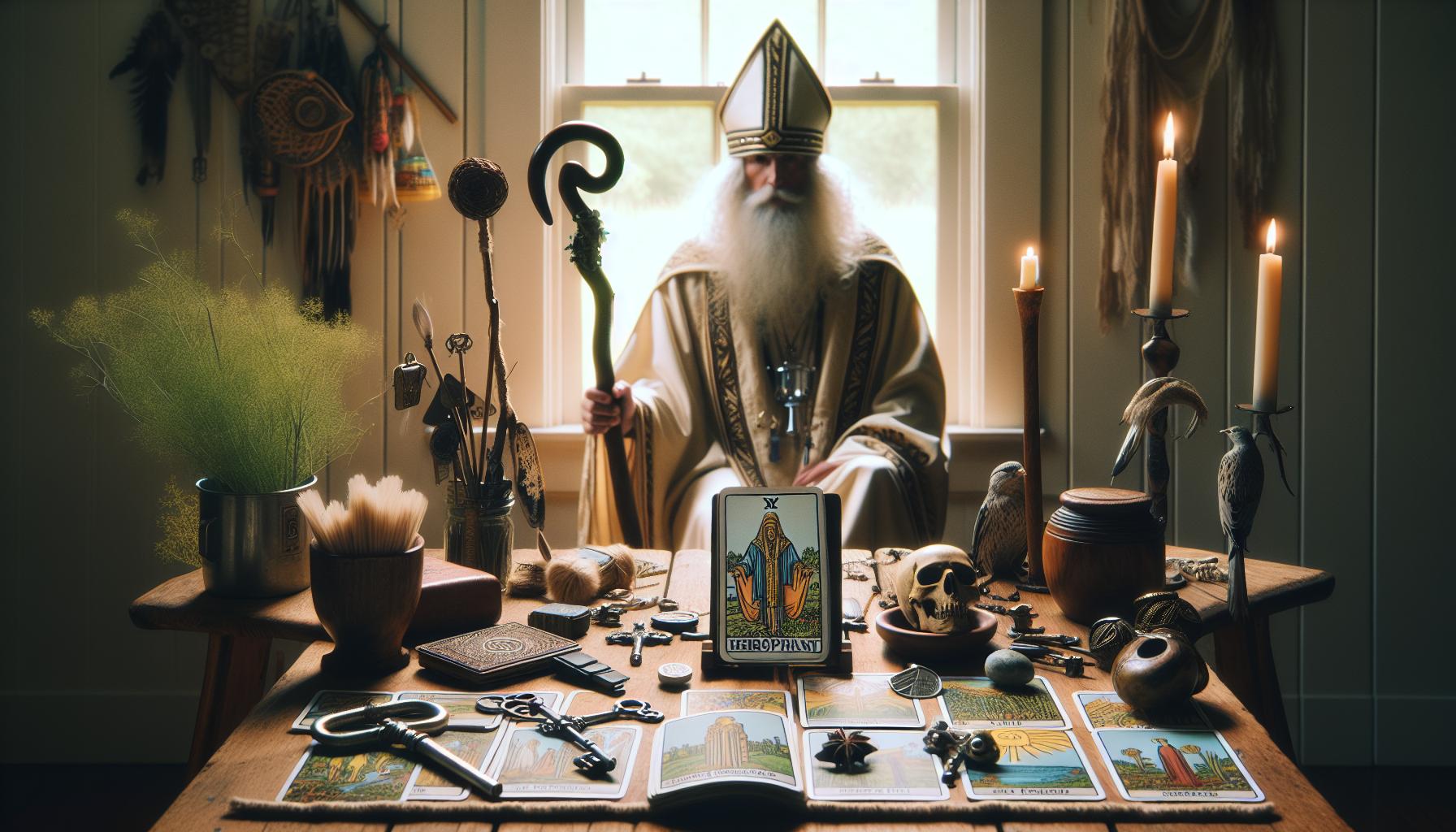
The Symbolism Behind the Hierophant
The Hierophant card is not just a symbol of tradition and convention; it embodies the transformative power of knowledge and the importance of community in our spiritual journeys. Visually, the Hierophant is depicted as a wise figure seated between two pillars, representing duality and balance, a nod to the connection between the spiritual and earthly realms. This positioning highlights the role of the Hierophant as a mediator, guiding seekers through societal norms and established beliefs.
At the heart of the Hierophant’s symbolism lies the concept of guidance-both for oneself and for others. The card often encourages you to seek wisdom from established sources, whether that be through spiritual teachers, religious institutions, or cultural traditions. In many interpretations, the two keys held by the Hierophant symbolize unlocking higher knowledge and spiritual truths, suggesting that understanding is available to those willing to engage with tradition rather than rebel against it. Engaging with these foundations can lead to profound insights and personal growth.
Another significant aspect of the Hierophant’s symbolism is the idea of community. This card reminds us that we are not alone in our spiritual quests. By participating in collective rituals or ceremonies, we can deepen our understanding and connect with others on similar paths. The Hierophant encourages you to explore the cultural practices that resonate with you, reinforcing the idea that wisdom often flourishes in shared experiences.
Engaging with the Hierophant invites you to reflect on your own belief systems and consider the structures that shape your worldview. Are there traditions that you’ve inherited or chosen that deserve deeper exploration? This card inspires curiosity and introspection, urging you to question why certain beliefs hold validity in your life while others might not align with who you are becoming. Just as the Hierophant embodies the role of the teacher, you can adopt a similar approach and become a student of your own experiences, gradually unlocking the keys to your unique spiritual path.
How to Interpret the Hierophant in Readings
Interpreting the Hierophant card in tarot readings can unlock doors to wisdom and guidance that resonate deeply with both your personal journey and collective experiences. This card often signifies a return to tradition and the influence of established beliefs or systems. When the Hierophant appears, consider its message about the importance of learning from mentors, institutions, or cultural practices. This is not merely about conformity; it’s an invitation to engage with traditions that can enrich your understanding of life’s complexities.
When interpreting the Hierophant, it’s beneficial to reflect on the context of your reading. Here are key aspects to consider:
- Guidance and Teaching: The Hierophant serves as a teacher or spiritual guide. In a reading, it may suggest the need to seek out a mentor or to embrace teachings from established sources, such as books, workshops, or spiritual communities. For example, if you’re facing a dilemma, drawing this card may indicate that guidance from a familiar framework or professional could help you navigate the situation.
- Tradition vs. Innovation: The Hierophant also embodies the tension between tradition and individual expression. When it comes up, ask yourself if there’s a set of beliefs you’ve adhered to that might require reevaluation or if you’re feeling constrained by expectations. For example, someone navigating a career choice might feel pressure to follow a traditional path but may also need to explore how their true desires fit into that framework.
- Community and Engagement: This card emphasizes the strength of community. It suggests that shared beliefs, cultural practices, or collective experiences can enhance personal growth. In practical terms, it might lead you to seek out groups or gatherings that align with your spiritual or personal interests.
Consider practical examples in your readings. If you pull the Hierophant while seeking insight on a relationship, it may reveal the importance of understanding familial or cultural beliefs that shape your dynamics. Conversely, in a career reading, it may encourage you to embrace the wisdom of a mentor or consider further training to enhance your skills.
Ultimately, the Hierophant invites you to explore the structures that influence your life. Reflect on which teachings resonate with you, how they’ve shaped your perspectives, and how you might honor tradition while carving out your unique path. Engage with this card’s wisdom, and allow it to enrich your experiences on your spiritual journey.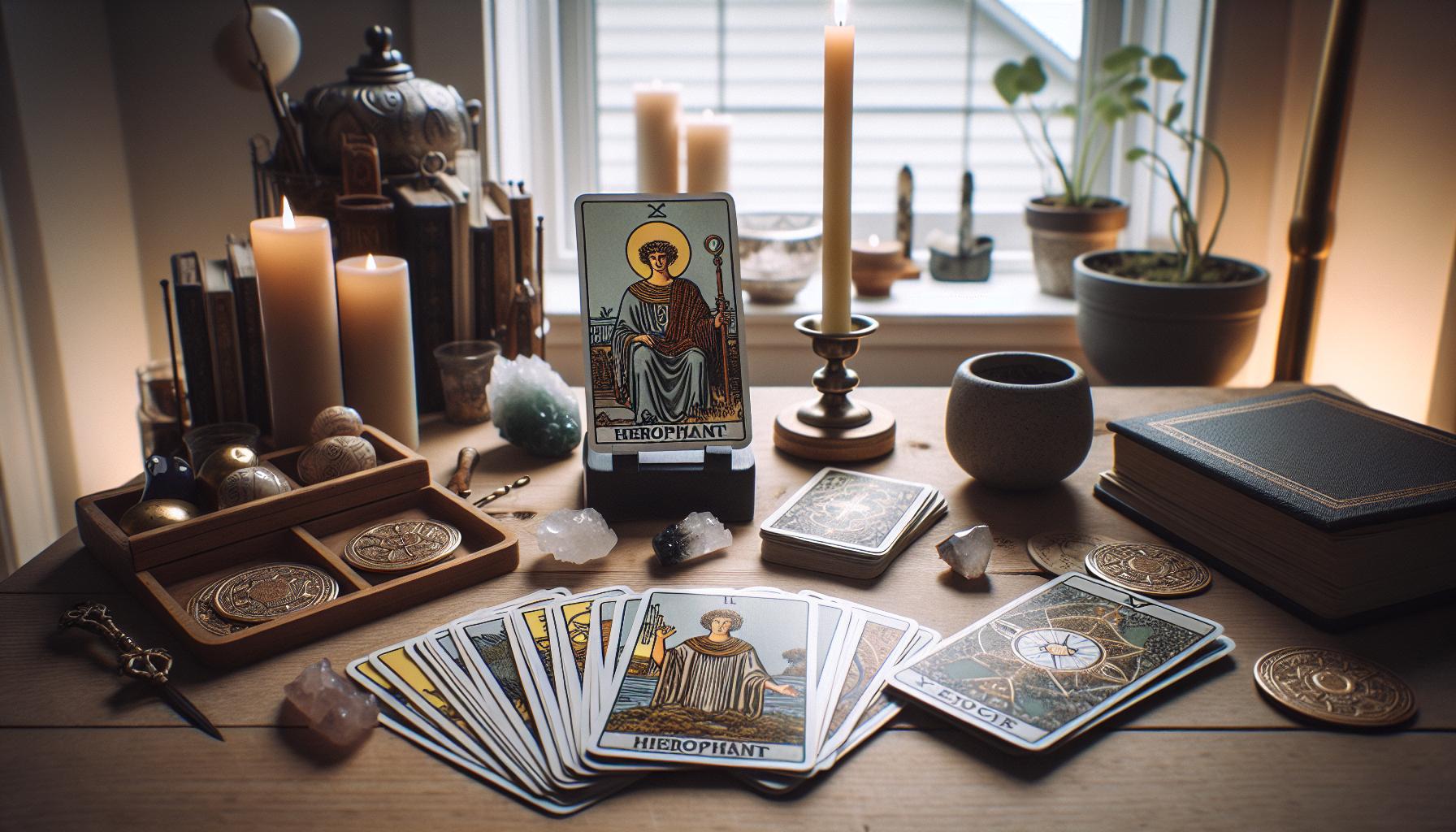
The Hierophant’s Role in Tarot Spreads
When the Hierophant appears in tarot spreads, it often serves as a powerful reminder of the influence of tradition and collective wisdom in our lives. This card can indicate the presence of a mentor or a spiritual guide, suggesting that it may be time to seek guidance from established sources. In various readings, the Hierophant can illuminate pathways toward personal and spiritual growth, often through the lens of societal structures or communal practices.
Understanding the Hierophant’s Influence
In a tarot spread, the position of the Hierophant plays a crucial role in defining its message. For instance, if it lands in a position representing the past, it may highlight formative experiences influenced by cultural or familial traditions. Alternatively, in a position suggesting future possibilities, it may encourage you to explore deeper spiritual teachings or educational pursuits that reflect your values and beliefs. This aspect of the Hierophant encourages a reflective mindset, inviting you to consider what established norms or teachings resonate with you and how they can guide your journey.
Practical Applications in Readings
Consider this example: if you pull the Hierophant in a relationship reading, it may suggest examining shared values or beliefs that underpin your connection. Perhaps it points to traditional expectations about partnership or the importance of family approval in your dynamics. Conversely, if it appears in a career spread, it might suggest pursuing certifications through formal education or seeking mentorship from more experienced colleagues to enhance your professional development.
Integrating the Hierophant’s Wisdom
The Hierophant’s presence in a spread signals a time to honor tradition while also considering your unique path. It encourages you to question which teachings hold genuine value for you, advocating a balance between respect for established beliefs and the necessity of personal authenticity. This harmonious blend can offer deep insights into navigating life’s complexities, enabling you to carve out a fulfilling path that honors both the collective and the individual.
By understanding how the Hierophant interacts with other cards in your readings, you cultivate a richer comprehension of its guidance. This card not only reflects the importance of conformity in specific contexts but also empowers you to redefine what tradition means in your life. Remember, this journey is not just about adhering to established norms; it’s about finding your place within them and allowing that understanding to enhance your spiritual and personal growth.
Understanding the Hierophant’s Reversed Meaning
When the Hierophant appears in reverse, it disrupts the traditional order usually associated with this card, signaling a time for questioning authority and established norms. Rather than adhering to conventional wisdom, the reversed Hierophant invites introspection and encourages you to carve out your own spiritual path. This aspect often surfaces when it’s time to break free from rigid structures or beliefs that no longer serve your highest good.
- Challenging Conformity: The reversed Hierophant often highlights situations where conformity may be detrimental. It asks you to consider whether you’re following traditions that feel out of alignment with your true self. For instance, if you’ve been following a career path because it’s expected or respected, but it doesn’t resonate with you, this card encourages you to explore alternative options.
- Questioning Authority: This version of the card may also bring to light issues of power and control. It serves as a reminder to assess whom you are allowing to influence your decisions. Are these influences empowering, or do they limit your potential? Reflect on your mentors or guides-are they supportive of your individual journey, or do they enforce a rigid perspective that feels confining?
- Rediscovering Personal Beliefs: The reversed Hierophant can signify a turn towards personal spirituality. It invites you to seek wisdom from within rather than from external institutions. This shift may manifest as exploring different belief systems or practices that resonate more authentically with you.
In practical terms, if you pull this card during a reading focused on relationships, it may suggest the need to redefine the terms of engagement by setting personal boundaries or stepping away from societal expectations of how a partnership should look. In a career-focused reading, it could signal a transition away from formal education in favor of experiential learning or alternative paths that honor your unique talents.
Embrace the energy of the reversed Hierophant by taking the opportunity to reassess what you’ve been taught and how it aligns with your values. This is your moment to reclaim your narrative and explore what authenticity means to you in a world dense with prescribed pathways. Whether you’re faced with pressure to conform or simply seeking deeper authenticity, allowing yourself the freedom to question and explore can lead to profound personal growth and fulfillment.
Real-Life Examples of the Hierophant in Action
When the Hierophant appears in a reading, it is a powerful reminder of the role that tradition and guidance play in our lives. Many people reflect on experiences where they sought advice from mentors or turned to established institutions for support. For instance, consider someone navigating a new career path. They may consult a mentor-a seasoned professional in their field-seeking wisdom grounded in their rich experience. This mentor could embody the Hierophant, offering insights that help the individual align their ambitions with the norms of the industry while also emphasizing the importance of professional ethics and education.
In another scenario, imagine a couple preparing for marriage. They might choose to participate in premarital counseling with a spiritual leader, such as a priest or rabbi, who guides them through the customs and expectations of their faith. This interaction beautifully illustrates the Hierophant’s essence-the blending of personal values with collective rituals, underscoring the significance of seeking knowledge and support from established systems to navigate life’s critical transitions.
The Hierophant can also manifest in the realm of education. For a student desiring deeper understanding, enrolling in classes with respected professors or engaging in a religious study group can highlight this card’s influence. These experiences teach not just academic principles but also the value of community and shared beliefs, fostering a sense of belonging and connection to a larger purpose.
Moreover, consider someone at a crossroads in their spirituality, feeling drawn to explore different belief systems. They might attend workshops or lectures led by knowledgeable instructors who encourage them to delve into the philosophies of various traditions. Here, the Hierophant serves as a bridge between different worlds, promoting openness and the acknowledgment of diverse paths while still honoring the foundational teachings that one may hold dear.
Ultimately, the Hierophant encourages us to embrace the wisdom of those who have walked similar paths while also fostering our journey towards personal understanding and growth. Whether in personal relationships, career decisions, or spiritual exploration, the lessons the Hierophant offers are invaluable, revealing how tradition and mentorship can guide us through life’s complexities and uncertainties.
The Hierophant and Its Spiritual Insights
When the Hierophant card appears, it often serves as a gentle nudge towards understanding and engaging with the spiritual traditions that enrich our lives. This card embodies the quest for deeper meaning through established practices and helps connect us with a greater sense of community and shared values. Its spiritual insights are multifaceted, guiding individuals to explore profound questions within the safety of tried-and-true structures.
One powerful insight from the Hierophant is the importance of mentorship. Whether through a spiritual leader, educator, or wise friend, guidance can illuminate our paths, helping us navigate personal and collective challenges. For example, someone may seek out a spiritual advisor when facing a major life decision, such as changing careers or entering a significant relationship. This act of reaching out is not just about receiving guidance; it’s about participating in a dialogue that honors existing wisdom while crafting a personalized journey.
Moreover, the Hierophant emphasizes the significance of rituals and shared practices. Engaging in community rituals, such as group meditation or religious ceremonies, can foster a sense of belonging and spiritual nourishment. These rituals offer a way to connect with others who share similar beliefs, reinforcing the sense of unity and purpose. Consider attending a weekly gathering at a local center; such participation can deepen your understanding of your spiritual path and open avenues for insightful discussions.
Understanding the Hierophant also involves recognizing the balance between tradition and individual exploration. While the card encourages adherence to established beliefs, it also invites questioning and personal growth. It encourages seekers to reflect on how traditional teachings resonate with their unique experiences. For instance, one might take a familiar spiritual practice and modify it to align more closely with personal beliefs, transforming an old tradition into something deeply relevant.
Incorporating the Hierophant’s insights into daily life can be as simple as setting aside time for study or reflection. Embrace opportunities for learning, whether through reading spiritual texts, joining discussion groups, or simply journaling thoughts and feelings about your evolving beliefs. This active engagement not only nurtures your spiritual growth but also reinforces the community spirit that the Hierophant embodies, reminding us that we are not alone on our journeys.
How to Incorporate the Hierophant’s Wisdom in Daily Life
Incorporating the lessons of the Hierophant into daily life opens up pathways to deeper understanding and community connection. This card encourages us to seek knowledge and wisdom in traditional practices, and applying its insights can enrich both our personal growth and our relationships with others. Engaging with spiritual traditions can serve as a foundation for navigating life’s challenges, making the teachings of the Hierophant highly relevant.
Start by actively participating in your community. This could mean attending local workshops, joining study groups, or simply engaging in conversations with those who share your interests. Consider attending a class on a topic of spiritual significance, whether it’s meditation, philosophy, or a creative pursuit that resonates with your beliefs. These gatherings are not just about learning; they foster connections with others, creating a communal space for shared exploration and dialogue.
Establish routines that integrate rituals into your life. Setting aside time for daily reflection or meditation can align you with the Hierophant’s emphasis on spiritual practice. You might create a personal ritual, such as lighting a candle and dedicating time to journal about your thoughts and feelings, or engage in a weekly group activity like book discussions or spiritual forums. These small rituals can ground you in your beliefs while also opening up discussions about them, reinforcing your community ties and personal insights.
Moreover, don’t shy away from mentorship opportunities-whether you seek a mentor or become one yourself. Engaging in a mentor-mentee dynamic can be incredibly rewarding. If you’re the mentor, share your knowledge and insights; if you’re the mentee, ask questions and seek guidance. This dynamic exemplifies the Hierophant’s role in guiding others through established traditions, allowing both parties to learn and grow together.
Lastly, remain open to adapting traditions to fit your unique journey. The Hierophant invites you to explore how established teachings resonate with your personal experiences. If a particular spiritual practice feels rigid, consider how it could be modified to suit your needs better. This balance between tradition and personal insight will empower you to shape your spiritual experience authentically.
In essence, living by the wisdom of the Hierophant revolves around community, ritual, mentorship, and personal adaptation. Embrace these aspects, and you will cultivate a robust spiritual practice that resonates with both yourself and the wider world.
Comparing the Hierophant with Other Tarot Cards
The Hierophant tarot card stands out distinctly within the Major Arcana, often bringing a rich and textured understanding when compared to other cards. Unlike The Fool, who embodies spontaneity and new beginnings, the Hierophant is a custodian of tradition and established norms. This contrast highlights the balance between following a path defined by cultural or spiritual frameworks and the urge to venture into the unknown.
When paired with cards like The Lovers, which emphasizes personal connection and choices, the Hierophant represents the need for guidance in making those decisions. For instance, in a reading where the Lovers appear alongside the Hierophant, it may indicate that seeking counsel-be it from a mentor, religious leader, or wise friend-could provide clarity in a relationship dilemma. This pairing encourages introspection about how beliefs influence choices in love.
Another notable comparison is with The Hermit. The Hermit explores the inner journey and self-reflection, often appearing when the seeker is advised to turn inward for answers. In contrast, the Hierophant turns the focus outward, seeking wisdom from traditions, groups, or higher authority. If both cards appear together, it can suggest a balanced approach-navigating external teachings while also valuing personal intuition and insight.
Engaging with the Hierophant as a reference point offers a broader lens through which to view personal aspirations, responsibilities, and spiritual insights. The interplay between the Hierophant and these other cards enriches readings, making them more layered and insightful. When interpreting the Hierophant’s role within a spread, consider how it interacts with surrounding cards to reveal deeper meanings about structure, mentorship, and the quest for guidance.
Cultural and Historical Context of the Hierophant
The Hierophant card, often steeped in rich cultural and historical symbolism, serves as a bridge between the sacred and the mundane in tarot. Historically, the term “Hierophant” refers to a priest or teacher of sacred rites in ancient Greece, particularly associated with the Eleusinian Mysteries, which celebrated the transition to higher knowledge and understanding through initiatory practices. This connection to ancient rites underscores the card’s emphasis on the transmission of wisdom and the importance of community rituals in understanding spiritual truths.
In the rich tapestry of historical context, the Hierophant has often represented institutions, such as religion and education, which play a significant role in shaping beliefs and social norms. The card encapsulates the idea of conformity and tradition, inviting seekers to consider how societal structures influence their personal journeys. As such, it can reflect the pressures to adhere to established doctrines, be they religious, educational, or cultural. This is particularly relevant in today’s diverse landscape where individuals navigate their beliefs amidst varying traditions.
Understanding the Sociocultural Impact
The Hierophant also opens a dialogue about the sometimes conflicting relationship between tradition and personal belief. For instance, in a reading focused on spiritual growth, the card might highlight the need to engage with established practices, like rituals or teachings from wise mentors, to ground oneself in understanding. As you interpret this card, consider how it calls you to respect the past while also forging your unique path within or outside these structures.
Readers can also approach the Hierophant with a critical lens, examining how societal norms can both support and restrict personal expression and growth. This duality allows for deeper introspection on one’s relationship with tradition-whether it’s to embrace it, challenge it, or find a balance between the two. By acknowledging this context, users gain a richer understanding of the card’s significance, aiding them in their tarot journeys and daily lives.
In summary, the Hierophant is not merely a card of dogma; it is a reminder of the value and weight of tradition and the wisdom it can offer as well as the invitation to reassess one’s ties to these structures. Embracing this perspective can empower readers to interact with the card holistically, enhancing their readings and personal spiritual practices.
Tips for Beginners: Reading the Hierophant
Reading the Hierophant can feel like stepping into a rich tapestry of tradition, wisdom, and spiritual guidance. For beginners, understanding this card is pivotal, as it invites thoughtful reflection on your own relationship with established beliefs and practices. The Hierophant encourages you to explore the influence of societal norms while fostering a connection to deeper spirituality.
To begin interpreting the Hierophant, keep these essential tips in mind:
- Context is Everything: Always consider the context of your reading. The Hierophant may signify a need to turn to conventional wisdom or a mentor’s guidance when you’re facing uncertainty or seeking direction.
- Trust Your Intuition: While the Hierophant emphasizes tradition, each reader brings a unique perspective. Listen to your intuition as you interpret the card-what personal associations come to mind? This helps you connect the card’s meanings to your life.
- Explore the Dual Nature: The Hierophant represents both conformity and the quest for personal truth. Reflect on areas where you feel pressure to adhere to traditions. Are there aspects you’re comfortable with, or do they feel restrictive? This duality can prompt significant insights during your readings.
- Engage with Ritual: Consider how rituals and routines can ground you. If the Hierophant appears in your reading, it may suggest that incorporating more structure or sacred practices into your life could be beneficial.
For a practical exercise, you might want to draw a daily card, incorporating the Hierophant into your reflection. Ask questions like, “What tradition or belief system will support me today?” or “How can I connect with a mentor or guide?” This daily practice not only strengthens your understanding of the card but also deepens your relationship with your intuitive skills.
The Hierophant encourages you to respect the existing frameworks while still nurturing your personal spiritual journey. Remember, as you grow more comfortable with the cards, your interpretations will naturally evolve, leading you toward a more nuanced understanding of both the Hierophant and your own spiritual landscape.
Advanced Techniques for Hierophant Readings
The Hierophant encourages a rich exploration of traditions, wisdom, and the structures that shape our beliefs. As you delve into advanced techniques for interpreting this card, you’ll find that combining your intuitive insights with structured methods can deepen your readings significantly. One particularly effective approach involves contextual layering-analyzing how the Hierophant interacts with surrounding cards in your spread.
Contextual Layering
Begin by examining the cards directly adjacent to the Hierophant. For instance, if paired with The Lovers, this could indicate that traditional values or societal expectations are influencing a romantic choice. Similarly, if the Hierophant appears near the Five of Pentacles, it may suggest that the conventional approaches to finances or security need reevaluation due to current crises. Always ask yourself how the energies of these cards interact to influence the central message.
Intuitive Rituals
Another technique worth exploring is the integration of rituals into your reading practice. When the Hierophant appears, consider performing a simple ritual, such as lighting a candle or journaling about a relevant belief system or tradition. This act can not only shift your energy but also help clarify the card’s messages. For instance, after lighting a candle, you could meditate on what societal structures support your current circumstances and how they can be either a guide or a barrier.
Role-Playing Scenarios
Role-playing can also offer a dynamic way to engage with the Hierophant’s teachings. Create scenarios where you embody a mentor or guide. Reflect on how that role would provide counsel in the context of your question. This technique promotes a deeper understanding of the Hierophant’s dual nature as both a keeper of tradition and a beacon for personal truth, allowing you to navigate your unique paths while honoring the lessons learned from both.
Incorporating Journaling Practices
Finally, a progressive journaling practice focusing on your interactions with traditions and beliefs can yield rich insights. Document your feelings and reactions to various societal norms, examining how they influence your decisions. Each time you draw the Hierophant, add reflections on intuition versus tradition. Over time, patterns may emerge, refining your understanding of both yourself and the card. By weaving together these advanced techniques, you enhance not only your readings but also your personal growth, celebrating the essence of the Hierophant in your journey.
Q&A
Q: What does the Hierophant in Tarot symbolize?
A: The Hierophant symbolizes tradition, spiritual authority, and guidance. It represents the quest for deeper understanding and connection to community and spiritual beliefs. In readings, it often embodies the importance of conforming to established conventions and seeking knowledge within a larger context. Explore more in the section on the card’s symbolism.
Q: How can beginner readers interpret the Hierophant card?
A: Beginner readers can interpret the Hierophant by considering its association with wisdom and teaching. Look for connections to mentorship, traditional practices, or spiritual guidance in your situation. Reviewing the tips for beginners can enhance your understanding of this card’s significance in your readings.
Q: In what situations should I consider the Hierophant during a Tarot reading?
A: Consider the Hierophant when facing decisions about conformity, learning, or seeking guidance from established institutions. It can highlight the need for spiritual counsel or reinforce the value of community. Refer to the section on interpreting the Hierophant in context for detailed insights.
Q: What does the reversed Hierophant card signify?
A: The reversed Hierophant often signifies rebellion against tradition, questioning authority, or breaking free from dogma. It encourages self-exploration and personal belief systems. To understand its implications, be sure to read about the Hierophant’s reversed meaning in your Tarot resources.
Q: How does the Hierophant compare to the other Major Arcana cards?
A: The Hierophant contrasts with cards like The Fool, signifying different paths: the fool embodies new beginnings and spontaneity, while the Hierophant emphasizes structure and tradition. Comparing these cards can deepen your understanding of their roles. Refer to the section on comparing the Hierophant for more details.
Q: What practical advice does the Hierophant offer for daily life?
A: The Hierophant advises embracing spiritual practices and seeking knowledge within community frameworks. It encourages respecting traditions while also considering personal growth. For actionable guidance, check out how to incorporate the Hierophant’s wisdom in everyday scenarios.
Q: How can I enhance my connection with the Hierophant card?
A: Enhance your connection by meditating on the card and journaling your thoughts about tradition and learning. Engage with spiritual texts or guidance from mentors. For deeper insights, explore advanced techniques for Hierophant readings that can foster this connection.
Q: When was the Hierophant card first introduced in Tarot?
A: The Hierophant card dates back to the earliest Tarot decks, appearing notably in the 15th century. Its themes are rooted in historical spiritual practices and societal norms. Understanding its cultural and historical context can enrich your readings and appreciation of the card.
To Conclude
As we wrap up our exploration of the Hierophant, remember that this card isn’t just about tradition-it’s also about unlocking your own spiritual wisdom. It encourages you to seek deeper meanings and allows you to connect with your inner teacher. If you’re curious about how to incorporate this card into your daily readings, consider checking out our guide on enhancing your Tarot skills or exploring the significance of other Major Arcana cards.
Don’t forget to subscribe to our newsletter for more insights and exclusive resources that will empower your Tarot journey. Have questions? Share your thoughts in the comments below-we love hearing how the Hierophant resonates with you! Embrace the magic and connection that Tarot offers, and continue your journey toward understanding. Your intuitive discovery awaits!
Get our latest guides, news, and insights highlighted in your Google Search & AI Overviews.