Tarot cards, with their rich symbolism and mysterious allure, have captivated minds for centuries. But have you ever wondered how this enigmatic tool came to be? Understanding the origins of tarot not only deepens your connection to the cards but also enhances your readings, providing context and meaning that can enrich your intuitive practice. Whether you’re a seasoned reader or just starting your journey, exploring this fascinating history can illuminate your path, revealing the mystical threads that tie us to our past. Join us as we delve into the origins of tarot cards and discover the stories and traditions that have shaped their powerful presence in our lives today.
The Historical Roots of Tarot Cards Uncovered
The origins of tarot cards are as intriguing as the cards themselves. Emerging in the mid-15th century, tarot’s beginnings were not in the mystical realms we associate with them today, but rather as a form of entertainment. The earliest tarot decks were created in Northern Italy, specifically for playing a game called tarocchi, enjoyed by the nobility and later by the common folk. These decks consisted of four suits, similar to modern playing cards, but were more elaborately illustrated with themes reflecting the culture and art of the time.
As these cards evolved, they began to accumulate layers of meaning. By the late 18th century, tarot transitioned significantly from a mere game to tools of divination and self-reflection. Philosophers and mystics, such as Antoine Court de Gébelin, linked tarot cards to ancient Egyptian wisdom and esoteric traditions, despite the lack of historical evidence for such connections. This infusion of mysticism and symbolism started to reshape the perception of tarot as not just a card game, but a powerful means of insight and personal growth.
The art and imagery of tarot cards drew on a variety of influences, ranging from Christian iconography to alchemical symbols. Each card became a vessel of deeper meaning, incorporating archetypes and themes that resonate on a psychological and spiritual level. This development invited practitioners to explore the cards not just as tools for divination but as mirrors reflecting their inner selves and life experiences. Engaging with tarot encourages introspection, prompting individuals to delve into their thoughts and feelings.
As we trace the historical roots of tarot, it’s essential to acknowledge that its journey is ongoing. While the fundamental essence of tarot has remained intact, each cultural context has adapted its interpretations and practices. Tarot cards now reflect a blend of history, culture, and spirituality, making them relevant for personal exploration and guidance in the modern world. Whether approached with skepticism or belief, tarot continues to inspire curiosity and self-discovery, offering a welcoming space for all who seek it.
How Tarot Evolved Through the Centuries
The evolution of tarot cards is a captivating journey that reflects the changing cultural, spiritual, and artistic landscapes of society. Beginning in the mid-15th century as a simple card game in Northern Italy, tarot was originally played for entertainment, distanced from the mystical connotations we associate with it today. Early decks, such as the Visconti-Sforza tarot, were designed with exquisite artistry, often depicting themes from the elite’s era, but it wasn’t until the late 1700s that a profound transformation began.
As tarot spread beyond Italy, mystics and scholars saw deeper meanings in the images and symbols, linking them with ancient spiritual traditions and philosophies. Figures like Antoine Court de Gébelin and later scholars introduced the idea that tarot had connections to Kabbalistic concepts and Egyptian wisdom, despite a lack of historical backing for such claims. This assertion marked a significant shift in perception; tarot cards began to be seen not merely as tools for games but as intricate instruments for divination, self-reflection, and psychological exploration.
By the 19th century, tarot underwent another pivotal change with the emergence of the popular Rider-Waite-Smith deck. This version democratized tarot accessibility with its clearer imagery and symbolism, enabling a broader audience to engage with the cards. Each card’s illustrations told stories relating to moral lessons, human virtues, and personal growth. Practitioners were encouraged to see tarot as a means to navigate life’s complexities, fostering a sense of empowerment through the understanding of personal cycles and challenges.
Today, tarot cards embody a rich tapestry of history, reflecting diverse cultural interpretations across the globe. From the mystical elements to psychological archetypes, tarot invites users to access their intuition and explore their inner worlds. Engaging with tarot encourages connection and understanding, making it relevant for both spiritual seekers and skeptics alike. Each card becomes a guide, fostering introspection and prompting inquiries that resonate deeply with our life experiences. As tarot continues to evolve, it remains a cherished tool for personal insight and creative expression, bridging the ancient and the modern.
Understanding the Original Purpose of Tarot
The earliest incarnation of tarot cards was far removed from the mystical and introspective tools we associate them with today. Originating in the 15th century Italy, tarot began as a deck of playing cards, intended for games rather than divination or spiritual exploration. The original purpose was simple: entertainment. Social gatherings would often revolve around card games like tarocchi, enjoyed by people of various classes. Early tarot decks, such as the Visconti-Sforza, exhibited intricate artistry and were crafted primarily for the wealthy, showcasing themes of courtly love, mythology, and morality.
As time progressed, the perception of tarot began to shift dramatically. By the late 18th century, with the spread of tarot throughout Europe, enthusiasts started to explore deeper meanings behind the images and symbols depicted on the cards. Influential figures like Antoine Court de Gébelin proposed that tarot was a remnant of ancient wisdom, suggesting it had links to Egyptian mysticism and Kabbalistic teachings. This was a pivotal moment in tarot’s history, marking the transition from a mere card game to a complex system employed for introspection, self-discovery, and guidance.
Through this evolution, tarot started to embody archetypes and narratives that resonated with human experiences. Each card, with its rich imagery, began to serve as a mirror reflecting the various aspects of life, including challenges, relationships, and personal insight. Beginners engaging with tarot today can embrace this heritage; the cards can be viewed not only as pathways to divine guidance but also as meaningful tools to enhance personal intuition and understanding. For those who approach tarot with curiosity, it offers a unique opportunity to explore one’s psyche and the world around them without the barriers of preconceived mysticism.
Ultimately, the original purpose of tarot lies in its ability to connect users with their inner thoughts and feelings, fostering a journey of personal insight and empowerment. Whether for curiosity or deeper spiritual practice, tarot invites everyone to explore its layers, proving that its roots in playfulness can lead to profound revelations.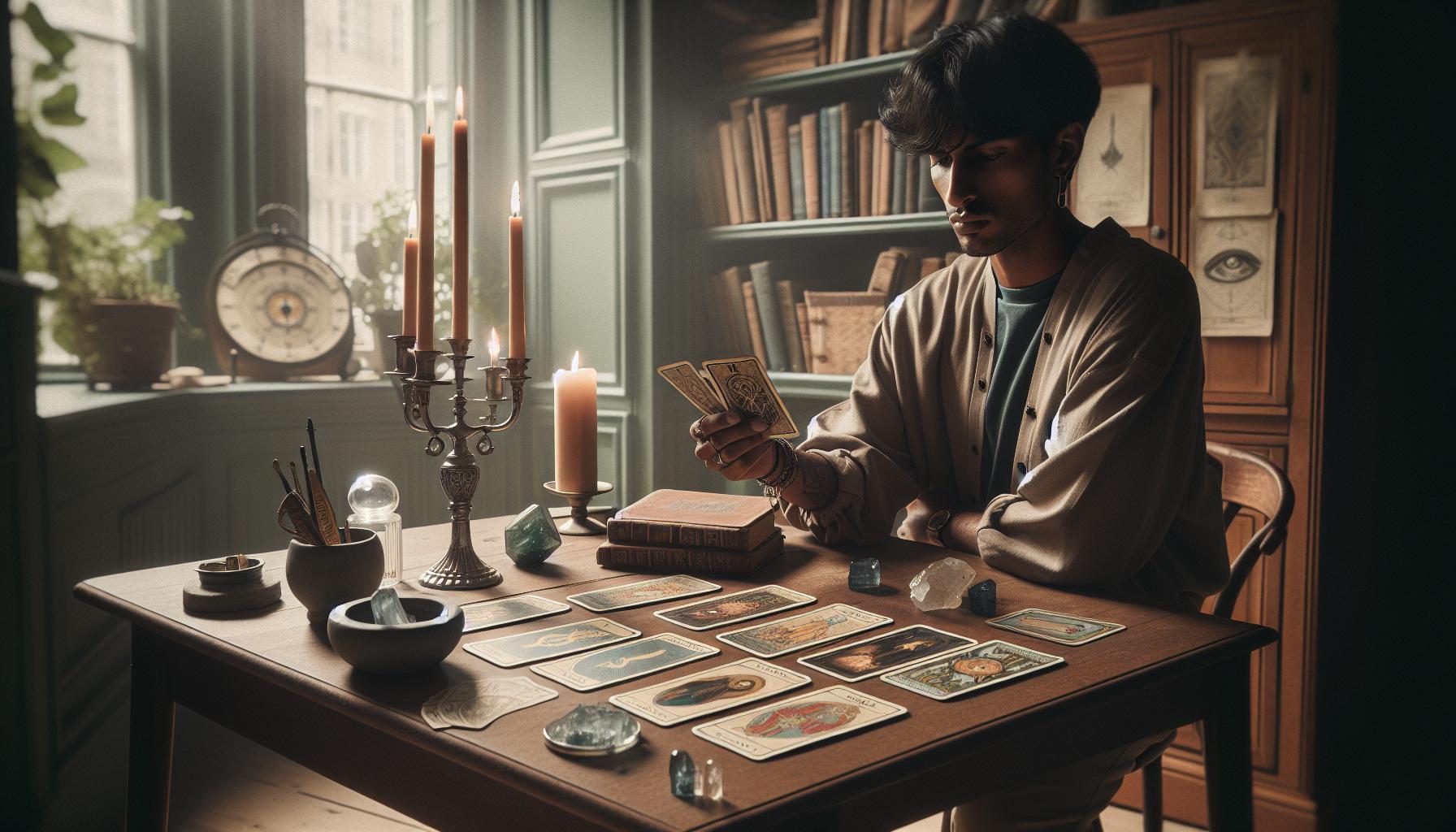
The Influence of Mysticism on Tarot’s Development
The journey of tarot cards from simple playing cards to profound tools of divination is deeply intertwined with the rise of mysticism in European culture. As tarot began to capture the imaginations of scholars and seekers of spiritual truth, its symbolism evolved to reflect deeper esoteric meanings. The mystical interpretations incorporated elements from various spiritual traditions, including the Kabbalah, Hermeticism, and ancient Egyptian beliefs, each contributing to a rich tapestry of symbolism and insight.
One pivotal figure in this transformation was Antoine Court de Gébelin, a French clergyman and Freemason, who in the late 18th century posited that the tarot cards were a remnant of ancient Egyptian wisdom, laden with hidden knowledge. His ideas sparked interest across Europe, leading to a broader acceptance of tarot as a means of divination rather than merely a game. This notion paved the way for a mystically charged understanding of the cards, where each illustration became a key to unlocking personal and universal truths. For instance, the image of The Fool is now often viewed not only as a representation of new beginnings but also as a symbol of spiritual journeys and enlightenment.
As mysticism continued to influence tarot’s development, specific symbols were assigned particular meanings, enriching the reading experience. Cards like The High Priestess evoke themes of intuition, mystery, and the subconscious, connecting readers to their inner wisdom. Understanding these symbolic layers can enhance the depth of any reading, whether you are applying tarot in a casual setting or delving into serious introspection. Beginners can start by recognizing the core meanings of the major arcana cards and how they relate to various life situations, thus building a foundation for deeper exploration.
Ultimately, embracing the mystical influences on tarot offers a way to connect more profoundly with the practice. It encourages readers to see the cards as multi-dimensional tools for insight, merging personal narrative with universal archetypes. This blending of ancient wisdom and modern interpretation ensures that tarot remains not only a reflection of one’s current state but also a guiding light towards future possibilities. As you explore tarot, remember that you hold the key to your interpretation-trust your intuition, and let the mysteries unfold at your pace.
Key Figures Who Shaped Tarot’s History
The evolution of tarot is intricately tied to a few remarkable individuals who played pivotal roles in transforming this set of cards from a simple game into a profound tool for divination and self-discovery. One of the most influential figures was Antoine Court de Gébelin. In the late 18th century, this French clergyman and Freemason asserted that tarot cards originated from ancient Egyptian wisdom, a claim that captivated many and sparked a surge of interest in the cards as repositories of hidden knowledge. His theories promoted the idea that the symbols on the cards connect to spiritual truths and human experience, laying the groundwork for the perception of tarot as a mystical practice rather than mere entertainment.
Another key figure is Eliphas Lévi, a French occultist whose works in the 19th century contributed significantly to the modern understanding of tarot. He introduced the concept that each tarot card holds deep symbolic meaning and can reflect universal archetypes. Lévi’s interpretation of the cards drew heavily from the Kabbalah and Hermeticism, further intertwining tarot with broader esoteric traditions. His writings encouraged readers to view the cards not just as tools for predicting the future but as mirrors to their inner selves, revealing insights about their past, present, and potential futures.
In addition to these figures, the Rider-Waite-Smith deck, created by Arthur Edward Waite and illustrated by Pamela Colman Smith in 1909, brought a new level of accessibility to tarot. This deck emphasized imagery in its card designs, making them more relatable and intuitive for users. Each card in this deck encapsulates a story and meaning, fostering a connection that encourages personal interpretation. By translating abstract concepts into visual symbols, Waite and Smith made tarot approachable to a broader audience, ultimately paving the way for widespread interest and use of tarot in both spiritual practices and casual readings.
These key figures, along with many others, shaped the rich history of tarot, fostering its evolution from a game to a deeply spiritual practice. Their contributions not only defined the imagery and meanings associated with the cards but also opened the doors for enthusiasts and seekers alike to explore tarot as a tool for introspection, personal development, and divination. As you embark on your own tarot journey, remember that these foundations can empower you to craft your unique interpretations and insights, fostering a deeper connection with the cards.
Tarot’s Transition from Games to Divination
The transformation of tarot cards from a playful pastime to a respected tool of divination is a fascinating chapter in their history. Initially, tarot cards were created in the 15th century in Italy as playing cards, known as tarocchi. They were used primarily for games similar to modern-day bridge or whist, reflecting the social and recreational practices of the time. However, as the cultural landscape shifted and intellectual curiosity grew, tarot began to attract the interest of mystics and scholars. This pivot marked the beginning of tarot’s role in divination and spiritual exploration.
As tarot cards found their way into the hands of scholars and occultists in the 18th century, their meanings began to evolve dramatically. Influential figures, such as Antoine Court de Gébelin, theorized that tarot contained ancient wisdom and spiritual truths. His assertions linked the imagery on the cards to Egyptian mythology and mystical knowledge, turning them into symbols of profound significance rather than mere tools for games. This reimagining sparked a burgeoning interest in tarot as a means to gain insight into one’s life, destiny, and inner self.
In the 19th century, further developments solidified tarot’s spiritual identity. Eliphas Lévi, a prominent occultist, emphasized the symbolic meanings behind each card, framing them as reflections of universal archetypes and personal consciousness. His ideas contributed to the understanding of tarot as a form of psychological introspection, paving the way for its use in personal growth and development. People began to see the tarot not just as a fortune-telling tool, but as a mirror for self-exploration and spiritual connection.
The creation of the Rider-Waite-Smith deck in the early 20th century marked a significant milestone in this transition. With its rich imagery and accessible designs, the deck allowed users to engage with the cards on a personal and intuitive level. Each illustration invited interpretation and storytelling, encouraging readers to delve deeper into their meanings. This shift enabled tarot to reach broader audiences, transforming the practice into a popular means of understanding oneself and exploring life’s mysteries through intuitive insights.
As you explore tarot, remember this journey from games to divination. Each card holds the potential to unlock your intuition and guide you toward self-discovery. Whether you view tarot as a mystical art or a psychological tool, its essence lies in the insights you gain from your own interpretations. Embrace the cards as companions on your spiritual journey, and don’t hesitate to draw on their wisdom whenever you seek guidance in your life.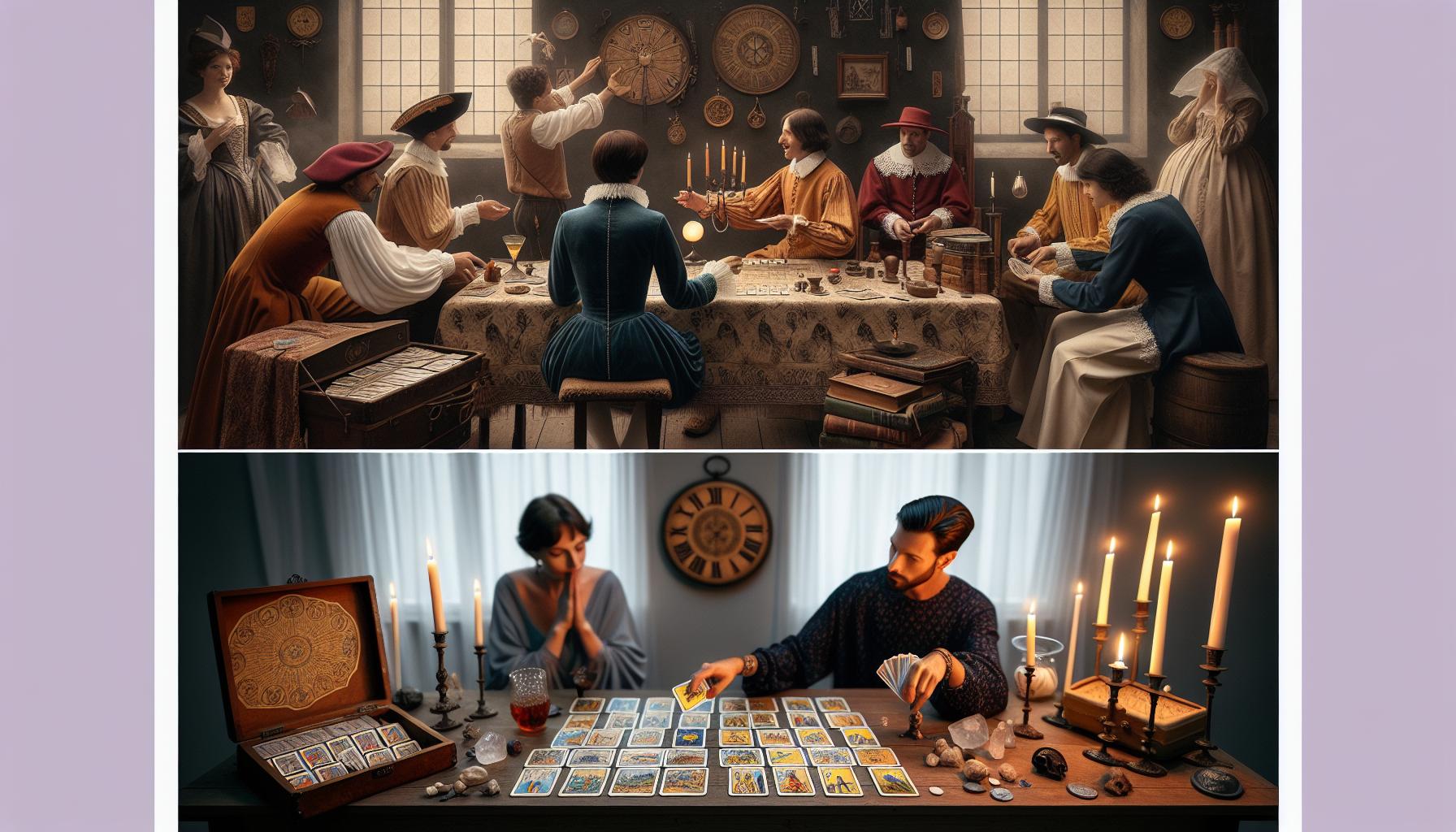
Cultural Variations in Tarot Interpretations
Throughout history, tarot cards have evolved into a rich tapestry reflecting diverse cultural interpretations. Each culture infuses its unique traditions, symbols, and meanings into tarot, transforming it into an accessible and personal tool for spiritual insight. For instance, Western tarot, which many are familiar with, often draws from Judeo-Christian iconography and European mysticism. Here, the cards are seen as vehicles for divination, providing insights into the self and life’s journey.
In contrast, Eastern interpretations of tarot, such as those found in Japan, approach the cards through the lens of Shinto and Buddhist philosophies. Japanese tarot decks might be illustrated with nature motifs and mythological figures, emphasizing harmony, balance, and the interconnectedness of all life. These decks highlight the importance of introspection through serene imagery, guiding users toward personal and spiritual enlightenment rather than strictly predictive outcomes.
Moreover, cultural variations also bring different card structures and interpretations. For example, some indigenous cultures incorporate local folklore and ancestral wisdom into their tarot practices. The incorporation of local traditions can tailor tarot cards to reflect a community’s unique story, illustrating universal themes through culturally specific narratives. When engaging with tarot from various cultural backgrounds, it’s essential to approach them with openness and respect, appreciating both the commonalities and distinctions in their meanings.
Understanding these cultural differences allows readers to approach tarot with a more profound sense of compassion and connection. No matter your background or beliefs, tarot’s diverse interpretations invite everyone into a journey of self-discovery and intuitive exploration. As you draw cards, consider the cultural origins and meanings behind each one; this can enrich your readings, deepen your connections, and enhance your understanding of the cards as personal guides on your spiritual path.
Unlocking the Symbols: Tarot Card Meanings
The intricate imagery and rich symbolism found in tarot cards have fascinated seekers for centuries. Each card acts as a repository of meaning, inviting introspection and guidance. Understanding these symbols is key to unlocking the wisdom tarot has to offer. For many, this exploration not only enhances their readings but also deepens their connection to the transformative potential of tarot.
Key Symbols and Their Meanings
Every tarot card is imbued with unique symbols that convey deep insights. Here’s a brief overview of some fundamental cards and their overarching themes:
- The Fool (0): Represents new beginnings, innocence, and spontaneity. This card encourages taking risks and embracing the unknown.
- The Magician (I): Embodies manifestation and resourcefulness. When this card appears, it signals that you have the tools to turn your dreams into reality.
- The High Priestess (II): Symbolizes intuition and the subconscious mind. She invites you to explore your inner wisdom and trust your instincts.
- The Empress (III): Reflects fertility, abundance, and nurturing energy. This card encourages the celebration of life and creativity.
- The Tower (XVI): Signifies sudden upheaval and revelations. While daunting, its presence can indicate necessary change and personal growth.
How to Interpret Tarot Symbols
To effectively interpret these symbols, try to approach each reading with an open mind and heart. Here’s a straightforward method to guide your understanding:
- Connect Emotionally: Before you start, take a moment to center yourself. Consider your feelings and thoughts about the current situation you’re inquiring about.
- Reflect on Imagery: Look closely at the illustrations on each card. What emotions or thoughts do they evoke? Each detail is loaded with meaning that can guide your interpretation.
- Consider Card Placement: In spreads, the card’s position can reveal additional layers of meaning. For instance, a card in the past position may offer insights into influences that have shaped your current situation.
- Trust Your Intuition: Your personal experiences and intuitions are invaluable. If a symbol resonates with you in a way that isn’t traditionally outlined, honor that perspective.
Practicing with Tarot
A practical way to build confidence in interpreting tarot symbolism is through journaling. After each reading, write down your reflections on the cards drawn, the feelings they stirred, and any insights you gleaned. This practice helps you to connect deeper with the cards over time and reinforces your intuitive abilities.
Whether you are a skeptic or a seasoned practitioner, understanding the symbols within tarot enriches your readings and enhances your personal journey. Tarot is not just a tool for divination; it’s a companion on your path of self-discovery, encouraging you to embrace the magic within and around you.
The Role of Tarot in Spiritual Practices
In the realms of spiritual practices, tarot serves as a profound tool for introspection and guidance, transcending its origins as a mere card game. Many seekers find that engaging with tarot allows them to connect with their inner wisdom and the greater universe. Whether you’re drawn to tarot for its rich symbolism or its potential to uncover deeper truths, the process can offer transformative insights into your life’s journey.
The beauty of tarot lies in its versatility. Beginners can start by using simple spreads to explore personal challenges or decisions, while experienced practitioners may delve into more complex layouts to gain insight into broader life themes. A common beginner’s spread is the three-card layout, where each card represents the past, present, and future. This structure can guide your understanding of how your past influences your present circumstances and future possibilities.
Understanding the meaning of each card is fundamental. Each card carries its own energy-like The High Priestess, which encourages you to listen to your intuition, or The Tower, which can signify the need for abrupt change. Making connections between these cards during your readings fosters a deeper spiritual dialogue with yourself. Reflect on what resonates with you personally; perhaps a card symbol evokes emotions or memories that can enrich your reading experience.
For those interested in integrating tarot into daily spiritual practices, consider setting aside time each week to pull a card and reflect on its message. This can become a meditative practice, inviting you to explore your thoughts and feelings in a nurturing way. Remember, tarot is a personal journey. Approach it with an open mind and heart, allowing intuition to lead the way as you uncover the magic of your inner landscape.
The Impact of Modern Tarot Trends
The world of tarot has undergone a remarkable transformation in recent years, reflecting broader shifts in culture and spirituality. Once viewed as a mysterious and esoteric practice, tarot is now embraced by a diverse audience seeking self-discovery, empowerment, and connection to the divine. This evolution is not merely a fad; it signifies the reawakening of interest in intuitive arts, personal insight, and ancient wisdom.
One of the most significant modern trends is the integration of tarot into everyday life as a tool for personal growth. Many practitioners now utilize tarot for journaling, meditation, and even decision-making. This shift emphasizes tarot’s accessibility-it’s no longer confined to the niche circles of mystics or psychics. Instead, individuals from all walks of life find joy and clarity in pulling cards for guidance on everything from mundane chores to life-altering decisions. A simple daily draw, such as selecting a single card to embody the day’s energy, has become a common practice for many. This encourages users to engage with their intuition and reflect on their experiences in a structured way.
Social media has also played a pivotal role in reshaping the tarot landscape. Platforms like Instagram and TikTok have fostered vibrant communities where users share readings, interpretations, and unique spreads. This visibility not only demystifies tarot but also fosters communal learning and exchange. Newcomers are welcomed with open arms, as seasoned practitioners share their insights and resources. The rise of diverse tarot decks showcasing various cultures, art styles, and themes further enriches the experience, allowing every individual to resonate with the imagery and messages they encounter.
Moreover, the intersection of tarot with mental health awareness cannot be overlooked. Many users are finding that tarot offers a supportive framework for exploring emotions and mental well-being. Guided by the rich symbolism of the cards, individuals can delve into their feelings, confront difficult truths, and find solace in their journeys. For instance, drawing The Hermit can prompt one to reflect on the need for introspection and inner guidance during challenging times. This connection of tarot to personal well-being frames the practice as not just divination but also a legitimate tool for healing and self-care.
As modern tarot trends continue to flourish, the essence of tarot remains the same-a deep exploration of one’s psyche and the universe’s mysteries. Whether you’re a curious beginner or a seasoned reader, the key lies in your willingness to engage with the cards thoughtfully and personally. Embrace this journey; it is yours to navigate, filled with insights and revelations awaiting discovery.
Exploring Tarot’s Continued Relevance Today
The resurgence of tarot in contemporary society illustrates its enduring appeal and transformative potential. Once relegated to the shadows of superstition and deception, tarot now stands at the forefront of holistic wellness and personal exploration. This elevation can be attributed to a growing recognition of its psychological benefits, as people seek tools to navigate the complexities of their emotions and life choices.
One compelling aspect of tarot’s relevance today lies in its adaptability across diverse contexts. Whether used for personal reflection, group workshops, or even creative inspiration, tarot can fit seamlessly into various lifestyles. Enthusiasts often report that engaging with tarot cards facilitates a deeper understanding of self, enabling users to articulate feelings that may be challenging to express otherwise. A simple three-card spread can help clarify past influences, present circumstances, and potential future paths, making it a versatile tool for self-discovery.
Additionally, social media platforms act as modern tarot classrooms, fostering connections among practitioners from around the world. Users share interpretations, readings, and personal stories, breaking down barriers and encouraging a communal approach to learning. This interconnectedness not only demystifies tarot but also amplifies its accessibility, creating a supportive environment for both newcomers and seasoned readers. The variety of cultural decks and artistic designs available today further reflects the global embrace of tarot, inviting individuals to find a deck that resonates with their unique perspectives and experiences.
Finally, the integration of tarot into therapeutic frameworks highlights its growing recognition as a legitimate practice within mental health contexts. Many therapists incorporate tarot as a tool for dialogue, allowing clients to visualize their concerns and engage with their feelings in a non-threatening manner. The symbolism found in tarot cards can prompt introspection and insights that are important for healing journeys, reinforcing the idea that tarot is not merely a mystical art but a valuable resource for personal growth and mental well-being.
In essence, whether you’re drawing a card to illuminate a particular question or seeking inspiration for creative projects, tarot’s continued relevance is a testament to its profound ability to connect individuals with their intuition and the world around them. By embracing this ancient practice, you open a doorway to countless insights and personal transformations, proving that tarot indeed has a place for everyone on their unique journey.
Accessing Tarot: Beginner Tips and Resources
To embark on a journey with tarot, it’s crucial to feel both confident and connected to the practice. Tarot is more than just beautiful cards; it’s a gateway to self-exploration and understanding. For those new to tarot, the sheer number of options and interpretations can be overwhelming. However, with a thoughtful approach and a few key tips, anyone can start to access the wisdom of the cards with ease and enjoyment.
Begin by selecting a tarot deck that resonates with you. There are countless options available, ranging from traditional decks like the Rider-Waite to more modern interpretations. Spend some time exploring various decks, paying attention to the artwork and your emotional response. A deck that speaks to you personally will enhance your readings and deepen your connection to the practice.
Familiarize Yourself with the Cards
Once you’ve chosen a deck, take the time to learn about each card. Start by identifying the Major Arcana cards, which represent significant life events or themes, and the Minor Arcana cards, which reflect everyday influences. Here’s a basic approach to get you started:
- Major Arcana: Focus on learning 1-2 cards per day. Reflect on their meanings and consider how they might apply to your life or current situations.
- Minor Arcana: Group them by suits: Cups (emotions and relationships), Wands (creativity and action), Swords (thoughts and challenges), Pentacles (material aspects). This grouping can help you grasp their meanings more intuitively.
A simple yet effective way to learn card meanings is to journal your interpretations and feelings about each card. This practice not only aids memorization but allows you to notice patterns and personal insights over time.
Starting with Simple Spreads
To begin reading, start with simple spreads, such as the one-card pull for daily insight or a three-card spread to explore past, present, and future dynamics. For a three-card spread, shuffle your deck while focusing on a particular question or theme:
- First Card: Represents the past influences affecting your question.
- Second Card: Reflects your current situation or feelings about the issue.
- Third Card: Offers insights into potential outcomes or advice moving forward.
For example, if you pull the Six of Cups in the past position, it may indicate nostalgia or past influences in your current situation, helping you understand the roots of your feelings.
Resources and Community
Finally, dive into available resources to enhance your understanding. Many books and online courses offer structured lessons on tarot basics, while forums and social media create opportunities for community engagement. Engaging with fellow tarot enthusiasts can demystify the practice and encourage you to share your experiences.
Tarot is a personal journey that unfolds uniquely for each seeker. Embrace the process, and allow yourself to interpret the cards in a way that feels authentic to you. Enjoy the exploration, and remember: intuition is as vital as any guidebook. Each reading is an opportunity to unlock deeper insights into yourself and your surroundings. Happy reading!
Frequently asked questions
Q: What are the earliest known uses of Tarot cards?
A: The earliest known uses of Tarot cards date back to the 15th century in Europe, particularly in Italy, where they were initially used for playing games. It wasn’t until the late 18th century that Tarot began to be associated with divination and spiritual insight.
Q: How did Tarot cards transition from gaming to divination?
A: Tarot cards transitioned from gaming to divination when, in the 18th century, scholars and mystics began to reinterpret the cards as mystical tools. This shift coincided with the Romantic movement that emphasized spirituality, leading to Tarot’s association with personal insight and fortune-telling.
Q: Who popularized Tarot for spiritual purposes?
A: Tarot for spiritual purposes was popularized by figures such as Antoine Court de Gébelin and Eliphas Lévi in the late 18th and 19th centuries. They attributed deep esoteric meaning to the cards, connecting them with ancient wisdom and mystical traditions.
Q: What cultural influences shaped Tarot’s imagery?
A: Tarot’s imagery is influenced by various cultures, including Egyptian, Kabbalistic, and alchemical traditions. The symbols and archetypes found in Tarot reflect a blend of folklore, mythology, and esoteric teachings that have evolved over centuries.
Q: How did the design of Tarot cards change over time?
A: The design of Tarot cards changed significantly from their crude medieval origins to the ornate illustrations seen in decks like the Rider-Waite. Artists began to create decks that emphasized symbolism and artistic expression, reflecting contemporary spiritual beliefs and aesthetics.
Q: What impact did the Rider-Waite Tarot have on Tarot’s popularity?
A: The Rider-Waite Tarot, published in 1910, had a profound impact on Tarot’s popularity. Its accessible imagery and accompanying guidebook made it easier for beginners to learn Tarot, leading to widespread use in both divination and personal exploration.
Q: Are there any ancient texts that reference Tarot?
A: There are no known ancient texts that specifically reference Tarot as we understand it today. However, scholars often connect Tarot to other mystical traditions and frameworks found in esoteric writings, suggesting a rich, albeit indirect, historical tapestry.
Q: How does Tarot reflect historical societal changes?
A: Tarot reflects historical societal changes by evolving in response to cultural shifts, such as the Renaissance’s focus on humanism and the Romantic movement’s embrace of mysticism. Each period’s interpretations and artistic styles reveal societal values and changing perspectives on spirituality.
For further exploration of Tarot’s fascinating history, check out the article on the historical roots of Tarot cards and understand how its meanings and uses have evolved.
In Summary
The rich history of Tarot cards offers a window into both the mystical and cultural evolution of this unique practice. Understanding how Tarot originated not only deepens your appreciation for the cards but also enhances your intuition as you navigate your own readings. If you’re eager to take your Tarot journey further, check out our comprehensive guide on how to use Tarot cards and discover the art of cleansing your deck for a more powerful connection.
Don’t forget to explore our daily Tarot readings for insights that can guide your day and illuminate your path. Ready to ask a burning question? Try our instant Yes or No Tarot reading for quick answers that empower your decisions. Each card is more than just a symbol; they’re keys to understanding your life’s narrative. Join our community, share your thoughts, and let’s continue this mystical journey together. Remember, Tarot is for everyone-embrace its magic!
Get our latest guides, news, and insights highlighted in your Google Search & AI Overviews.