Have you ever wondered just how far into the future tarot cards can gaze? While many see tarot as a tool for immediate insight, its timeless wisdom can actually extend beyond the present, offering glimpses into future possibilities. Understanding these time limits is essential for anyone seeking clarity in their journey-whether you’re a skeptic or a seasoned reader.
In this exploration, we’ll delve into the fascinating interplay between tarot and time, uncover practical tips on how to interpret future outcomes effectively, and reveal the nuances of card meanings that might impact your timeline interpretations. By demystifying the relationship between tarot and time, you’ll enhance both your readings and your personal insights, empowering you to navigate your life’s path with confidence. Ready to unlock the mysteries of tarot’s temporal dimensions? Let’s dive in!
How Tarot Readers Interpret Time Frames
In the world of Tarot, understanding how readers interpret time frames can be both captivating and essential for those seeking insights into their future. Tarot cards do not function solely as prophetic tools, but rather as mirrors reflecting the energy and circumstances surrounding a question. Time interpretation in Tarot often hinges on the context of the reading and the intuition of the reader. For instance, certain cards may signify immediate events, while others indicate long-term processes, making it crucial for readers to discern the nuances involved.
One effective way to analyze time within a Tarot reading is through the spread structure itself. Different layouts, such as the Celtic Cross or Three-Card Spread, can provide insights into the past, present, and future. For example, in a Three-Card Spread, the leftmost card could represent what has already happened, the middle card could reflect current influences, and the rightmost card might give guidance on what lies ahead. Beginners may benefit from starting with simple spreads to build confidence in interpreting these subtleties, while advanced readers can incorporate more complex layouts to explore deeper time-related themes.
Intuition plays a pivotal role in shaping the interpretation of timeframes. A proficient reader will blend their understanding of card meanings with gut feelings that arise during the reading session. This intuitive process allows for personalized insights that align with the client’s life path. For example, if the Ten of Pentacles appears alongside the Wheel of Fortune, it might suggest a significant long-term financial change is nearing, moving from preservation to abundance at a pivotal moment.
It’s also important for both readers and clients to recognize that Tarot provides guidance rather than fixed predictions. This perspective fosters a sense of agency, allowing individuals to understand that their choices can influence outcomes. Embracing this view invites them to consider the timeframes presented as potential pathways, rather than inevitable futures. By approaching Tarot with curiosity and openness, seekers can navigate their journeys with greater clarity and empowerment.
Understanding Tarot Spread Structures and Time
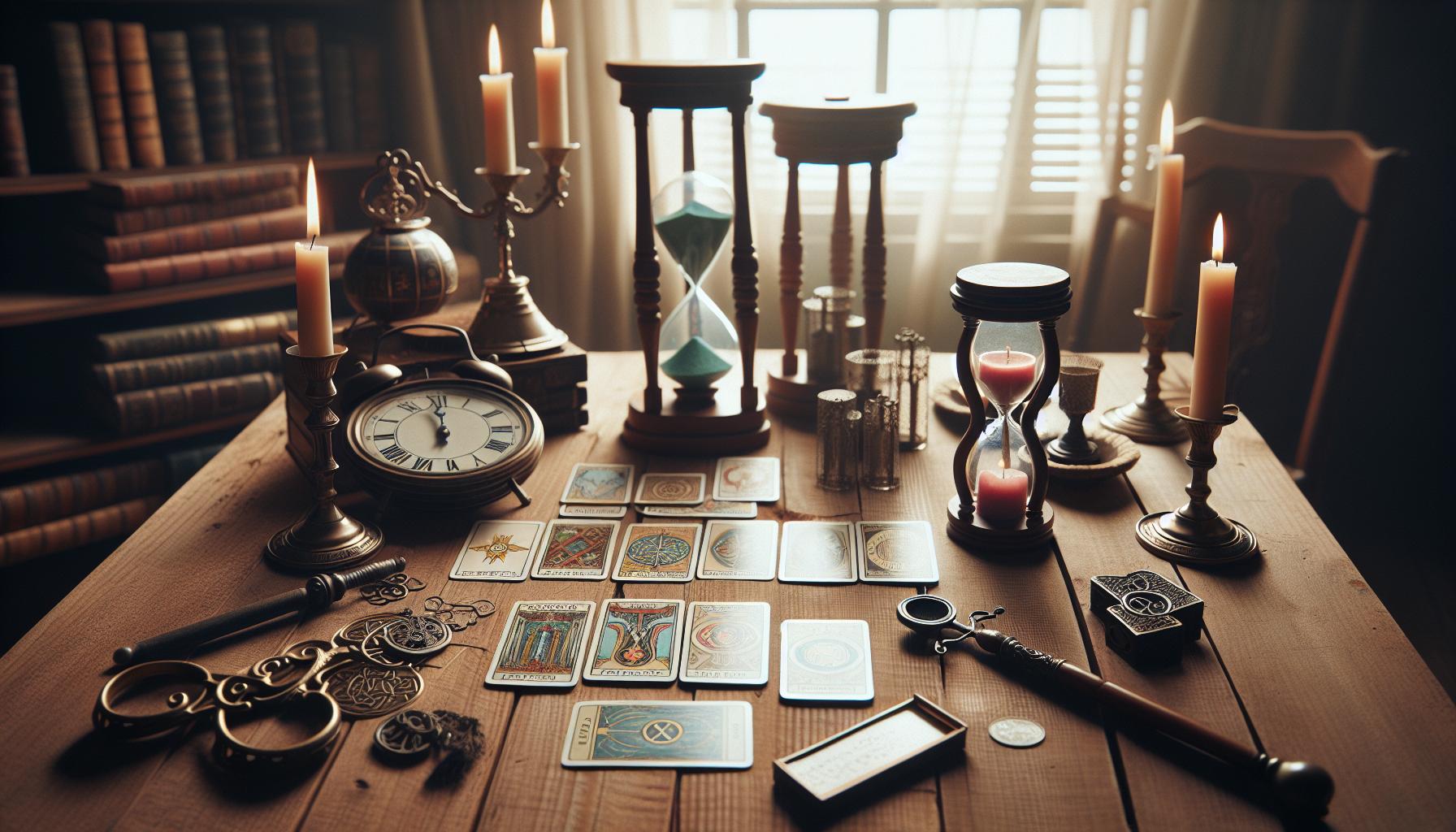
When exploring the intricate relationship between Tarot spreads and the concept of time, understanding how different layouts can reveal insights into past, present, and future events is key. Each Tarot spread has a unique structure that enables readers to connect various cards to specific time frames, creating a narrative that unfolds across dimensions of time. For instance, the classic Celtic Cross layout not only addresses multiple aspects of a situation-such as emotions, external influences, and obstacles-but offers a timeline that ranges from the past influences shaping the present to potential future outcomes.
In practical terms, let’s consider the Three-Card Spread, an excellent choice for beginners. In this simple layout, the first card represents the past, the second card signifies the present situation, and the third card points to possible future developments. By interpreting these cards within their time-based positions, you can discern patterns or shifts. For example, if your past card is the Tower, indicating upheaval, but your future card is the Sun, it suggests a turnaround with hope and success following challenges. This illustrates how past events and current energies can dynamically influence future possibilities.
As readers progress, they might adopt more complex spreads, such as the Astrology Spread, which can encompass a broader timeframe aligned with planetary cycles. Each position correlates with specific astrological houses that detail various life areas, effectively broadening the scope of timing from months to years. This approach nurtures a deeper understanding of how personal timing interacts with broader cosmic influences, enriching your readings with layers of temporal insight.
Ultimately, the way we interpret time in Tarot is not only dependent on the structure of the spread but also on the reader’s intuition and the contextual situation at hand. Readers are encouraged to remain open and flexible, recognizing that while certain cards may provide clues about the immediacy or longevity of events, the timeline of Tarot can often reflect a more fluid nature-encouraging self-reflection and adaptability as life unfolds. By blending structural knowledge with intuitive interpretation, Tarot becomes a profound tool for navigating the complexities of time and personal destiny.
The Role of Intuition in Tarot Predictions

The essence of Tarot readings lies not just in the cards drawn but also in the intuitive insight that readers bring to each session. This intuition acts as a bridge between the symbolic meaning of the cards and the specific situation of the querent, allowing for a nuanced understanding of how far into the future the Tarot can effectively see. While some may seek concrete timelines, the reality is that the Tarot operates within a spectrum of possibilities, influenced by the reader’s intuition and the energies surrounding each inquiry.
When interpreting cards in the context of time, strong intuitive abilities can illuminate hidden connections and reveal deeper layers of meaning. For example, if a Tarot reader draws the Wheel of Fortune in a future position, this may suggest a pivotal change is imminent. However, the intuitive reader will consider the querent’s current life circumstances and feelings, weaving these factors into the reading. They might note, “The changes indicated by this card could unfold within the next season, but it’s vital to remember that your decisions now can influence this timeline.” Such insights empower querents to take charge of their destinies rather than resigning themselves to fate.
Moreover, intuition helps navigate the more abstract aspects of time, such as cyclical versus linear experiences. A card like the Moon might point to a period of uncertainty or introspection. However, an intuitive reader may enhance the interpretation by saying, “This phase feels longer than a month but may lead to profound clarity by the next lunar cycle.” This illustrates how intuitive insight can guide querents through the complexities of time, emphasizing flexibility and self-discovery.
In practice, developing intuition is a personal journey, and there are various ways to hone this skill. Keeping a Tarot journal can assist in tracking the correlation between intuitive hits and outcomes. For beginners, starting with basic spreads-like the Three-Card Spread mentioned earlier-allows space to practice interpreting cards while tuning into their instincts. With time, readers can become more adept at reading the subtle hints the universe provides, transforming Tarot into a tool not just for predictions but for empowerment and self-awareness. Embracing this intuitive nature enriches the Tarot experience, demonstrating that while the future may hold uncertainties, the path forward can still be navigated with clarity and intention.
Common Misconceptions About Tarot and Time
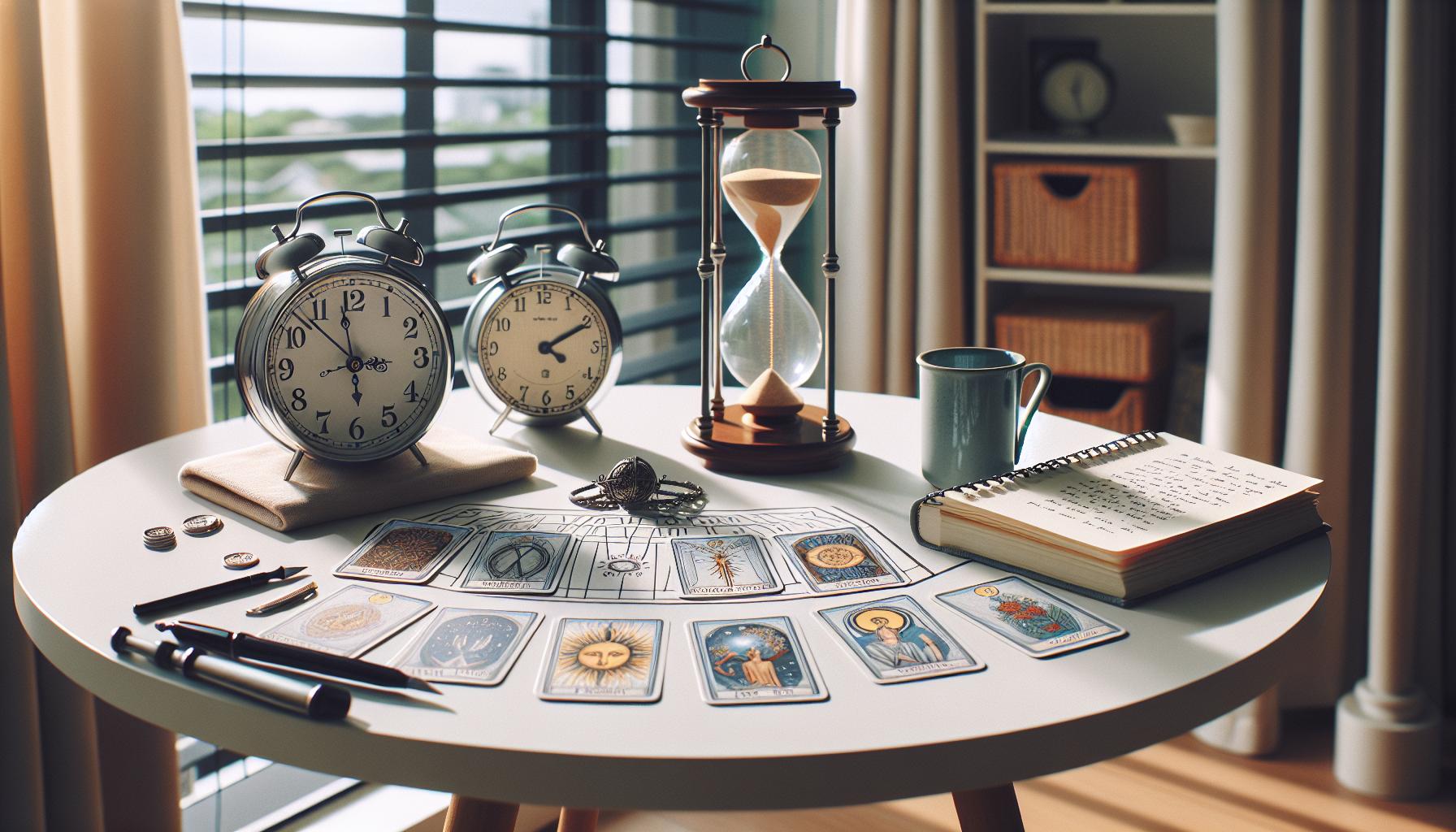
The landscape of Tarot can seem mysterious, especially when it comes to its relationship with time. One of the most pervasive misconceptions is that Tarot readings can provide rigid, precise timelines for future events. Many seekers yearn for exact answers, expecting to hear things like “you will get that job in three months” or “you will meet your soulmate next year.” However, Tarot is not a crystal ball; it’s a nuanced tool that reflects possibilities rather than certainties.
Tarot operates on a spectrum of interpretation. Each card carries its own vibrational energy and meaning, which can shift depending on the reader’s intuition and the context of the question. For instance, drawing the Two of Wands, often associated with planning and future endeavors, may indicate a timeframe that is more about a period of preparation than fixed dates. A seasoned reader might say, “This energy suggests you’re in a planning phase that could last a few months, but remember, the choices you make can change this path.” This reflects how personal agency and free will play significant roles in the Tarot narrative.
Another common misconception is that Tarot operates on a strict linear timeline. In reality, Tarot engages with both cyclical and linear perceptions of time. Cards like the The World can signify completion, which may connect to a cyclical journey rather than a moment set in time. An intuitive reader might explain, “This cycle is complete, and new ones are on the horizon. The timing might feel like it’s following the seasons rather than adhering to a calendar.” Such insights enhance the understanding that Tarot timeframes can be fluid and influenced by ongoing choices and evolving circumstances.
Ultimately, recognizing these misconceptions allows querents to approach Tarot with greater openness and confidence. Instead of seeking definitive predictions, they can embrace the insights offered through the cards, appreciating the potential for growth and change. Engaging with Tarot invites a journey of self-reflection, providing guidance that empowers users to navigate their paths rather than deterministically receive answers. Tarot is less about predicting the future with certainty and more about illuminating potential futures based on current energies and choices.
Real-Life Examples of Tarot Timing Predictions
Captivating insights can emerge from a Tarot reading, particularly when it comes to understanding the timeframes for upcoming events. Many tarot readers focus on “when” something will happen, but these predictions are often fluid rather than fixed. For example, a client asked when they would secure a job after being unemployed for several months. The reader laid out a three-card spread and drew the Eight of Pentacles, known for its link to hard work and skill development, along with the Three of Wands, which indicates exploration and waiting for results. The implication here wasn’t a fixed date but rather that the client should focus on refining their skills in the coming weeks. The reader suggested that by putting in the effort now, the client could expect positive opportunities to arise within two to three months.
In another instance, a querent inquired about the timing of a romantic relationship. The spread included the Two of Cups, symbolizing partnership, and the Wheel of Fortune, which signifies cycles and change. The reader interpreted this combination to mean that a significant relationship could come into play over the next season, around three months, as the querent needed to remain open to new interactions that could lead to deeper connections. This example illustrates how Tarot expresses timing as more of an invitation to be aware of shifts rather than a strict calendar date.
On the flip side, a more advanced example involves a reader using a technique called “timing cards.” This approach integrates different suits, where each suit’s numerological associations can indicate timeframes. If a reader pulls cards primarily from the Wands suit, this can correlate to months, while Pentacles may indicate years. This method can add another layer of depth to timing predictions, allowing for a customized reading based on the specific cards drawn. Such a tailored approach showcases how Tarot serves as a guide rather than a definitive answer regarding the timeline of events.
Ultimately, these examples remind us that Tarot timing is less about locking in specific dates and more about building a roadmap of potential paths. Embracing this mindset can empower seekers to engage actively with the process, enhancing their intuition and understanding of the energies at play in their lives. Through introspection and attention to the narrative offered by the cards, Tarot readings can illuminate the underlying dynamics affecting timing, allowing for a richer engagement with one’s journey.
Exploring the Limitations of Tarot Readings
While Tarot can provide profound insights into timing and future possibilities, it is essential to recognize the inherent limitations of these readings. The practice of divination through Tarot is both an art and a skill, and it often reflects the energies and situations surrounding the querent at the moment of the reading. It is not a crystal ball that gives absolute answers but rather a mirror reflecting potential paths that can shift with the actions and decisions of the individual seeking guidance.
For instance, when a reader pulls cards related to future events, they may indicate likely outcomes based on current circumstances. However, these predictions can change in response to the querent’s choices or unforeseen external factors. Consider the example of a querent asking about career advancement. If the reading reveals positive cards such as the Chariot, symbolizing success and determination, it suggests a favorable future. Yet, the querent’s subsequent choices-such as whether to pursue additional training or to network more actively-can significantly influence the outcome. Tarot does not delineate a strict timetable; instead, it encourages the seeker to engage actively with their journey.
Another limitation is the temporal scope of Tarot readings. While some tarot readers feel confident interpreting events that may unfold in the coming weeks to months, predicting long-term outcomes-years into the future-can be more challenging. The further out the prediction, the more variables come into play. As life progresses, circumstances evolve, and the querent’s internal landscape can shift dramatically. Relying on a Tarot reading to determine specific events years in advance often leads to disappointment, as the nuanced nature of life’s unfolding cannot be fully captured in a single reading.
Many readers also emphasize the importance of context. The meaning of certain cards can vary drastically depending on the questions asked and the spread used. When interpreting timing, readers must consider the surrounding cards and the overall narrative of the reading. A card that might suggest rapid movement in one context may imply delays in another. For example, pulling the Hanged Man alongside cards suggesting movement may highlight a necessary pause for reflection rather than a straightforward waiting period.
Ultimately, embracing these limitations can enhance one’s experience with Tarot. Rather than seeking to confine their future into predetermined slots of time, querents are encouraged to view their readings as opportunities for introspection, growth, and empowerment. By understanding the fluidity of time and the role of personal agency, individuals can use Tarot as a supportive tool to navigate the complexity of their lives, rather than an inflexible schedule of events. This perspective invites a richer engagement with the cards and a deeper trust in one’s own intuitive abilities.
Advanced Techniques for Timing in Tarot
To unlock deeper insights into timing within Tarot readings, practitioners can employ several advanced techniques that enhance their ability to gauge timeframes more accurately. One effective method is using time-related spreads specifically designed to highlight the temporal aspects of a situation. For instance, a “Past-Present-Future” spread can reveal how past actions influence current situations and future possibilities. By dedicating one card to each time period, readers can easily visualize the progression of events and better understand how timing plays a crucial role in the querent’s journey.
Another valuable technique involves associating cards with specific timeframes. Many Tarot practitioners interpret certain Major Arcana cards as indicators of time. For example, the Wheel of Fortune might suggest events occurring in cycles or seasons-perhaps in three months, when the seasons change. On the other hand, cards like the Four of Swords might indicate a timeframe of rest or recuperation, possibly suggesting a pause in action before proceeding. Understanding these associations can provide querents with a clearer sense of when to expect resonances from their readings.
Intuition is also essential in interpreting timeframes in Tarot. Engaging in a practice known as “tuning in” can amplify this aspect. When a reader pulls cards, they can take a moment to meditate on the energy of each card while considering the querent’s question. This can create a richer context for time interpretation, allowing insights to flow more naturally. For example, if a querent asks about a job change, and the reader pulls the Three of Cups, they might intuitively sense that celebrations and networking will play a crucial role within the next few months. A reader’s personal insights can often guide querents toward better understanding their timing.
Finally, incorporating astrological correspondences into Tarot practice can provide additional layers of timing insight. Each card can be linked to astrological signs or planetary influences, which can help delineate when certain events may unfold. For instance, if the Empress, associated with Venus, appears in a reading, it might suggest favorable developments in love or finances during periods governed by Venus, such as late spring. By following these astrological cues, readers can integrate time predictions based on celestial movements, thus broadening the scope of their forecasts.
Using these approaches, Tarot practitioners can create a dynamic and multifaceted understanding of timing, addressing querents’ questions with both wisdom and accuracy. By combining structured spreads, card associations, intuitive assessments, and astrological insights, readers can transcend the conventional limits of Tarot timing, offering their clients a more profound and empowering experience.
Comparing Tarot Timeframes: Short vs. Long-Term
When exploring the vast landscape of Tarot timing, understanding the distinction between short-term and long-term predictions can greatly enhance a reader’s insight. Short-term timeframes often refer to events that may unfold within days or weeks, while long-term predictions can stretch months or even years into the future. This division isn’t just about the length of time; it also relates to the immediacy and nature of the events being forecasted.
Short-Term Timeframes
Short-term readings are like fresh blossoms, vibrant and energetic. They can provide clarity on present situations or upcoming developments. For instance, drawing cards like the Page of Wands often signifies a surge of enthusiasm or inspiring news that can happen soon-perhaps within a matter of days. Similarly, the Eight of Wands, which depicts swift action and movement, may suggest that events are likely to unfold quickly, possibly within a few weeks. These predictions often focus on immediate decisions, relationships, or projects that require prompt attention. Utilizing spreads specifically designed for short-term insights can aid in clarity, such as a one-card pull for daily guidance or a three-card spread focusing on “What to Expect Today.”
Long-Term Timeframes
Long-term predictions resemble the sturdy roots of a tree, deeply embedded and influencing the trajectory of one’s life. These insights often revolve around significant life changes or broader developments that unfold over months or years. Cards like the Wheel of Fortune can suggest that cycles of change are on the horizon, indicating shifts that might become apparent within a year or so. Another example, the World, represents completion and achievement, often resonating with long-term personal or professional goals. When engaging in advanced spreads like the Year Ahead spread, practitioners can commit each card to different months of the upcoming year, offering a comprehensive view of how circumstances may evolve over time.
Integrating Insights Across Timeframes
By combining short- and long-term readings, practitioners can create a holistic view of a querent’s path. For instance, if a short-term spread indicates turbulence, recognizing this as a part of a larger, long-term transformation can provide much-needed reassurance. Encouraging querents to reflect on how immediate choices influence their longer journey fosters a sense of empowerment. Thus, employing a mix of tactical spreads and intuitive insights encourages not just awareness of temporal changes, but also inspires proactive engagement with the now.
Ultimately, embracing both short and long-term perspectives in Tarot allows for a richer understanding of one’s journey, inviting clarity and fostering a deeper connection with the guidance provided by the cards.
Integrating Astrology with Tarot Timing
can enrich your readings, providing deeper insights into how celestial influences shape personal experiences. Just as the planets move through their cycles, tarot cards resonate with specific energies that can guide readers in understanding the timing of events more clearly. For instance, the energy of a new moon can be beautifully reflected in tarot cards like the Fool, symbolizing new beginnings and opportunities, while the full moon might resonate with the World card, indicating completion and fulfillment.
To effectively combine astrology with tarot, start by familiarizing yourself with the major planetary cycles and their associated influences. Here are a few steps to get you started:
- Identify Key Astrological Events: Keep track of important astrological dates, such as retrogrades, eclipses, and the ingress of planets into new signs. These events can create powerful contexts for your readings.
- Choose the Right Spreads: Utilize specific tarot spreads designed for timing. For instance, a lunar cycle spread can align the energy of the cards with the moon’s phases, reflecting how your circumstances might evolve throughout the month.
- Reflect on Card Meanings: Connect the meanings of your tarot cards to astrological symbols. For example, drawing the Tower during a Mars retrograde could suggest upheaval or sudden change, possibly tied to impulsive actions taken during this period.
This approach not only provides clarity but also encourages readers to consider how their actions align with cosmic timing. It fosters a sense of empowerment, as individuals can learn to navigate their lives in harmony with natural rhythms. For instance, if a reading indicates that the time is ripe for launching a new project during a Jupiter transit, you might feel more confident in pursuing that path.
Moreover, consider creating a simple table to track the connections between specific cards and astrological houses or planetary influences. This can serve as a personal reference guide:
| Tarot Card | Astrological Influence | Timing Insight |
|---|---|---|
| The Chariot | Cancer | Movement and progress in personal matters |
| The Star | Aquarius | Optimism and hope; ideal timing for new ventures |
| Death | Scorpio | Transformation; endings leading to new beginnings |
By embracing this integrative approach, you not only enhance your tarot practice but also foster a holistic understanding of how time and universal energies intertwine. As you become more intuitive in relaying the timing of events, remember that both tarot and astrology serve as tools for empowerment, guiding you and your querents in navigating life’s mysteries.
How to Use Tarot for Personal Timing Insights
Using tarot for personal timing insights can be a transformative experience, illuminating the paths ahead and helping you navigate life’s choices with greater clarity. When you approach tarot readings focused on timing, you invite a dialogue with your intuition, the cards, and the energies that surround you. To harness this powerful tool effectively, it’s essential to adopt a structured and open-minded approach.
Start by choosing a tarot spread specifically designed for timing. A popular option is the Three-Card Spread which can represent the past, present, and future. When interpreting these cards, pay close attention to both their individual meanings and their positions within the spread. For example, if you draw the Wheel of Fortune (representing cycles and change) in the future position, it may suggest that significant shifts are on the horizon, perhaps within the next few months.
In addition to spreads, incorporating intuitive practices can deepen your timing insights. Before each reading, take a moment to meditate or ground yourself. This helps heighten your awareness of subtle energies and enhances your connection with the cards. When pulling cards, ask specific questions about timing, such as “When is the best time to pursue this opportunity?” or “What can I expect in the next three months?” This focused approach invites clearer answers.
Consider creating a timing journal where you document your readings, focusing on the timing aspects of each session. Write down the questions asked, the spread used, and the interpretations gleaned. Over time, you may start to notice patterns in your readings that correlate with real-life events. For example, if readings often suggest action during Leo season (mid-July to mid-August), you might pay attention to that timeframe for personal projects or decisions.
Lastly, remember that while tarot can provide insights into potential timing, it is not a guarantee. Life is influenced by numerous factors, and the cards serve as guides rather than absolute forecasts.
As you become more proficient, try more advanced techniques such as integrating astrological influences with your tarot readings. Cards like The Empress can correlate with Venus, suggesting that times governed by love and beauty may be ideal for personal growth. Create a table linking tarot cards to associated astrological cycles to aid your understanding:
| Tarot Card | Astrological Influence | Timing Insight |
|---|---|---|
| The Empress | Venus | Fertility and creativity are favored; good time for new ventures |
| The Moon | Pisces | Intuition and dreams are heightened; a good time to reflect |
| The Sun | Leo | A period of joy and positivity; ideal for celebrations |
Engaging deeply with tarot for personal timing insights opens pathways that honor both your intuition and the mysteries of the universe. Embrace the journey and allow the cards to guide you through the ebbs and flows of time with confidence and grace.
Navigating Uncertainty: Embracing Tarot Readings
In times of uncertainty, engaging with tarot can be a profound source of insight and reassurance. Whether you’re facing a personal dilemma, contemplating a big decision, or simply trying to understand the flow of your life, tarot readings offer a reflective tool to help you navigate these murky waters. The beauty of tarot lies in its ability to not only provide answers but also to frame your questions, guiding you toward self-awareness and confidence in your choices.
To start, approach your tarot reading with a clear intention. Formulate open-ended questions that reflect your current concerns. For example, instead of asking, “Will I get this job?” try, “What guidance can the cards offer regarding my career path?” This shift encourages the cards to reveal insights that align with your journey rather than merely predicting a fixed outcome. The cards themselves can help clarify priorities, unveil hidden influences, or illuminate paths you hadn’t considered.
Utilizing different spreads can further enhance your tarot experience. A useful spread for navigating uncertainty is the Five-Card Cross Spread. This layout allows for a comprehensive examination of your situation by addressing key aspects: your current state, challenges, potential outcomes, and advice. A card drawn in the advice position might resonate with an affirmation, such as patience or courage, nudging you to embrace the journey rather than just the destination.
Embracing Flexibility
While tarot can uncover avenues and possibilities, it’s essential to remain flexible. The future is not set in stone; it’s molded by choices and circumstances. Embrace the idea that tarot serves as a guide, providing insights that are pertinent to your life at this moment. After your reading, reflect on how the insights resonate with your current feelings and thoughts. You might be surprised by how the guidance unfolds over time, revealing layers of understanding as circumstances evolve.
Remember, when you encounter ambiguity-whether in your readings or life-it’s an invitation to trust your intuition. Challenge yourself to act from a place of awareness rather than fear. By nurturing this mindset, you empower yourself to navigate life more gracefully, with tarot as your ally. Embrace the uncertainty; it’s not only a part of life but also an opportunity to grow and discover new facets of yourself.
Evolving Perspectives: The Future of Tarot Practice
As tarot continues to evolve, so do the perceptions surrounding its ability to forecast the future. The journey of tarot practice reflects a dynamic blend of tradition and innovation. For many seekers, the key question remains: how far into the future can tarot see? While some may wish for definitive answers, it is essential to recognize that tarot operates within a framework of potentialities rather than certainties. This nuanced understanding provides a pathway for deeper exploration and connection with the cards.
The future of tarot practice lies in its adaptability and the integration of various spiritual modalities. Many practitioners are now combining tarot with other divinatory tools like astrology, numerology, and even modern psychology to offer richer insights. For instance, tying astrological transits to tarot readings can provide a timeline that helps clients understand when certain energies might be more prominent, thus allowing for a clearer perspective on the timing of events. By incorporating these elements, readers can enhance their predictions and navigate the complex layers of time more effectively.
Practitioners are also emphasizing the importance of personal intuition in interpreting the messages from the cards. As you engage with tarot, consider developing your intuitive skills alongside your understanding of the cards. When drawing, for instance, the Two of Wands, think about how this card represents choices and planning for the future. Ask yourself questions about the context of your reading: what decisions lie ahead, and what preparations can you make now? This approach not only helps in gaining clarity but also empowers individuals to take an active role in shaping their destinies.
Moreover, embracing flexibility in interpretations is key. Future predictions are not fixed but rather suggest trajectories that can shift based on our actions and decisions. As tarot readers, recognizing this fluidity encourages both personal growth and a more compassionate approach to guidance. Each reading is a snapshot of potential paths that can unfold, empowering seekers to adapt to their evolving circumstances. This agility is becoming a hallmark of modern tarot practice, fostering a deeper connection between the reader and the seeker, and ultimately embracing the beautiful uncertainty of the future.
Frequently Asked Questions
Q: How far into the future can Tarot cards predict?
A: Tarot cards can provide insights into events as far as several months to a few years ahead. However, predictions often focus on immediate influences and potential developments. For long-term visions, consider combining Tarot insights with astrology for a more comprehensive view.
Q: Can Tarot accurately predict short-term events?
A: Yes, Tarot is particularly effective for short-term predictions, often revealing upcoming challenges or opportunities. Daily or weekly draws can give you actionable insights to enhance your decision-making. Check the section on “Understanding Tarot Spread Structures and Time” for more details.
Q: Why do some tarot readings seem vague about the future?
A: Vagueness in Tarot readings often arises from the reader’s interpretation, not the cards themselves. Factors like the question’s clarity and the reader’s intuition play a crucial role. To get more specific guidance, ask focused questions that limit the scope of the inquiry.
Q: What factors influence the time frame of a Tarot reading?
A: Multiple factors affect the time frame in Tarot readings, including the reader’s intuition, card meanings, and the context of the question. Understanding how these elements interact can enhance your readings; refer to the section on “The Role of Intuition in Tarot Predictions” for deeper insights.
Q: How can I ask Tarot questions for better time predictions?
A: To improve time predictions, frame your questions clearly and focus on specific time frames, such as “What can I expect in the next three months regarding my career?” This specificity can lead to more actionable insights. The section on “How to Use Tarot for Personal Timing Insights” covers effective questioning techniques.
Q: Can Tarot predict events years in advance?
A: While Tarot can suggest trends up to a few years ahead, predictions beyond this may lack clarity due to changing circumstances. Tarot reflects potential paths rather than fixed futures. Check insights on “Exploring the Limitations of Tarot Readings” for more information.
Q: How do I interpret time frames in Tarot spreads?
A: Time frames in Tarot spreads can be interpreted through card placement and suits. For instance, Major Arcana cards often indicate long-term influences, while Minor Arcana may suggest imminent events. Explore the section “Comparing Tarot Timeframes: Short vs. Long-Term” for practical guidance.
Q: Why is time in Tarot not absolute?
A: Time in Tarot is not absolute because it is fluid and influenced by free will. Readings provide guidance on potential outcomes, but personal choices can significantly alter paths. For a deeper understanding, see “Common Misconceptions About Tarot and Time.”
The Conclusion
As we journey through the mysterious realms of Tarot, remember that the cards offer guidance rather than absolute predictions about the future. Understanding how far into the future Tarot can truly see empowers you to navigate your life’s path with clarity and confidence. Whether you’re exploring personal transformations or looking for answers to pressing questions, your next step is to dive deeper into the practice.
Join our community of Tarot lovers, and explore our Free Tarot Readings for immediate insights into your situation. Curious about specific spreads or interpretations? Check out our comprehensive guides on The Meaning of Tarot and discover how to enhance your reading skills. Don’t hesitate-take action today! Share your thoughts below or engage with us on social media. Remember, every moment spent in reflection is a step toward your spiritual growth. Embrace the magic!
Get our latest guides, news, and insights highlighted in your Google Search & AI Overviews.