Have you ever faced a decision that left you feeling lost, unsure which path to take? You’re not alone; many people turn to Tarot for guidance through life’s uncertainties. In “How to Ask Tarot Yes or No? Simple Question Method,” we will explore the art of formulating straightforward questions that lead to clear, actionable insights. This empowering method simplifies your Tarot experience, allowing you to tap into the wisdom of the cards with confidence. Whether you’re a seasoned reader or just starting on your Tarot journey, this approach aids in clarifying your doubts and enhancing your intuitive abilities. Get ready to demystify the Tarot and discover how to tackle your burning questions with ease. Join us as we unlock the potential of the Tarot, helping you connect with your inner guidance and navigate your decision-making process effectively.
How Does Yes or No Tarot Work?
When it comes to finding answers through the mystical world of tarot, the Yes or No Tarot reading is a popular and effective method. This approach simplifies decision-making by providing direct responses from the cards, which can help clarify thoughts and feelings about a situation. Essentially, it’s a tool that connects your question to the collective wisdom embedded within the tarot deck, allowing for intuitive guidance that can be both affirming and enlightening.
In a Yes or No Tarot reading, you typically focus on a specific question, which is then addressed by selecting one card from the deck. Each card represents distinct meanings that lean towards a “yes,” “no,” or “maybe.” For instance, cards like The Sun often signal a positive affirmation, while The Moon might suggest confusion or doubt, indicating a “maybe” or a “no.” This binary framework enables you to engage with the tarot in a quick, straightforward manner, addressing concerns without the complexity of more elaborate spreads.
To maximize the effectiveness of your reading, it’s crucial to phrase your questions clearly and with intention. Open-ended or vague queries can lead to ambiguous answers. Instead, precise questions-like “Will I get the promotion?”-allow the cards to respond more meaningfully. This focused approach not only aids in getting clear answers but also enhances your intuitive connection with the cards, making the experience more personal and insightful.
Incorporating your intuition is equally important. As you work with the cards, pay attention to your initial feelings and thoughts when you draw them. These impressions can add depth to the card’s traditional meanings, helping you to interpret their significance within the context of your life. By fostering a respectful and open-minded attitude towards both the cards and your own insights, you cultivate a richer, more rewarding tarot practice.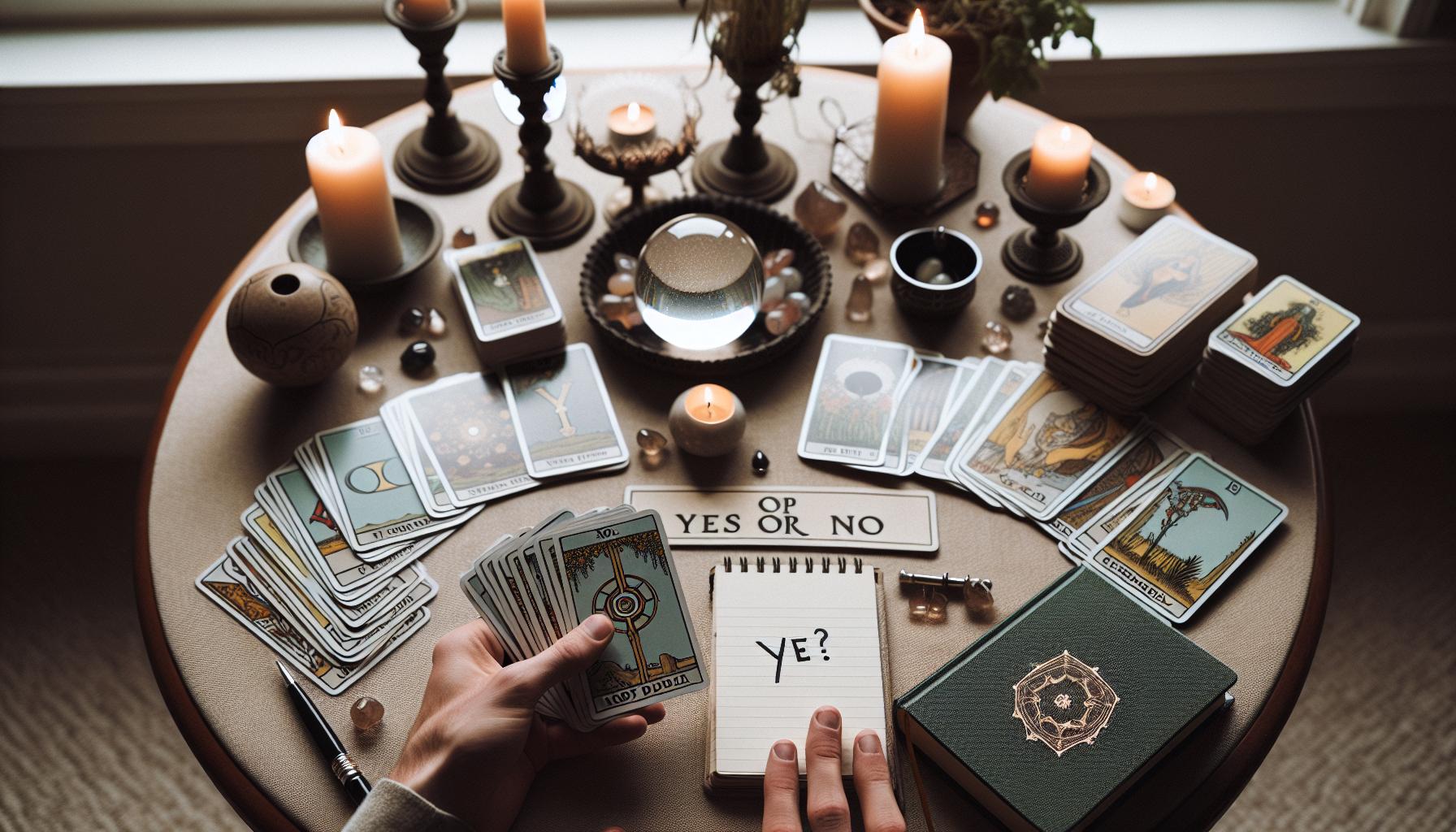
Choosing the Right Tarot Deck for Yes or No Questions
Choosing the right tarot deck can significantly enhance your Yes or No readings, setting the stage for clarity and intuition. With countless decks available, the selection can feel overwhelming, but understanding your personal preferences and what each deck offers can make the process enjoyable and meaningful.
First, consider the artwork and symbolism of the deck. Different decks resonate differently with individuals, so choose one that captures your imagination and aligns with your intuition. For instance, a deck with vibrant imagery might energize you, while one with muted tones might help you focus inward. Take time to browse various decks, paying attention to how the cards make you feel.
Next, think about the specific purpose of your readings. Some decks are designed for general guidance, while others might be more suitable for specific inquiries or themes-such as love, career, or spiritual growth. A streamlined deck, like the Rider-Waite, offers clear symbolism that can be particularly effective for Yes or No questions. Conversely, more artistic or abstract decks might require deeper interpretation, which can be challenging when seeking straightforward answers.
Finally, don’t underestimate the power of personal connection. Your ideal deck should feel like an extension of your own energy; this is where your intuition can thrive. Spend a few moments meditating with the deck before using it for readings. Shuffle the cards while focusing on your question or intention. Notice how the cards resonate with your energy; trust your instincts in finding a deck that feels right for you.
In summary, involves selecting one with appealing artwork, a clear focus that matches your needs, and a strong personal connection that enhances your intuitive insights. By being intentional with your choice, you set the stage for readings that are both straightforward and deeply personal.
Simple Methods to Phrase Your Yes or No Questions
Formulating effective Yes or No questions for Tarot readings can be surprisingly nuanced. The clarity of your question often determines the clarity of your answer, so it’s worth taking the time to phrase your inquiries thoughtfully. Good questions are specific yet open enough to allow the Tarot’s insights to unfold naturally. Instead of asking vague questions like, “Will I be happy?” try rephrasing to something more precise, such as, “Should I pursue this job opportunity?” This approach directs your focus to a particular aspect of your life, making it easier for the Tarot to provide relevant guidance.
Here are a few simple methods to help you craft your Yes or No questions:
- Be Direct: Use straightforward language to express your inquiry. Instead of beating around the bush, ask, “Is it a good idea to invest in this project?”
- Avoid Ambiguity: Stay clear of questions that could have multiple interpretations. For example, instead of “Will I meet someone special?” try “Is this the right time to start dating again?”
- Embrace Positivity: Phrase your questions positively. Rather than asking, “Shouldn’t I leave my current job?” you could ask, “Is leaving my current job the best choice for me?” This helps set a constructive tone for the reading.
- Keep It Simple: Ensure your question is concise. Simple questions are easier for the Tarot to answer, avoiding the confusion that can arise from complex scenarios.
Additionally, consider the energy behind your question. The intention you exude influences the reading. Approach your Tarot session with an open heart, ready for whatever insights come your way. For instance, before drawing cards, you might meditate on your question or write it down to reinforce your focus.
By practicing these methods, you create a supportive environment for the Tarot to reveal its wisdom, empowering you to navigate challenges with confidence and clarity. Remember, every reading is an opportunity to connect with your inner guidance, so take the time to ask the right questions for meaningful insights.
Understanding the Tarot Card Meanings
In the world of Tarot, understanding the meanings of each card is essential for effective readings, especially when seeking straightforward Yes or No answers. Each of the 78 cards represents specific concepts, emotions, and events, and can be interpreted in various contexts. When utilizing Tarot for binary inquiries, knowing how to read these meanings can clarify the guidance you receive.
The Tarot deck is typically divided into two main sections: the Major Arcana and the Minor Arcana. The Major Arcana cards are considered the more significant cards, representing profound life lessons and karmic influences. For example, The Fool embodies new beginnings and innocence, which might suggest a “yes” for embarking on a new venture. Conversely, cards like The Tower symbolize sudden change and upheaval, often conveying a “no” or a warning to reconsider your choices.
The Minor Arcana consists of four suits-Wands, Cups, Swords, and Pentacles-each reflecting different aspects of life. Each suit can indicate varying kinds of Yes or No responses based on their positions and combinations. For instance:
- Wands: Generally relate to action, inspiration, and ambition. A card like the Three of Wands might suggest a “yes” when asking about pursuing a passion.
- Cups: Connect to emotions and relationships. The Two of Cups, a card signifying partnership, usually leans toward a positive affirmation for relation-based questions.
- Swords: Represent thoughts, challenges, and conflict. If you draw the Eight of Swords, it may signal a restrictive situation-likely a “no” regarding the freedom to proceed.
- Pentacles: Focus on material aspects and stability. The Ace of Pentacles hints at new opportunities, often correlating with a “yes” in regards to financial decisions.
To deepen your understanding, consider the position of the cards in your spread. For Yes or No readings, some practitioners use a single card draw for quick answers, while others might opt for a three-card spread to provide context alongside the decision. In this case, if the first card is a strong positive affirmation, the subsequent cards can offer deeper insight into potential obstacles or encouragement that support the initial answer.
Be mindful that the interpretation also relies heavily on your intuition and the specific dynamics of your situation. As you gain confidence in your understanding of card meanings and practice asking clear, direct questions, you will enhance your ability to receive accurate guidance through Tarot readings.
Interpreting Yes or No Answers from the Tarot
Interpreting the answers provided by Tarot can be both thrilling and enlightening, especially when you’re seeking straightforward Yes or No responses. At its core, this process is about aligning the energy of your question with the intuitive messages of the cards. The first step involves drawing your card with a clear mind and intention. As you shuffle, focus on your inquiry and hold it closely to your heart; this connection will guide the reading.
When analyzing your card, you’ll want to gauge the symbolic meanings inherent in the Tarot. Major Arcana cards, like The Sun or The Lovers, often suggest affirmative responses-they embody positive forces and significant life experiences. In contrast, cards such as The Devil or The Tower signal caution or negative outcomes, pushing you towards a ‘no’. For minor draws, consider the suit of the card:
- Wands: Typically indicate action and energy-drawing a card from this suit often leans towards a ‘yes’.
- Cups: Reflect emotions, suggesting affirmative answers in matters of love and relationships.
- Swords: Usually represent challenges or conflict, often shifting the answer to ‘no’ or advising against a decision.
- Pentacles: Relate to the material world and can provide mixed answers based on the context, but strong cards here often suggest ‘yes’ regarding financial matters.
The position of your card also plays a crucial role. For instance, drawing a card in the first position of a three-card spread typically holds more weight than those that follow, as the first card reveals the immediate answer to your question. Supplementary cards can lend context or delineate challenges, enhancing the overall understanding of your situation.
Lastly, embrace your intuition throughout this process. Your personal feelings and insights regarding the cards create a richer narrative. Engage with your readings, asking follow-up questions, and don’t hesitate to consult resources on card meanings to deepen your interpretations. Cultivating this practice not only empowers you but helps you develop a more intuitive relationship with the Tarot, making it a vibrant tool for self-exploration and decision-making.
Common Mistakes in Tarot Questioning
Engaging with Tarot for Yes or No questions can lead to enlightening insights, yet there are common pitfalls to avoid that can cloud your readings. One frequent mistake is asking vague or overly complex questions. For instance, instead of asking, “Will I find happiness in my career in the future?”, rephrase to something more direct like, “Should I pursue the job offer I received?” The clarity of your inquiry greatly influences the clarity of the response.
Another misstep occurs when seekers focus solely on the ‘yes’ or ‘no’ without allowing for the intuitive guidance the cards can provide. Tarot is not just a tool for binary answers; it offers rich narratives and deeper meanings behind the responses. Consider that drawing a card that suggests caution might fall on the questioner to reflect on why they’re feeling uncertain, rather than just dismissing it as a negative answer. Embrace the journey of understanding, even if it veers away from your original expectation.
Relying too heavily on a single card or interpretation is another error. The Tarot encourages exploration. It’s beneficial to draw several cards to see if there are themes or additional insights that highlight aspects of your situation. For example, if you draw a major arcana card alongside a challenging minor card, it can suggest that a significant life shift is more influential than current troubles.
Lastly, some practitioners fall into the trap of misunderstanding reversals or not recognizing how the position of a card can alter its meaning. A reversed card could indicate blockage or internal struggle, but it might also signal the need for introspection instead of outright rejection. Acknowledging these nuances in card interpretation will enrich your readings and enhance your intuitive engagement with the Tarot.
Remember, approaching your questions with clear intent and an open mind bolsters your connection with the cards, allowing them to reveal insights harmoniously. Happy reading!
Enhancing Your Intuition with Tarot Readings
Engaging with Tarot can be a deeply personal and enriching experience, and one of the most transformative aspects is enhancing your intuition. While many initially seek straightforward answers through Yes or No questions, the real journey lies in developing a connection with your cards and your inner voice. By learning to trust your intuition, you not only improve the quality of your readings but also foster a deeper understanding of yourself.
To strengthen your intuitive abilities with Tarot, start by creating a tranquil space where you can focus without distractions. This might mean finding a quiet corner in your home or lighting a candle to set the mood. As you shuffle your cards, take deep breaths and center your thoughts. This practice calms your mind and opens the door for intuitive insights to flow in. Consider journaling before each reading; write down how you feel, any pressing thoughts, and what you hope to gain from the session. This reflection helps anchor your intentions, making it easier to interpret messages from the cards.
Next, try associating specific images or symbols with your emotional responses during readings. For example, if you pull the Two of Swords, which often symbolizes indecision, reflect on what that card feels like to you personally. Does it evoke a sense of tension? Confusion? Joy? Your unique interpretations can offer meaningful insights beyond traditional card meanings. Practicing this association builds a personal lexicon that connects your emotional landscape with the Tarot, making your readings more profound and insightful.
To further cultivate your intuition, practice drawing a single card each day and meditating on its significance. This daily ritual helps you attune to the subtle nuances of the cards and encourages you to listen to your inner voice. As you become more comfortable with this practice, you may find that your gut feelings about the cards start to align with the insights they provide on your Yes or No questions.
Lastly, remember that Tarot is not just about predicting the future; it’s a tool for self-discovery and guidance. Embrace the uncertainty and let your intuition guide you through the process. Each reading is an opportunity to explore your thoughts and feelings more deeply. With patience and practice, you’ll find that your intuitive skills will flourish, enriching not only your Tarot practice but your overall perception of life’s many mysteries.
Using Tarot Spreads for Deeper Insights
Using tarot spreads can elevate your tarot yes or no readings from mere binary choices to profound explorations of your life’s questions. By incorporating spreads, you can unveil underlying themes, motivations, and influences that might not be immediately apparent. Even when seeking a straightforward answer, a well-chosen spread provides depth and context, enriching your understanding of the situation.
One effective method is the Three-Card Spread, which can be adapted to a yes or no format. Lay out three cards to signify the past, the present, and the potential outcome. This can help you grasp how past events influence your current question and what future developments might arise.
Creating Meaningful Connections
When interpreting your spread, remember to consider the relationships between the cards. For instance, if your first card indicates a challenging past (like the Tower), and your second card shows current hesitation (like the Two of Swords), this suggests that the past turmoil is impacting your decision-making now. Finally, if your third card indicates a positive resolution (like the Sun), it can imply a ‘yes’ response, framed within the context of overcoming prior obstacles.
Exploring Complex Questions
For more complex questions, a Celtic Cross Spread can be illuminating. Though it typically requires more than just a yes or no answer, it can still provide clarity around the deeper issues connected to your question. The spread explores various aspects, such as what is crossing you (challenges) and your hopes or fears, enabling a richer dialogue with the cards.
By synthesizing information from multiple cards, you can draw a more nuanced conclusion. For example, if your cards present a mix of positive and negative aspects, your answer might lean towards ‘maybe’, urging you to reflect on what changes could lead to a more favorable outcome.
Adapting Spreads as You Grow
As you become more comfortable with tarot reading, experiment with various spreads. There’s no one-size-fits-all approach; what matters is finding a method that resonates with you. Whether you stick to simple three-card options or venture into more intricate configurations, each spread can offer unique insights into your yes or no questions.
Incorporating spreads into your practice not only enriches your readings but also supports your growth as a tarot reader. Like any profound tool for self-expression, the tarot unfolds its mysteries in layers, allowing you to peel back each one at your own pace.
Incorporating Affirmations with Your Tarot Practice
Incorporating affirmations into your tarot practice can significantly enhance the effectiveness of your yes or no readings. Affirmations are positive statements that can help you focus your intentions, clear doubts, and align your mindset with your desires. When paired with tarot, they create a powerful synergy that promotes clarity and confidence in your readings.
Start by identifying the core intention of your question. For example, if you are seeking guidance on a new job opportunity, an affirmation like, “I am worthy of success and embrace new opportunities” can set a positive tone. Before drawing cards, take a moment to recite this affirmation aloud or silently, allowing it to resonate within you. This practice not only creates a receptive state but also helps in visualizing a desirable outcome.
Integrating Affirmations into Your Reading Process
After formulating your affirmation, consider the following steps to smoothly integrate it into your tarot practice:
- Set the Space: Create a calm environment for your reading. Light a candle or use incense to elevate your space, allowing the ambiance to support the affirmations you wish to manifest.
- Draw Your Cards: With your affirmation in mind, shuffle your deck while repeating it. Allow the energy of your words to infuse the cards as you draw them for your reading.
- Reflect on Your Cards: Analyze the meaning of the cards in relation to your question and affirmation. Consider how the messages of the cards align with your statement, reinforcing your focus on positive outcomes.
Example in Action
Imagine you draw the Queen of Pentacles for a question about financial stability. Your affirmation could then revolve around abundance, such as, “I attract financial stability and nurture my resources wisely.” The Queen symbolizes not just financial acumen but also abundance and nurturing energy, strengthening your conviction in achieving your goals.
Recap and Expansion
Remember, the affirmations you choose can evolve as you deepen your practice. You might start with broader statements and gradually move to more specific affirmations as you fine-tune your inquiries and readings. This flexible approach encourages growth and alignment, enhancing both your confidence and intuition as a tarot reader.
By consciously weaving affirmations into your tarot practice, you create a pathway for self-empowerment. Not only does this enrich your understanding of yes or no answers, but it also engages your entire being-mind, body, and spirit-in the tarot process.
Reflecting on Your Tarot Readings
can be a transformative experience, providing clarity and insight that extend beyond the immediate yes or no answers you may seek. The post-reading phase is an essential part of the process, allowing you to internalize what you’ve learned and apply it to your life. By taking the time to analyze your readings, you deepen your intuitive abilities and nurture your personal growth.
Begin by reviewing the cards you’ve drawn and the specific questions you asked. Ask yourself what emotions and thoughts arose during the reading. Were there any surprising elements in the spread? Consider keeping a journal where you document each reading. This habit not only tracks your evolving connection with the tarot but also captures patterns and themes over time that can enhance your understanding. For instance, if you frequently draw the Lovers card in relation to relationship inquiries, explore how these messages resonate with your heart and current circumstances.
Another valuable technique is to relate the cards back to your affirmation or intention. If your question was about securing a new job and you drew the Eight of Pentacles, which indicates hard work and dedication, you might reflect on how your efforts align with the affirmation, “I am capable and deserving of success.” This cultivation of awareness helps you connect the dots between your inner beliefs and the external world, reinforcing a mindset of growth and positivity.
Finally, don’t hesitate to seek feedback from trusted friends or fellow tarot practitioners, as their perspectives might reveal insights you hadn’t considered. This collaborative approach encourages an open dialogue about interpretations, further illuminating the themes presented during your reading. Remember, every reading is an invitation to explore not only the answers but also the deeper questions they evoke within you. Embrace this reflective practice as a way to enhance your understanding of the tarot and its relevance in your life, guiding you toward more confident decision-making and a clearer path forward.
Advanced Techniques for Tarot Yes or No Questions
When seeking clarity from the tarot, advanced techniques can elevate your yes or no readings into profound insights. One powerful method is to incorporate intuitive layering into your practices. Instead of relying solely on the binary answer, consider drawing additional cards to add depth and context. For example, if a card indicates “no” to your question, a follow-up card can reveal underlying reasons or suggest alternative paths. This layered approach enhances understanding and can provide valuable guidance even in seemingly negative outcomes.
Using numerology and astrological correspondences with the tarot can also deepen your readings. Each card bears qualities aligned with numbers and celestial bodies, which can help further interpret the messages. When you draw a card, explore its numerological significance or any astrological connections-it could provide new perspectives on the yes or no answer. For instance, if you pull the Five of Cups (often associated with loss), consider the number five’s representation of change and conflict; perhaps the situation encourages embracing transformation rather than focusing on what’s lost.
Another effective technique is to set a thematic intention for your reading. This involves framing your yes or no question within a broader context. For example, instead of simply asking, “Will I get the job?” rephrase it to “How can I best approach the possibility of getting this job?” This shifts the focus from seeking a direct answer to exploring paths, leading to a more productive discussion with the tarot. This way, the card drawn can serve as a guiding principle, reflecting not just a yes or no but also advice on how you might navigate the situation.
For those wanting a more collaborative experience, consider incorporating the group dynamic into your readings. Engage friends or fellow tarot enthusiasts to interpret cards together. Different perspectives can spark ideas or interpretations you might not have considered, enriching the reading experience. Mutual exploration can also nurture a shared understanding of the tarot’s nuances and help everyone sharpen their intuitive skills.
By integrating these advanced techniques into your tarot practices, you can transform simple yes or no queries into rich, multidimensional explorations of life’s questions, fostering deeper insights and personal growth along the way.
Faq
Q: What types of questions work best for a Yes or No Tarot reading?
A: The best questions for a Yes or No Tarot reading are specific and clear. Instead of asking vague questions like “Will I be happy?”, try something more focused, such as “Will I receive a promotion this month?” This directness helps the cards provide more accurate answers.
Q: Can I use any Tarot deck for Yes or No questions?
A: Yes, you can use any Tarot deck for Yes or No questions as long as you feel connected to it. Each deck has its unique imagery and symbolism, which can enhance your intuition. Choose a deck that resonates with you personally for more insightful readings.
Q: How do I phrase my Yes or No questions for Tarot?
A: Phrase your Yes or No questions in a way that encourages straightforward answers. Start with “Is it…” or “Will I…”, and keep it simple and direct. Avoid questions that are too complex or leading, as they can confuse the reading.
Q: What if the Tarot cards give me an unclear answer?
A: If you receive an unclear answer, consider rephrasing your question or drawing additional cards for clarification. You can also reflect on the context of the reading and the emotional nuances of the cards drawn. Sometimes, exploring deeper meanings can provide insight beyond a simple Yes or No.
Q: How often should I do Yes or No Tarot readings?
A: It’s best to do Yes or No Tarot readings sparingly, perhaps once a week or whenever you need guidance on specific decisions. Frequent readings can lead to confusion and indecisiveness, as the energy and circumstances surrounding questions may change rapidly.
Q: Can I combine Yes or No questions with other Tarot spreads?
A: Yes, you can combine Yes or No questions with other Tarot spreads for deeper insights. For instance, start with a Yes or No question, then use a three-card spread to explore the surrounding influences or outcomes related to the question. This enhances your understanding while keeping the clarity of the Yes or No format.
Q: Is there a specific mindset I should have while asking Tarot questions?
A: Yes, approach your Tarot reading with an open and calm mindset. Ensure you are free from distractions and in a peaceful environment. This clarity facilitates intuition and helps you better interpret the messages from the cards.
Q: Should I ask the same Yes or No question multiple times?
A: It’s generally not advisable to ask the same Yes or No question repeatedly. This can lead to mixed messages and confusion. Instead, focus on different aspects of the situation or ask follow-up questions as needed to explore further.
Final Thoughts
Now that you know how to ask Tarot for simple yes or no questions, it’s time to dive deeper into the mystical world of Tarot. Remember, clarity and focus are key when formulating your queries. Don’t hesitate to try out a daily Tarot reading to continue sharpening your intuition; explore our Daily Tarot Reading for fresh insights every day.
If you’re feeling adventurous, consider a 3-Card Tarot Spread for a broader perspective on your inquiries. These methods can provide you with deeper understanding and guidance, empowering you to take the next step in your journey.
Don’t forget to share your experiences in the comments below! Engaging with our community can offer support and additional insights. Sign up for our newsletter to stay updated with the latest Tarot techniques and resources. Your journey into the world of Tarot awaits-embrace it boldly!
Get our latest guides, news, and insights highlighted in your Google Search & AI Overviews.