Have you ever sensed that the right Tarot card can provide profound insights into your life? Each card embodies unique energies and messages, but your Significator Card holds a special place, representing you on your journey. Choosing wisely is crucial, as this card can illuminate your personal strengths, challenges, and potential paths ahead. As you connect with this powerful tool, you may find clarity and confidence in your readings, whether you’re a skeptic or a seasoned reader.
In this guide, we’ll explore how to identify your Significator Card using simple, intuitive methods. By understanding the significance of this card, you can deepen your connection to the Tarot and enhance your ability to navigate life’s complexities. Curious about what your Significator might reveal? Let’s dive in and discover how this personalized approach can transform your Tarot experience and empower your spiritual journey.
Understanding the Significator Card in Tarot
The significator card in tarot holds a unique place in readings, acting as a mirror that reflects the querent’s current state or overarching themes in life. This card symbolizes the individual or situation at hand, embodying personal attributes, experiences, and energy. When you select a significator, you invite insight into both personal journeys and the broader context of your questions, enriching your connection to the tarot’s wisdom. By understanding this core element, you open pathways to profound self-awareness and intuitive clarity.
To grasp the essence of your significator card, consider the many ways it can resonate with you. Does the card represent personality traits or current life challenges? For example, the Strength card might indicate resilience in facing adversities, while the Empress could symbolize creativity and nurturing energy in your life. When selecting a card, you might naturally gravitate towards imagery or themes that speak to you, making the process feel personal and validating.
Choosing a significator card can be approached from various angles, whether through intuition, astrology, or elemental associations. Trusting your instincts can lead you to cards that feel most representative of your journey. You might even find that a particular card appears consistently during your readings, signaling a deeper connection. Embrace this fluidity, as your relationship with the significator can evolve and adapt with your growth.
In practice, remember that your significator card is not static; it serves as a tool for insight and reflection. By integrating it into your tarot spreads, you create focal points for readings that can clarify questions and illuminate paths forward. Embrace both the mystical aspects and the grounded interpretations of your significator, allowing it to guide you through layers of meaning and understanding. This balance will empower you to deepen your practice and cultivate your relationship with the tarot as a trusted ally in your spiritual journey.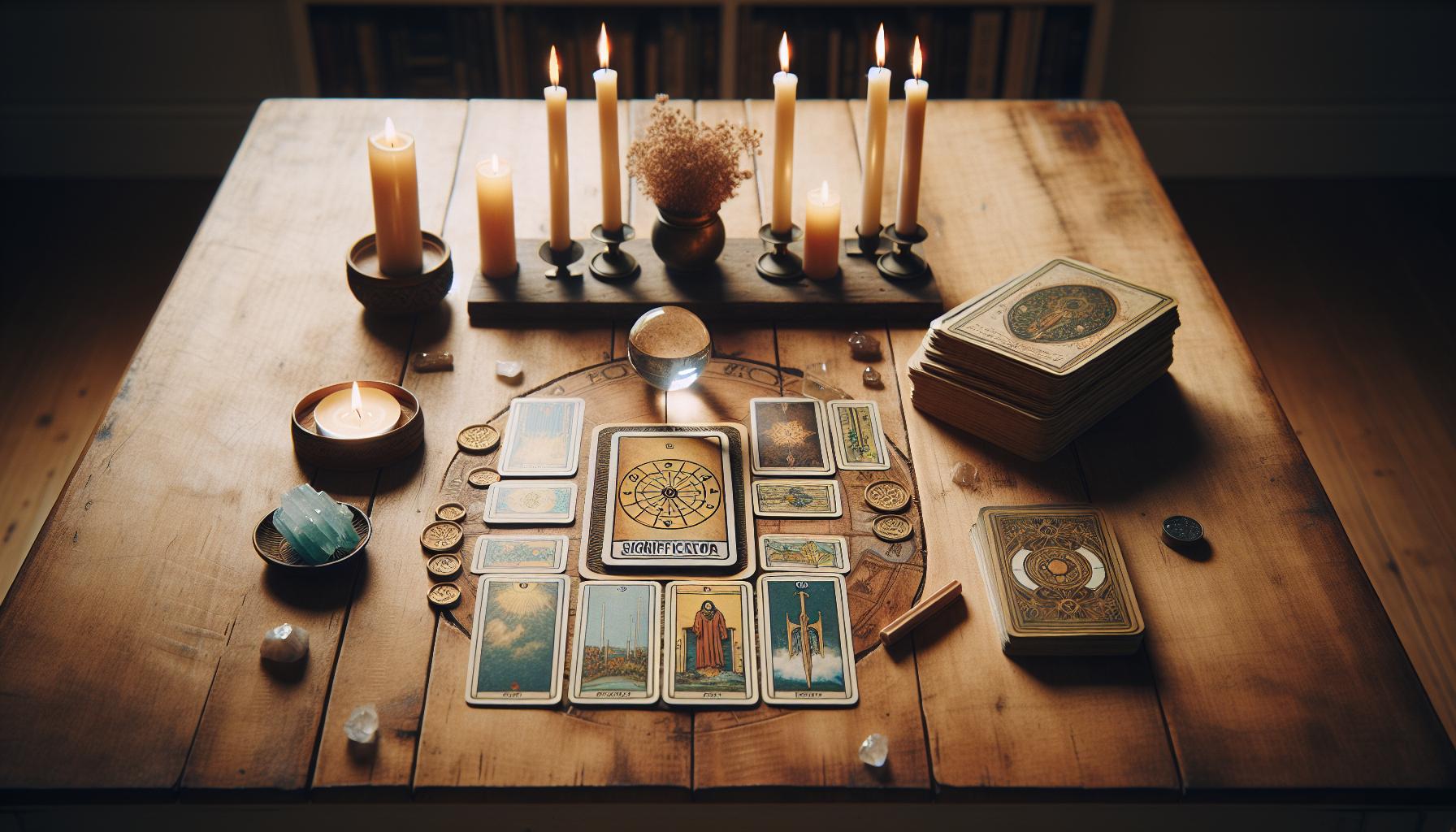
The Importance of Choosing Your Significator Card
Choosing a significator card in tarot is a fundamental step that can profoundly impact your readings and deepen your connection to the cards. This card serves not only as a focal point but also as a reflection of your current self, encapsulating your unique energies, perspectives, and experiences. When you select a significator, you make a conscious choice to engage more fully with your inner journey, inviting clarity and insight into your personal narrative. The card you pick can resonate with your personality, life circumstances, or even aspirations, creating a tapestry of meaning that enhances your overall understanding of the tarot.
Many readers find that the process of choosing their significator card is not just a mechanical task but rather an intuitive experience. For example, consider a reader facing a challenging career decision; selecting the Four of Pentacles might symbolize their desire for security and control. In contrast, pulling the Chariot could reflect a readiness to embrace change and take bold steps forward. This active engagement with the cards fosters a stronger bond between the reader and the tarot, transforming readings into a dialogue that vividly mirrors the querent’s life.
Utilizing a significator card also serves to ground your readings, providing a clear reference point that can guide your interpretation of other cards in the spread. By visually anchoring the session around a chosen card, you can clarify questions and illuminate insights, making connections that may otherwise be obscured. This practice can demystify complex interactions within the tarot, allowing you to track personal growth over time. For some, the significator becomes a trusted companion, appearing consistently in different readings and providing cohesive threads throughout their tarot journey.
Ultimately, the importance of your significator card lies in its ability to encapsulate your journey, offering both a mirror to reflect your reality and a guidepost to your potential. Embrace this tool with openness and curiosity, as it can lead you deeper into self-discovery and intuitive mastery. Each reading becomes a sacred space for exploration, where you can draw on the wisdom of the tarot and your inner truth to navigate life’s challenges with greater confidence and clarity.
How to Select Your Significator Card with Intuition
Selecting a significator card in tarot can be a deeply personal and intuitive experience, akin to finding a mirror that reflects your current journey. The beauty of this process lies in its subjectivity; there is no right or wrong way to choose your card. The key is to tap into your feelings and instincts, allowing your inner voice to guide you. Often, this involves engaging with your deck in a way that feels natural and authentic, opening yourself to the messages the cards convey.
One of the most effective methods for connecting intuitively with your significator card is to handle the cards with intention. Sit quietly with your deck and take a moment to clear your mind. As you shuffle, focus on a specific question or aspect of your life that you want to explore. Feel the texture of the cards and notice any images or colors that catch your eye. When you’re ready, spread the cards before you and observe which one resonates with you on a deeper level, whether through its imagery, its energy, or a personal connection to the card’s meaning.
Another approach is to use visual cues and symbolism. As you look through the cards, pay attention to your emotional responses. Does a particular card evoke excitement, calmness, or curiosity? For instance, if the Queen of Cups draws your attention, you might feel a connection to her nurturing and intuitive qualities, suggesting that you should trust your feelings in your current situation. This technique can help reinforce your sense of direction and personal insights, providing clarity as you navigate life’s choices.
Utilizing journals can also enhance this intuitive selection process. Write down your thoughts, feelings, and the cards that resonate with you over time. You may find patterns or themes that emerge, allowing for a deeper understanding of your significator’s significance. By combining intuition with self-reflection, you create a richer relationship with the tarot that is both illuminating and empowering.
Ultimately, the goal is to cultivate a relationship with your significator card that enriches your readings and deepens your understanding of yourself. Allow yourself the freedom to explore, and remember that this practice is as much about the journey as it is about the destination. Embrace the process with an open heart, and trust in your ability to select a card that aligns with your intuitive wisdom.
Common Approaches to Finding Your Significator Card
Finding your significator card can be a profound journey of self-discovery, allowing you to connect more deeply with your tarot practice. Many readers approach this task using a variety of techniques that honor both intuition and the symbolic meanings of the cards. Exploring these methods can empower you to select a card that resonates with your current life phase and inner self.
One effective strategy is to consider personal identification with the cards. Begin by reviewing the major arcana and choosing a card that feels familiar or representative of your personality traits or life situation. For instance, if you resonate with the Empress, you might find yourself embodying creativity and nurturing qualities in your current phase of life. Take time to reflect on what each card represents and how it aligns with your feelings and experiences.
Another common method is to use astrological connections. Each tarot card has corresponding zodiac signs and planetary influences. By identifying your astrological sign, you can find your significator card linked to it, enriching the personal relevance of your readings. For example, if you are a Leo, the Sun card may serve as your significator, symbolizing confidence, vitality, and leadership. This alignment can deepen your understanding and connection to the card’s energy.
Intuitive selection also plays a crucial role in choosing your significator card. This approach involves engaging with your tarot deck in a ritualistic way. Shuffle the cards while focusing on a question or intention. When you feel ready, fan the cards out and allow your intuition to guide you to the card that stands out the most. Pay attention to emotional responses; perhaps a specific card invokes excitement or comfort, drawing you toward it naturally.
Lastly, journaling can be a powerful tool in this process. As you explore various cards, document your thoughts and feelings about each one. Over time, patterns may emerge, revealing deeper insights about which card truly reflects your essence at this moment. This practice not only enhances your relationship with the cards but also grounds your readings in personal experience.
In essence, the process of discovering your significator card should feel empowering and enlightening. Through personal reflection, astrological connections, intuitive practices, and journaling, you will be able to navigate this journey with confidence and clarity. Remember, each approach is valid, and the best way to find your card is the one that feels right for you. Embrace this relationship with your tarot deck, and let your significator serve as a guide on your spiritual path.
Exploring Zodiac Signs and the Tarot Connection
Connecting your zodiac sign with tarot can unlock deeper layers of insight during your readings. Each tarot card often aligns with specific astrological signs and planetary influences, creating a rich tapestry of meanings that resonate with your personal energy. By identifying your sun sign, you can discover correspondences that not only enhance your understanding of yourself but also empower your tarot practice.
Astrological Correspondences
Understanding the system of astrological correspondences within tarot can help illuminate the connections you share with certain cards. For instance, the signs of the zodiac are traditionally linked to specific cards in the tarot, particularly within the Major Arcana. Here are a few notable examples:
- Aries – The Emperor: Symbolizing leadership and authority.
- Taurus – The Hierophant: Representing tradition, values, and stability.
- Gemini – The Lovers: Reflecting duality, choices, and relationships.
- Cancer – The Chariot: Emphasizing emotional resilience and victory.
- Leo – Strength: Embodying courage and compassion.
- Virgo – The Hermit: Highlighting introspection and guidance.
- Libra – Justice: Focusing on balance and fairness.
- Scorpio – Death: Indicating transformation and renewal.
- Sagittarius – Temperance: Representing moderation and purpose.
- Capricorn – The Devil: Addressing materialism, ambition, and limitations.
- Aquarius – The Star: Symbolizing hope, inspiration, and vision.
- Pisces – The Moon: Exploring intuition, dreams, and the subconscious.
These connections serve as a guide, allowing you to draw cards that resonate with your inherent traits, fears, and potential.
Choosing Your Significator Card
To utilize zodiac associations in selecting your significator card, begin by reflecting on your sun sign. Contemplate how the characteristics of your sign manifest in your life. For example, if you’re a Libra, you may naturally gravitate toward The Justice card, seeking balance in readings.
Besides your sun sign, consider moon and rising signs to deepen your insight. Each aspect of your astrological profile can influence different dimensions of your personality and experiences, enriching your connection to your significator and the broader messages within your tarot practice.
Ultimately, using your zodiac sign as a compass while exploring tarot can illuminate your strengths and challenges, guiding your selection of a significator card that feels like a true reflection of who you are. The beauty of this relationship is that it welcomes both skeptics and spiritual seekers alike into a journey of self-exploration and intuitive growth. Embrace these connections, and allow the energies of the zodiac to flow through your readings, enhancing your ability to understand yourself and navigate life’s complexities with confidence.
Using Birth Cards for Personal Insight
Your birth card is a powerful tool for personal insight and can significantly enhance your tarot practice. Each individual’s birth date corresponds to specific tarot cards, typically calculated through a simple numerological method that reveals your primary influences in life. By understanding your birth cards, you gain deeper access to your personal strengths, challenges, and themes, much like exploring your zodiac sign. Discovering these cards can be the key to unlocking your unique journey through tarot.
To calculate your birth card, add the digits of your birth date together until you arrive at a single-digit number or a number that corresponds to a Major Arcana card (11, 12, or 21 also correspond to specific cards). For example, if your birthday is June 15, 1990, you would add 6 + 1 + 5 + 1 + 9 + 9 + 0 = 31, and then 3 + 1 = 4. The number 4 corresponds to The Emperor card, indicating themes of leadership and structure are strong influences in your life.
Once you’ve found your birth card, delve into its meaning. Each card tells a story and offers lessons that resonate throughout your life. For instance, if your birth card is The Lovers, you may find that relationships, choices, and duality come into play frequently, guiding you in areas where collaboration and partnerships are essential. Reflecting on these themes can enhance your self-awareness and provide a framework within which to understand challenges and opportunities as they arise.
Incorporating your birth card into tarot readings can be transformative. You might choose to include it in spreads, allowing it to serve as a focal point, or simply draw upon its energy when seeking clarity. By regularly engaging with your birth card-by journaling, meditating, or simply contemplating its influence-you not only strengthen your connection to your tarot practice, but also cultivate a richer understanding of your life’s path. This intuitive process invites personal growth, making your tarot journey accessible, meaningful, and empowering for both skeptics and believers.
The Role of Elemental Associations in Card Selection
Elemental associations play a crucial role in selecting your significator card, adding depth and insight to your personal tarot practice. In tarot, the four elements-Earth, Water, Fire, and Air-each embody distinct qualities that can provide a powerful framework for understanding both yourself and your path. By aligning your chosen card with these elemental influences, you can enhance the clarity of your readings and deepen your intuitive understanding.
To start, consider how the elements might align with your personality or life circumstances. For example:
- Earth represents stability, practicality, and material concerns. If you feel grounded and focused on tangible goals, cards like The Emperor (associated with structure) or The Hierophant (guidance and tradition) may resonate with you.
- Water symbolizes emotions, intuition, and connection. If you lean towards empathy and emotional insight, look for cards such as The High Priestess (intuition and inner wisdom) or The Moon (dreams and subconscious mind).
- Fire embodies passion, creativity, and transformation. If you’re driven by your desires or seeking growth, consider cards like The Fool (new adventures and innocence) or Strength (courage and inner power).
- Air is associated with intellect, communication, and change. If you value logic and ideas, cards like The Chariot (movement and determination) or The Tower (sudden change) might speak to you.
Next, reflect on how these elements interplay in your life. You may find that your current emotional state or life phase influences which element feels most relevant. For instance, during times of upheaval, a Fire card might resonate more due to its transformative nature. Whereas, in moments requiring grounding, Earth cards could provide the stability you need.
When choosing your significator card, consider conducting a simple meditation focused on the elements. Close your eyes and visualize the four elements-what feelings or images arise? This practice can guide you in identifying which element most aligns with your present self, thus helping you choose a significator that reflects your inner landscape and intentions.
By incorporating elemental associations into your tarot practice, you’re not just selecting a card; you’re selecting a symbol that mirrors your essence and supports your journey. This mindful approach helps bridge the gap between the mystical and the accessible, inviting both skeptics and believers to engage meaningfully with tarot. As you continue to explore your significator, its elemental roots will deepen your readings and enrich your understanding of the self.
Real-Life Examples of Significator Card Interpretations
Choosing a significator card can profoundly influence your tarot readings, providing a personalized touch that resonates deeply with your individual journey. Real-life examples can illustrate how this selection process unfolds, showcasing the insights and clarity gained through specific card interpretations.
One individual, seeking guidance during a career transition, selected the Two of Wands as their significator card. The card’s themes of planning and potential were a mirror to their feelings of anticipation and strategic thinking. In subsequent readings, the presence of the Two of Wands prompted discussions about foresight and the importance of making decisive plans. It encouraged the querent to be open to new opportunities, reflecting their inner landscape and aspirations. This choice not only grounded the reading but also provided a clear focal point for the querent’s career journey.
Another example involves someone navigating relationship issues who chose The Lovers as their significator card. This card, rich in themes of partnerships and choices, resonated deeply with their current struggles. During a reading, the card’s appearance influenced interpretations around values and communication, emphasizing the need for honesty and alignment with one’s true desires. The querent found that using The Lovers as a focal point helped clarify their feelings, ultimately guiding them towards important conversations with their partner.
In exploring how other aspects, such as elemental associations, align with personal experiences, consider a querent who identified with the elemental qualities of Water and chose The High Priestess as their significator card. Known for its representation of intuition and inner wisdom, The High Priestess encouraged them to trust their instincts during times of uncertainty, particularly in creative projects. In readings, this choice led to deep explorations of dreams and subconscious insights, ultimately enriching their creative endeavors and reinforcing their ability to listen to their inner voice.
These examples highlight the practical and transformative power of selecting a significator card in tarot readings. By aligning the card with personal circumstances, emotions, or life phases, querents can enhance their readings, fostering deeper understanding and clarity. Whether it’s through embodying career aspirations, navigating relationships, or connecting with one’s intuition, the significator card becomes a potent symbol of guidance and reflection on their unique path.
How to Use Your Significator Card in Readings
Using your significator card in readings can transform your tarot practice, allowing for a deeper connection to your intuition and a clearer focus on your personal circumstances. By anchoring your readings in the symbolism and energies of your chosen card, you create a unique lens through which to interpret the messages the tarot presents. This practice not only enhances your insights but can also serve as a comforting guide during times of uncertainty.
Start by placing your significator card at the center of your reading space. This establishes it as the primary focus, allowing the surrounding cards to relate back to the energies of your significator. When you draw additional cards, consider how each one interacts with this central card. For example, if your significator is the Empress-symbolizing abundance and fertility-cards that appear alongside could emphasize growth, creativity, or nurturing themes, depending on their meanings. Use this framework to explore relationships, goals, or challenges that resonate with your life.
Incorporating your significator card into specific spreads can also enhance its significance. For a basic three-card spread, position your significator as the first card, representing the current situation. The second card can denote challenges, while the third represents potential outcomes. This approach creates a storyline where your significator’s qualities illuminate the path ahead. For instance, if an obstacle card like the Five of Pentacles appears next to your Empress, it could suggest that feelings of scarcity are obstructing your potential for growth, prompting a deeper reflection on how to nurture your aspirations despite fears.
As you advance in your tarot practice, consider more elaborate techniques to utilize your significator card. Try integrating it into larger spreads, such as a Celtic Cross, where it can represent your overall essence amidst the complexities of the reading. This will not only affirm your connection with the card but can also guide you through intricate interpretations-all while keeping the focus on your personal journey. Moreover, journaling about each reading where the significator appears can help you track patterns and themes over time, enriching your intuitive understanding of both the tarot and your own life narrative.
With continued practice, using your significator card will deepen your tarot experience, turning it into a rich tapestry of self-discovery and guidance. Embrace its presence in your readings, and allow it to evolve alongside your journey, becoming an invaluable tool in navigating the myriad paths of your personal and spiritual development.
Integrating Your Significator Card into Spreads
Your significator card serves as a personal touchstone within your tarot readings, anchoring the energies and insights that flow from the cards. To truly harness its power, consider how to strategically integrate your significator card within various tarot spreads. This process not only deepens your connection to the reading but also allows for nuanced interpretations based on the significator’s attributes.
Begin with a simple three-card spread to practice this integration. Position your significator as the first card, which reflects your current state or situation. The second card can represent challenges, while the third explores potential outcomes. For instance, if your significator is the Queen of Cups, representing emotional intuition and compassion, drawing the Eight of Swords as the challenge might suggest feelings of emotional entrapment. The third card could be something empowering like the Ace of Wands, indicating a path toward renewed creativity and action despite the initial struggle.
As you gain confidence, expand to more complex spreads like the Celtic Cross. In this layout, place your significator in the central position where it represents your essence or the core issue at hand. This allows you to interpret surrounding cards through the lens of your significator’s qualities. For example, if your significator is the Hermit, surrounded by cards like the Three of Cups and the Tower, you may explore themes of solitude versus community, inner reflection amidst chaos, creating a richer narrative about your personal journey.
Another approach is to journal your readings. After each session, take time to reflect on how your significator influenced the reading’s message. What patterns emerged? Did the significator’s qualities resonate with the interpretations of surrounding cards? Documenting these insights will gradually enhance your intuitive grasp of both the tarot and your own evolving story. With each reading, you weave a tapestry not only of the cards but of your personal growth and understanding. This process welcomes both the skeptic and the believer, making tarot a tool for everyone eager for clarity and self-awareness.
Overcoming Challenges in Selecting Your Significator Card
Choosing your significator card can be a profound yet challenging aspect of tarot reading, filled with emotional weight and personal significance. One of the biggest hurdles readers face is the fear of making the “wrong” choice. Remember, this process should be intuitive and aligned with your personal energy. Instead of overthinking it, trust your instincts. When you shuffle the cards, pay attention to the ones that draw your eye or resonate with your feelings. This connection is a crucial part of selecting a significator that accurately reflects your essence.
Another common challenge is the overwhelming number of tarot cards and their interpretations. To simplify the process, consider breaking it down based on key attributes that resonate with you. Reflect on your personality traits, life experiences, or current emotional state. Create a list of cards that represent these qualities. For example, if you’re feeling particularly nurturing, you might gravitate toward cards like the Empress or the Queen of Cups. This focused approach not only narrows your options but also deepens your connection to the cards you select.
As you explore different methods of finding your significator, keep in mind that personal symbolism can vary greatly. A card that speaks to someone else may not hold the same significance for you. Embrace your unique interpretations. Perhaps a specific card represents an event in your life or embodies a lesson you’ve learned. Utilize reflective practices like journaling or meditation to explore your past experiences with the cards. These reflections can provide a richer understanding of which significator aligns best with your journey.
Lastly, don’t shy away from seeking guidance from the tarot community or literature. Books and online resources can provide valuable insights into card meanings, but always filter this information through your intuitive lens. Join discussions with fellow tarot enthusiasts – they can offer perspectives that may resonate with your experiences. By practicing patience and maintaining an opened mind, you will overcome the challenges of selecting your significator card, leading to a more enriching tarot reading experience.
Frequently asked questions
Q: What is a Significator Card in Tarot?
A: A Significator Card represents the querent or the main focus of the reading. It reflects personal attributes, life situations, or spiritual paths. Understanding its significance can enhance your tarot readings by providing deeper insight into the situation at hand. Explore more in the section on Understanding the Significator Card in Tarot.
Q: How can I identify my Zodiac Significator Card?
A: Your Zodiac Significator Card is often linked to your astrological sign. Look for cards that embody the traits and elements of your zodiac. For example, The Emperor may resonate with Aries. Dive deeper into this connection in the article’s Exploring Zodiac Signs and the Tarot Connection section.
Q: Can my Significator Card change over time?
A: Yes, your Significator Card can change as your life experiences and personal growth evolve. Regularly reassessing your card allows for new insights and relevancy in your readings. This is discussed further in the article under Overcoming Challenges in Selecting Your Significator Card.
Q: How do I pair my Significator Card with other cards in a spread?
A: To pair your Significator Card with others, consider the context of your reading. Place it in a central position and draw supporting cards around it to enhance its meaning. Refer to Integrating Your Significator Card into Spreads for detailed methods.
Q: What if I feel no connection to my chosen Significator Card?
A: If you feel disconnected from your chosen Significator Card, reassess your selection process. Trust your intuition and consider different approaches, such as using guided meditation or reflective journaling to explore more fitting options. Find tips in Common Approaches to Finding Your Significator Card.
Q: How do I use my Significator Card in daily tarot practice?
A: Incorporate your Significator Card in daily draws to maintain focus on your personal growth. Reflect on its attributes and how they apply to your day-to-day life. For techniques on effective usage, see How to Use Your Significator Card in Readings.
Q: Is it necessary to have a Significator Card in every tarot reading?
A: While not mandatory, having a Significator Card can enhance clarity and personal connection in your readings. It serves as a personal anchor, guiding interpretations and insights. This is elaborated in The Importance of Choosing Your Significator Card.
Q: What common mistakes should I avoid when selecting my Significator Card?
A: Common mistakes include choosing a card based on popular opinion rather than personal resonance. Trust your instinct and feelings towards the card to ensure it reflects your true self. Consult the section on Common Approaches to Finding Your Significator Card for more insights.
In Conclusion
Now that you’ve discovered how to identify your Significator Card, you’re ready to deepen your tarot practice. Remember, this card serves as your personal guide, reflecting your essence in readings. Don’t hesitate to revisit our tips for interpreting the major and minor arcana, which can enhance your understanding even further.
To stay connected and informed, consider signing up for our newsletter for the latest insights and exclusive content. If you have questions or stories about your tarot journey, share them in the comments below! Your experiences could inspire others in our community.
Explore more resources on tarot spreads and advanced techniques on our site. Each visit opens new doors to your spiritual exploration. Embrace the magic that tarot offers you-your intuitive journey awaits!
Get our latest guides, news, and insights highlighted in your Google Search & AI Overviews.